The kettle on the stove was whistling its usual sharp tune, and the linoleum under my socks was still damp from where I had scrubbed it that morning. I did not know then that the steam rising off that kettle was the last normal thing I would hear for months, or that Evelyn had already set the trap long before she ever walked across my threshold.
She had come over carrying a casserole dish she never asked to take back, her wool coat smelling faintly of mothballs and stale peppermint. Arthur sat at the small kitchen table with his thumb hooked into his belt loop, staring down at his coffee mug like he was trying to read tea leaves at the bottom of the ceramic. He had been working double shifts down at the grain elevator for three years, and the gray grease under his fingernails had long since stopped washing out with lava soap.
My mother-in-law set the manila envelope right next to the sugar bowl without asking permission. She did not raise her voice because Evelyn never had to raise her voice to make a room go dead quiet. She just folded her hands over the clasp and looked at me with those pale, watery eyes that had watched me raise little Clara from the day we brought her home from the county hospital. “If you truly loved my son, Clara, you would sign these papers,” Evelyn said, her voice dropping into that smooth, reasonable tone she used when she was about to take something that did not belong to her. “Arthur is working sixty hours a week just to keep the roof over your head.
A grandmother’s name on the adoption records gives the child real stability. It protects the bloodline.”
I did not touch the envelope. My hand stayed wrapped around the handle of my coffee mug, feeling the warmth of the ceramic fade away into the cool air of the room. I looked over at Arthur, waiting for him to tell his mother that we were doing just fine on our own, that Clara was our daughter and nobody else’s. He just stared at the grain of the laminate table, his jaw working slowly from side to side. Arthur had lived under Evelyn’s thumb since the day his father walked out, and after seven years of marriage, I knew that heavy, terrified silence better than I knew my own name. He stood behind his mother like a ghost prop in a photograph, letting her speak for the both of us while he hid behind his own exhaustion.
When I finally pushed the papers back across the table without opening them, the silence in that small kitchen felt heavier than a load of wet timber. “She has her mother and her father,” I said, my voice shaking in spite of myself. “We are not signing anything, Evelyn.” She did not yell or curse, which was almost worse. She just picked up the manila envelope, tucked it back under her arm with slow, deliberate care, and told Arthur it was time to go home. By the next morning, my phone was buzzing off the hook with missed calls and text messages from cousins and aunts I had not spoken to since Thanksgiving, all of them asking what kind of monster keeps a little girl away from a loving grandmother who only wanted to help.
The next two weeks were a slow blur of bolted doors and drawn blinds while the town whispered behind my back at the grocery store.
I kept Clara home from preschool, terrified that Evelyn would try to pull something while I was out buying milk or paying the water bill. Arthur barely spoke two words to me when he came home from the elevator at midnight, just dropping his boots by the back door and heading straight for the spare bedroom where he had been sleeping since the argument. I thought the worst of it was just the family gossip and the cold looks at church, but I had entirely underestimated how deep Evelyn’s roots went into the county courthouse.
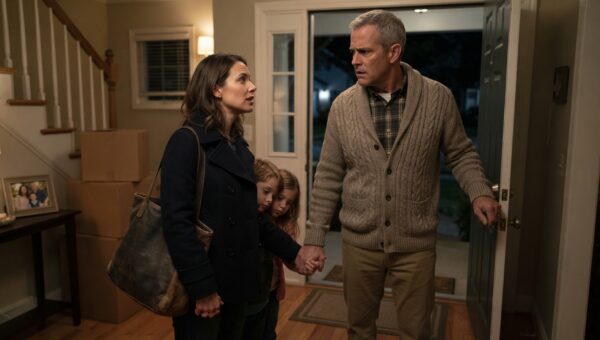
The knock on the front door came on a rainy Tuesday afternoon when Clara was napping in her room down the hall. I opened it expecting the postman or a neighbor wanting to borrow a cup of flour, but instead I found a stranger in a gray wool blazer holding a black leather briefcase. She had sharp eyes behind silver-rimmed glasses and a badge clipped to the lapel of her coat that read Department of Social Services. “Mrs. Arthur Miller?” she asked, her voice clipped and professional. “I’m Ms. Vance. I need to come in and speak with you about an active family file.” My stomach dropped into my shoes, but I stepped aside and let her into the tiny living room, where the damp smell of wet wool filled the space immediately.
Ms. Vance did not sit down on the sofa. Instead, she opened her leather case and pulled out a thick stack of stapled papers with official blue stamps across the top corner. She flipped past several pages of signatures and birth certificates until she stopped at a form that made the hair on the back of my arms stand straight up. “Your daughter’s name was submitted to the regional adoption registry six months ago,” Ms. Vance said, her eyes fixed steadily on mine. “The application lists your exact home address, your maiden name, your birth date, and includes a high-resolution photograph taken inside your own kitchen.” I stared at the paper, reading my own vital statistics typed out by someone who knew every detail of my life down to the day I got my driver’s license.
“That’s impossible,” I managed to say, my throat suddenly dry as dust. “I never submitted anything. I fought tooth and nail just to keep them from taking her two weeks ago.” Ms. Vance turned the page around so I could see the photograph attached to the back with a metal paperclip. It showed Clara sitting in her high chair eating applesauce, with our floral dish towel hanging from the oven handle in the background and the distinctive wood-grain pattern of our kitchen cabinets clearly visible behind her. It was a picture Evelyn had taken during a Sunday afternoon visit three years ago when she brought over a homemade peach cobbler and spent an hour taking casual snapshots on her little digital camera while I was out washing out baby bottles in the sink.
Ms. Vance closed the briefcase with a sharp click that echoed in the quiet apartment. “The application was processed using a verified digital ID that matches your residential IP address and your personal identifiers,” she said, watching my face closely. “Before I go, Mrs. Miller, I have to ask you something very important. Do you know who has been pretending to be you?” After she left, I sat on the edge of the floral sofa for a long time watching the rain streak down the living room window, realizing that Evelyn had not just dropped by for pie all those years ago. She had been harvesting my life piece by piece, filing away my data and my domestic routine like a collector storing specimens in glass jars.
I did not wait for Arthur to come home from his shift to talk about it. I drove straight down to the county records office the following morning, leaving Clara with my sister in town, and spent four hours pulling every public document linked to our family name. The clerk behind the counter, an old high school acquaintance named Brenda who looked like she would rather be anywhere else, handed over the stamped copies of the preliminary adoption inquiry with a look of genuine pity. There it was in black and white, filed under a docket number that pre-dated our wedding by eighteen months: an open-ended guardianship petition filed by Evelyn Miller using my personal data as the primary petitioner, designed to secure legal control over any child born into the Miller bloodline regardless of who her son eventually married.
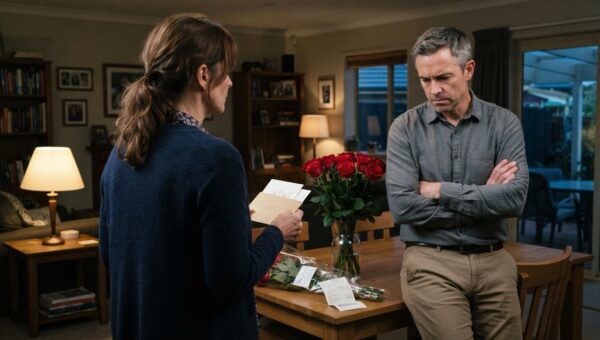
When Arthur walked through the front door that night, he looked more tired than usual, his shoulders slumped beneath his heavy canvas jacket as he kicked off his steel-toed boots. I did not yell at him or throw anything across the room, which probably scared him more than a screaming match would have done. I just laid the stapled stack of records from the county clerk right on top of the oilcloth kitchen table beside his dinner plate. He looked down at the header page, and the color drained right out of his face until his skin looked like skim milk. “You knew,” I said, my voice barely louder than the hum of the refrigerator. “You knew she filed this before we even had Clara, didn’t you?” Arthur dropped into the wooden kitchen chair, buried his face in his grease-stained hands, and started crying with the ragged, ugly sobs of a grown man who had finally run out of places to hide.
“She said it was just a precaution,” Arthur whispered through his fingers, his voice cracking down the middle. “She said our family needed to stay together no matter what happened, that she wanted to protect the grandchildren from ever leaving us like my father did.” I stood there by the sink looking at him, feeling all the love and pity I had carried for him through seven hard years just drain out of me like dirty dishwater. “She didn’t want to protect us, Arthur,” I said, my voice as cold as winter iron. “She wanted to own us.” I told him he had until morning to pack his duffel bag and find a place to stay down at the motel by the rail yards, because I was not going to spend another night under the same roof as a man who traded his own child’s future for a quiet life with his mother.
The next morning, I took the entire file straight back to Ms. Vance’s office at the Department of Social Services along with a signed affidavit from Brenda at the records bureau and the metadata printouts from the kitchen photographs. By Friday afternoon, the fraudulent adoption inquiry was officially voided and expunged from the state registry due to documented identity fraud and unauthorized third-party filing. Evelyn tried to call me twice that weekend, but I let the phone ring out until voicemail picked up her sharp, demanding voice before I blocked her number permanently from the handset. On Sunday evening, I drove out to the house on Maple Street where Evelyn lived alone with her doilies and her grudge, and I slid copies of the voided paperwork right through her mail slot without knocking on the door once.
The town took another three weeks to stop talking about the fallout, but by then I had already changed the deadbolts on the front and back doors and had a security camera installed right above the back porch. Arthur had moved into a small apartment near the elevator and was spending his weekends going through mandated counseling to deal with what the social worker gently called lifelong maternal enmeshment. He came by twice a week to see Clara under my supervision, speaking in low, careful tones and never once looking me directly in the eye. I didn’t hate him anymore, but the distance between us was wider than the state line and twice as permanent.
Tonight, the kitchen is quiet again except for the low hum of the refrigerator and the ticking of the wall clock over the pantry door. Clara is fast asleep in her own room down the hall, breathing softly with her favorite stuffed rabbit tucked under her arm. A simple crayon drawing she made of our little house rests on the clean laminate counter, held down by the salt shaker under the evening light coming through the freshly locked window. I run my hand across the smooth wooden surface of the table where Evelyn once laid her trap, listening to the deadbolt click securely into place against the dark.