My mother never did understand that numbers have a way of telling the truth long after people stop telling it.
The email landed in my inbox on a Tuesday morning while I was sitting at my desk at the firm, three years after I finally walked across that graduation stage with my diploma in my hand. It was an Excel file titled simply, College_Expenses_Final.xlsx.
When I opened it, my eyes went straight to the total at the bottom of the column. Forty-one thousand, two hundred dollars.
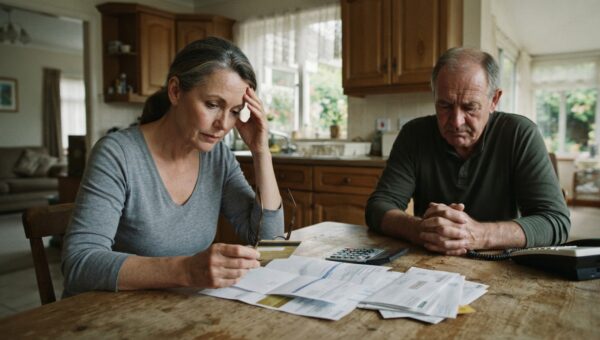
My mother had broken down every single semester into neat little rows. Tuition, apartment rent, meal plans, parking decals, and even a line item for four hundred dollars worth of chemistry textbooks from the fall of my junior year. Beneath the total, she had written a polite little note in her usual neat cursive saying she expected me to start paying her back in monthly installments of three hundred dollars now that I was settled into my career.
I stared at the screen for a long time. I remember sitting there in my gray cubicle while the office hummed around me, feeling this cold little knot tighten right under my ribs. I had spent four years working twenty hours a week at the campus library and summers hauling boxes at the hardware store downtown just to keep my head above water.
I had eaten enough peanut butter toast to last a lifetime because my mother always swore up and down that paying for my education was cleaning out her retirement fund.
She had called me selfish more times than I could count back then whenever I asked if she could spare twenty bucks for a lab fee. So seeing that spreadsheet should have just felt like more of the same guilt trip she had been running since I was ten years old. But something about the line items did not sit right in my head.
I saved the file to my desktop and decided to wait until the weekend. I drove out to her house on Saturday morning, figuring we could sit down over coffee and sort it out like adults.
My mother lives in that small brick rancher off Highway 11 where she raised both of us after my dad passed away.
The place always smelled like lemon Pledge and old paper. When I walked through the side door, she was standing at the counter pouring hot water into her favorite blue ceramic mug.
“I see you got my email,” she said without even turning around. “It is time to start pulling your own weight, Clara. Your brother has his own family to look after now, and I cannot keep carrying debts that belong to you.”
That was the first strange note, though I let it slide right past me at the time. I pulled the printed pages of the spreadsheet from my satchel and laid them flat on the kitchen table right between the salt shaker and the napkin holder.
“Mom, I just want to go over these first two years,” I said, keeping my voice level. “Because I remember getting that Dean’s Scholarship freshman year. The one that covered full tuition plus books. Why is tuition listed here for my very first semester?”
She took a slow sip of her tea, her eyes dropping down to the paper before darting back to the window over the sink. “Scholarships change, Clara. Fees go up. You do not know half of what it takes to keep a household running.”
“It didn’t just change,” I said, my chest tightening up. “It was a four-year renewable award. I remember signing the paperwork with the dean myself.”
“Well, things happen,” she muttered, turning her back to wipe down an already clean counter with a yellow sponge.
I did not argue with her then. I took the printed spreadsheet and drove straight to the university administration building on Monday afternoon during my lunch break. The campus looked different when you were no longer running across the quad late for an eight a.m. lecture, the old brick buildings looking smaller than I remembered.
The woman behind the counter in the financial aid office was older, with silver hair pinned back and half-moon glasses sitting low on her nose. Her name tag said Mrs. Gable. She looked up from her computer screen when I slid my driver’s license across the counter and asked for my historical disbursement records.
“Let’s see here,” Mrs. Gable murmured, her fingers clicking away on the keyboard with a steady, rhythmic clack. “Ah, yes. You had the Henderson Academic Award. Full ride for the first year. Very prestigious.”
“What happened to it for my sophomore year?” I asked, leaning in close.
Mrs. Gable stopped typing. She adjusted her glasses and frowned at the monitor, scrolling down through several archived windows. “Well, according to this note from the bursar’s office, the award was formally relinquished on October 14th of your sophomore year.”
My hand gripped the edge of the wooden counter. “Relinquished? By whom?”
“It says here it required a signed student-parent waiver,” Mrs. Gable said, squinting at the screen. “And it was processed using your mother’s secondary authorization pin. The funds were redirected back into the general university scholarship pool, and an equivalent amount of credit was… wait. That is unusual.”
“What is unusual?” I asked, my voice dropping lower than I intended.
“The credit wasn’t applied to your account balance after that first semester,” she said, turning the monitor slightly so I could see the ledger lines. “The remaining balance was paid out via separate institutional checks mailed directly to your mother’s home address, designated for educational expense reimbursement.”
I stood there in the quiet office while the fluorescent lights hummed overhead, feeling like someone had just pulled the floorboards right out from under me. For three years, I had stressed over every single textbook purchase, skipped meals to save five dollars, and thanked my mother every time she handed me a twenty-dollar bill for gas, believing she was stretching every penny she had just to keep me in school.
The drive back to my apartment was a blur. I spent the next three hours pulling up my old bank statements from back then and cross-referencing them with the check numbers Mrs. Gable had printed out for me. That was when I found the second trail. The checks weren’t going toward my rent or my groceries at all. They were being deposited directly into a commercial checking account belonging to an LLC named Miller Framing and Construction.
That was my brother Toby’s business.
Toby had been trying to launch his custom cabinet shop right around the time I started my sophomore year. He always drove a newer truck than I did, and he always had some new excuse about why his bids weren’t landing or why lumber prices were killing his margins. My mother had bailed him out time and time again, but I never knew she was using my education to do it. She had stolen my scholarship, lied to my face for three years, let me struggle and stress and work myself sick, and then had the absolute nerve to send me an itemized bill demanding I pay her back for money she never even spent on me.
By Thursday evening, I had the entire folder put together. Every printed bank record, the university bursar’s notes, the canceled checks with Toby’s company endorsement stamped on the back, and my mother’s neat little Excel spreadsheet sitting right on top like a confession waiting to be read.
I didn’t call ahead this time. I just drove out to the house on Highway 11 around five o’clock, the sun sitting low and orange behind the cedar trees at the edge of the yard.
My mother was sitting at the kitchen table shelling butterbeans into an old plastic bowl when I pushed the front door open. The TV was mumbling in the living room, but the kitchen was dead quiet except for the dull thud of beans hitting the bottom of the plastic.
She looked up, wiping her hands on her floral apron, expecting me to hand over the first month’s payment or start negotiating terms.
I didn’t say a word. I just walked straight across the linoleum, opened the manila folder, and dropped the entire stack of papers right on top of her butterbeans. Some of them spilled out onto the table, rolling into the folds of her spreadsheet.
“What is the meaning of this?” she asked, her voice instantly hardening into that sharp tone she used whenever she got caught doing something she shouldn’t.
“Look at page three, Mom,” I said. My voice didn’t even shake. That surprised me more than anything. “Look at where the scholarship money went after my freshman year. And then look at the endorsement stamps on the back of those checks.”
She didn’t touch the papers. She just stared down at the top sheet, her jaw tightening as she recognized the university letterhead. The silence in that little kitchen stretched out so long I could hear the refrigerator humming in the corner and the distant sound of a truck shifting gears out on the highway.
She reached out slowly, pushed the butterbean bowl aside, and picked up the printout showing the deposits into Toby’s business account. Her fingers didn’t tremble at all. She just laid the paper back down on the table, folded her hands in her lap, and looked right up at me with those cold, flat eyes.
“Your brother needed the money more than you did,” she said.
The words just hung there in the air between us, small and ugly and final. There was no apology. No stuttered excuse. No shame whatsoever. Just that flat, heavy sentence delivered like it was the most obvious fact in the world.
“He had two children to feed and a mortgage on that shop,” she added, her chin tilting up just a fraction. “You were just living in a dorm room with a hot plate. You were young. You could manage. Toby had real responsibilities.”
I looked at her sitting there in her floral apron, surrounded by her clean counters and her lemon scent, and I realized something that should have probably hit me years before. She wasn’t ever going to see me as anything other than a spare pocket to empty whenever Toby needed a bailout. To her, my hard work, my late nights at the library, and my scholarship weren’t mine at all. They were just family property to be moved around like chess pieces wherever she saw fit.
“I am not paying you a single cent,” I said.
“Clara,” she warned, her voice dropping into that familiar maternal reprimand. “Don’t you take that tone with me after everything I sacrificed, “
“You didn’t sacrifice a damn thing,” I said, and the words came out harder than I meant them to, sharp enough to cut glass. “You stole from me. And then you had the arrogance to send me an invoice for it.”
I didn’t wait for her to answer. I reached down, scooped my university documents and bank statements out from among the butterbeans, and left her spreadsheet sitting right there on the laminate table.
I turned around, walked out the front door, and let it click shut behind me for the very last time.
The evening air outside was cool and smelled of damp earth and pine smoke from someone’s backyard fire down the road. As I walked down the concrete path toward my car, I reached into my satchel, pulled out her itemized spreadsheet, and dropped it straight into the green municipal recycling bin beside her porch.
I got behind the wheel, turned the key, and listened to the engine catch with a steady, quiet hum. For the first time in my life, the road ahead of me was entirely my own.