PART 1
When Linda moved into our spare bedroom last November, I had a calendar on the refrigerator with a red circle around December twentieth. That was the date her orthopedic surgeon estimated she would be back on her feet after total knee replacement. Six weeks. That was the deal. Six weeks of helping her out of bed, driving her to physical therapy three times a week, cooking low sodium meals, and making sure she took her blood pressure pills on time.
Mark, my husband of twenty four years, had looked at me with those earnest, tired eyes and said, “It is just six weeks, Sarah. My sister is too busy with her twins, and you work from home anyway. It makes sense.”
I had agreed. I loved Mark, and I respected Linda in that distant, polite way daughters-in-law manage when they live forty miles apart. But forty miles is very different from sharing a single hallway bathroom and a kitchen that suddenly smelled constantly of boiled cabbage and Tiger Balm.
Six weeks came and went. Then January rolled in with freezing rain, and Linda was still shuffling around in her fleece slippers, leaning heavily on her walker. When I gently asked Mark if we should check with Dr. Vance about the slow progress, Mark sighed and rubbed the back of his neck. “She is family, Sarah. Her stamina is shot. We cannot rush her.”
I nodded. I kept nodding through February and March. By April, the guest room was no longer a guest room. It was Linda’s permanent domain, complete with her favorite arm chair hauled up from the basement, a collection of herbal teas taking over half the pantry, and a framed photograph of Mark at age ten placed squarely in the center of the mantelpiece, displacing our wedding portrait.
Linda had also developed strong opinions about how I ran my household. She stood by the kitchen island while I loaded the dishwasher, shaking her head. “You are wasting water, Sarah. In my day, we scraped every plate before it touched the rack.” She reorganized my linen closet, folding my bath towels into tight, militaristic rectangles that refused to stay stacked. Worse still, when our neighbors dropped by with a welcome casserole in May, Linda waved a hand toward the living room and said, “Oh, make yourselves at home. I basically run the kitchen now that Sarah is so buried in her laptop.”
Mark laughed it off when I mentioned it that evening. “She is just trying to feel useful, honey. Let her have her little victories.”
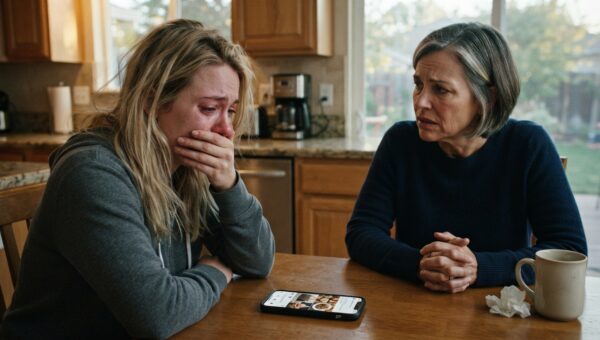
The breaking point arrived on a humid Tuesday in August. Linda had gone out with her friend Martha to the farmers market down the street, taking her time because walking was such a struggle. I was sitting at the dining room table editing spreadsheets when my cell phone rang. The caller ID showed the local physical therapy clinic.
I answered, expecting a billing question or a scheduling notice for someone else. Instead, a brisk, unfamiliar male voice asked for Linda Vance.
“She is out right now,” I said, rubbing my temples. “I am her daughter in law, Sarah. I handle most of her appointments. Is this about her ongoing physical therapy?”
There was a brief pause on the line. “Ongoing? Ma’am, Linda discharged herself from our care back in April. She completed her twelve scheduled sessions successfully. In fact, Dr. Vance signed off on her full clearance without restrictions on April twelfth. She has not been in this building in over four months.”
I stared at the blank wall opposite my desk. The silence stretched until the receptionist cleared his throat. “Is everything alright?”
“Yes,” I lied, my voice sounding hollow and small. “Thank you. I must have mixed up the dates.”
I hung up the phone and sat very still. The hum of the refrigerator seemed deafening. I looked down at my hands, noticing for the first time that my knuckles were white. Four months. She had been cleared four months ago.
PART 2
I did not go back to my spreadsheets. I stood up and walked down the hallway, stepping into the guest room for the first time without knocking.
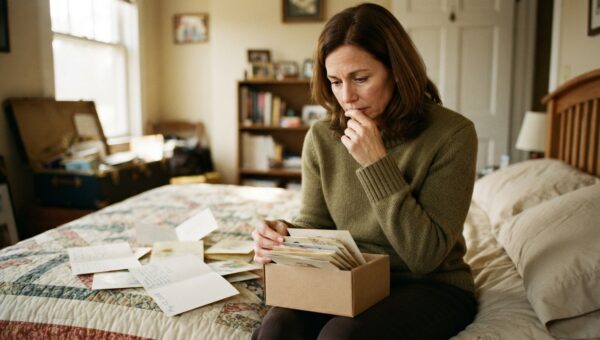
It smelled faintly of lavender powder and old paper. The walker that Linda usually treated like a third limb was tucked neatly behind the bedroom door, completely out of sight. On the nightstand sat a pair of sensible walking shoes with flexible rubber soles, unlaced and ready to go. I opened her closet. Hanging there were three brand new pairs of lightweight walking trousers and a collection of colorful cotton blouses she claimed she could never button by herself because of her fingers.
My mind raced backward, connecting months of strange, overlooked moments. The way she suddenly stopped asking me to drive her to the clinic, insisting she preferred to wait for Mark to take her on Saturdays. The way she managed to walk three blocks to the corner bakery whenever Mark mentioned he had the afternoon off, but needed me to fetch her mail whenever I was downstairs.
Mark had been driving her to her invisible appointments. Mark had been picking up her prescriptions long after the pharmacy had called to say they were auto refilled. Mark was the one who kept telling me her recovery was stalling out.
I went back to the kitchen and began to prep dinner with hands that felt entirely disconnected from my body. I chopped onions and sliced bell peppers, listening to the grandfather clock in the hallway tick away the minutes until Mark came home from his office.
When the front door clicked open at six thirty, Mark walked in carrying his briefcase and loosened his tie. “Something smells good,” he said, leaning down to kiss my cheek. His skin was warm from the summer heat. “Where is Mom?”
“She is still walking back from the market with Martha,” I said quietly, keeping my back turned as I stirred the skillet. “She said the fresh air helps her knee.”
Mark smiled, completely at ease. “Well, she is tougher than she looks. Stubborn Scotch blood.”
I turned around and leaned against the counter. “The physical therapy clinic called today.”
Mark stopped unbuttoning his cuffs. His fingers froze on his shirt sleeve for half a second before he smoothed them down. “Oh? What did they want?”
“They wanted to know why she missed her appointment,” I said, keeping my tone entirely flat. “I told them she was still recovering. The receptionist corrected me. He said she finished her program back in April.”
Mark looked away, fixing his gaze on a coffee mug on the drying rack. The easy, relaxed posture vanished from his shoulders, replaced by a rigid stiffness I had never seen in him before.
“She likes being here, Sarah,” Mark said softly, his voice dropping into that pleading register he used when he wanted me to drop an argument about household expenses. “Her apartment lease ended right when the surgery happened. You know how tight money is right now. We could not just throw her out on the street.”
“She has a pension, Mark. And a savings account,” I said. “And more importantly, you lied to me every single day for four months.”
“I did not want to cause a fight,” he muttered, finally looking at me with a mixture of guilt and annoyance. “You have been stressed with your workload. I figured we could let her stay through the summer until the weather cooled down.”
“It is not about the weather, Mark.”
Before he could answer, the front door swung open and Linda bustled into the hallway, carrying a cloth tote bag bulging with fresh peaches and tomatoes. Her cheeks were flushed with healthy color, and she walked with an even, swinging stride that did not feature even the slightest hint of a limp.
“Oh, it is sweltering out there,” Linda announced, untying her sun hat. She stopped dead when she saw the two of us standing in silence by the kitchen island. Her eyes darted from Mark’s tense face to mine. “What is going on in here? Is dinner burned?”
PART 3
I walked slowly out from behind the counter, wiping my hands on a dish towel. I did not raise my voice. When you are genuinely furious, shouting feels like a waste of breath.
“Dinner is fine, Linda,” I said, stopping three feet from her. “The physical therapy clinic called this afternoon.”
Linda did not flinch, but her fingers tightened around the cloth handle of her shopping bag. She let out a small, dismissive huff and tossed her hat onto the hall table. “Oh, those people. They never keep proper records. Their filing system is an absolute shambles.”
“They kept very good records,” I said. “They have Dr. Vance’s signature right there in the computer from April twelfth. Fully cleared. No restrictions.”
Mark opened his mouth, likely to interpose some weak excuse about paperwork misunderstandings, but I held up a single finger. He closed his mouth and looked down at the floorboards.
Linda adjusted the collar of her blouse, her chin lifting with that familiar, haughty tilt I had spent nine months trying to excuse away as old age and pain. “Well. And what if I was?” she asked, her voice dropping all pretense of frailty. “Are you really going to begrudge an old woman a safe place to sleep? Your house is half empty anyway, Sarah. Mark wanted me here. He knows how lonely I get in that retirement village.”
“Mark lied to me,” I said, looking straight into her eyes. “And you used my hospitality, my patience, and my home as a hotel while you criticized my housekeeping and acted like I was the servant in my own kitchen.”
“I am his mother,” Linda snapped, taking a step forward. “Family does not keep score.”
“Family does not orchestrate a nine month fraud just to avoid paying rent while hoarding pension money for a new Buick,” I said.
The kitchen went dead quiet. The clock on the wall seemed to tick twice as loud. Mark winced as if he had been physically struck, and Linda’s mouth tightened into a hard, thin line.
“Pack your bags tonight, Linda,” I said evenly. “Mark can drive you back to your apartment tomorrow morning, or he can help you find a proper senior living community where people are actually paid to listen to your complaints about laundry folding. But you are not sleeping another night under this roof.”
Linda turned her head sharply toward her son. “Mark. Are you going to let her talk to me like this in your own house?”
Mark swallowed hard. He looked from his mother to me, trapped in the center of the web he had woven with his own cowardice. For a long moment, he said nothing at all. Then he let out a long, shaky breath and rubbed his face with both hands.
“She is right, Mom,” Mark whispered, his voice cracking. “You need to go home.”
ENDING
The house has been quiet for three weeks now.
The guest room has been thoroughly aired out, the herbal teas are gone, and our wedding portrait is back where it belongs in the center of the mantelpiece. Mark is sleeping in the guest room for the time being, spending his evenings on the phone with real estate listings and counselors, trying to figure out how a marriage survives eighteen months of deliberate deceit.
This morning, I stood by the linen closet and pulled out a stack of bath towels. Without thinking, I unfolded them, shook them out, and refolded them the lazy, imperfect way I like best, stacking them unevenly on the second shelf.
Then I closed the door, walked down the hall, and locked the front door from the inside.