PART 1
My brother David looked me straight in the eye at the kitchen table and told me he just could not swing it.
“My business is tied up right now, Sarah,” he said, shaking his head with a look of genuine regret. “Between payroll and the kids’ braces, I have too many expenses right now. I wish I could help with the funeral costs, truly I do.”
Mom had passed away on a Tuesday morning at seventy-four, quiet and sudden in her sleep. By Thursday, David and I were supposed to be splitting the bills for the service at Miller & Son Funeral Home. Instead, I sat alone with the director, writing a check for five thousand four hundred dollars out of my own modest savings account. That covered the basic service, the spray of white lilies she always liked, the obituary in the local paper, and the small room afterward where our cousins and neighbors ate egg salad sandwiches and drank lukewarm coffee.
I didn’t have five thousand four hundred dollars to spare. I was a library assistant making twenty-two dollars an hour, and my savings were meant for a new transmission for my old sedan. But somebody had to do it. Mom couldn’t just sit in cold storage while my brother figured out his cash flow.
When Saturday came, the chapel was crowded. People from the church and the neighborhood filled the wooden pews. Right before the service started, the heavy glass doors swung open and David walked in. He wasn’t wearing the navy blazer he’d worn to our uncle’s funeral two years ago. He had on a charcoal-gray tailored suit that looked expensive, the kind with subtle stitching on the lapels. When we stepped outside afterward, he didn’t walk to his old sedan either. He climbed into a brand-new dark blue SUV with dealer plates still tucked in the back window.
During the lunch in the church basement, I watched him from across the room. He had his arm around Aunt Clara, leaning in close.
“David took care of everything,” I overheard him telling her, his voice carrying just enough for the surrounding tables to hear. “I wanted to make sure Mom got the send-off she deserved.
Sarah helped out here and there, of course, but I managed the heavy lifting.”
Aunt Clara patted his sleeve, her eyes misty. “Such a good son. Your father would have been proud.”
My jaw tightened, but I didn’t say a word. I was too tired. My legs ached from three days of phone calls, paperwork, and standing in receiving lines. I let him have his moment in front of the relatives. I figured the truth had a way of coming out eventually, or at least that was what I kept telling myself to keep from walking over there and making a scene in front of Mom’s casket flowers.
Three days after the burial, the phone rang while I was sitting at my kitchen table with a pile of thank-you cards. It was Mr. Henderson, the funeral director.
“Sarah,” he said, his voice sounding oddly formal. “I am calling about the account settlement.
I need you to come into the office when you have a moment.”
“I paid the balance in full on Thursday, Mr. Henderson,” I said, my stomach dropping. “Is there a problem with the check?”
“No, the check cleared fine,” he said, pausing for a second. “That is actually why I am calling. There was a second payment recorded on your mother’s file. It was mailed in six months ago. I assumed you knew about it.”
I gripped the receiver. “What second payment?”
“Your mother prepaid three thousand five hundred dollars toward her own arrangements before she passed,” Mr. Henderson said quietly. “It sat in our escrow ledger. When I balanced the file this morning, I realized the total payments exceed the invoice by almost the exact amount you paid on Thursday. Furthermore, she left explicit written instructions about who was allowed to receive any remaining balance or refund.”
PART 2
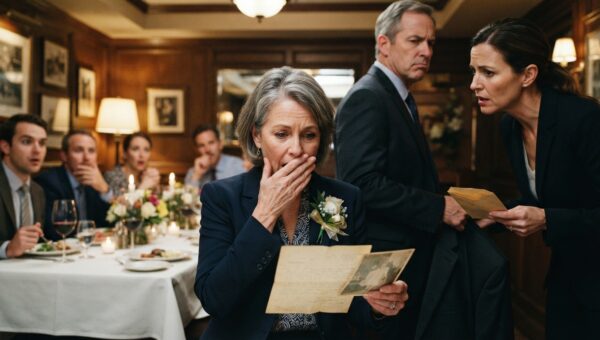
I drove down to Miller & Son Funeral Home in fifteen minutes, my hands gripping the steering wheel so tight my knuckles turned white. The office smelled of old carpet and faint lavender air freshener. Mr. Henderson was waiting at his mahogany desk with a thick manila folder open in front of him.
“Have a seat, Sarah,” he said, sliding a printed ledger sheet across the blotter.
I looked at the numbers. There it was in black and white. A check for three thousand five hundred dollars, drawn from Mom’s local credit union account and dated eighteen months prior, receipted into the funeral home’s pre-need trust. Below that was my own check from last week for five thousand four hundred dollars. Total collected: eight thousand nine hundred dollars. Total cost of the service: five thousand four hundred dollars.
“My mother prepaid this?” I asked, looking up at him. “She never mentioned it to me.”
“She set up the pre-need plan when she updated her will,” Mr. Henderson said, adjusting his glasses. “People often do that so their children are not burdened. But that is not even the interesting part. Look at the amendment page attached to the back of her file.”
He turned the folder around and pointed to a typed sheet bearing Mom’s neat, sharp signature at the bottom. The date at the top was from last year, right after she had spent a weekend at David’s house helping with his kids.
I read the lines slowly. In the event that my accounts are settled by my son, David, without disclosure of my pre-paid arrangements, or if any duplicate payments are submitted following my death, Mr. Henderson is instructed to hold all surplus funds and issue the refund strictly to my daughter, Sarah, who maintains our family records.
I stared at the paper. My chest grew tight, not with grief this time, but with a cold realization.
“David knew,” I whispered.
“He must have known,” Mr. Henderson said gently. “When he came in to finalize the arrangements three days before the service, he brought his own ledger printout from an older folder he found at your mother’s house. He instructed me to bill the full amount to you, claiming the estate was empty and he was covering his own out-of-pocket expenses for the flowers and catering. But he never mentioned the pre-paid balance. In fact, he specifically asked if there were any credit balances on file, and I told him I would have to audit the ledger later since the files were locked in the safe over the weekend.”
“He asked if there were credits?” I repeated.
“Yes. He seemed quite interested in whether any funds were left over,” Mr. Henderson said. “And when I checked the mailing address for the pre-paid receipt copy, it had been forwarded to David’s home address through an online change-of-address request filed six months ago.”
The pieces clicked together with brutal clarity. David hadn’t just neglected to help pay for Mom’s funeral. He had discovered Mom’s pre-paid funeral plan when he went through her desk looking for checkbooks, realized there was a credit sitting there, and decided to let me pay out of pocket for the actual service while he pocketed whatever refund or estate assets he could maneuver. That new SUV and tailored suit weren’t bought with his business profits. They were bought with whatever he had cleared out of Mom’s savings before I even got to her house.
“What happens to the surplus now?” I asked.
Mr. Henderson pulled a checkbook from his desk drawer. “The refund check is made out in your name, Sarah, exactly as your mother specified in her signed instructions. It is for three thousand five hundred dollars. Plus, since you paid the invoice in full on Thursday, I am refunding your original five thousand four hundred dollar payment as well, minus the actual adjusted balance of the flowers and catering that weren’t covered. Total payout to you is eight thousand nine hundred dollars.”
I looked at the refund check sitting on his desk. Eight thousand nine hundred dollars. It was more than enough to fix my car transmission, pay off my credit card, and finally breathe. But looking at it didn’t feel like winning a prize. It felt like standing at the edge of a crater where my family used to be.
PART 3
I didn’t deposit the check right away. I took the manila folder home, placed it on my kitchen table, and sat there until the sun went down. My phone buzzed twice with group texts from cousins asking about the family Thanksgiving plans, messages David had conveniently ignored while he was busy playing the grieving, generous benefactor.
I called him on Tuesday evening. He answered on the second ring, his voice smooth and slightly hurried.
“Sarah? Hey. I’m right in the middle of a client meeting, can I call you back?”
“No, David,” I said. My voice didn’t shake. That surprised me. “You can’t call me back. You need to come over here.”
“What are you talking about? I’m working.”
“You’re not working. You’re sitting at home or you’re out driving that new SUV. Either way, you need to be at my kitchen table in thirty minutes. If you aren’t here, I’m driving over to your house with Mr. Henderson’s file from the funeral home.”
There was a long silence on the line. The smooth confidence drained out of his voice instantly.
“What file?”
“The one with Mom’s signature on it. The one that explains how she prepaid her funeral eighteen months ago, and how you tried to make me pay for it twice while you stole the difference.”
Another silence, heavier this time. When he spoke again, the tone had shifted from corporate polish to defensive anger.
“Mom didn’t tell me about that plan! I found out about it when I looked through her papers, sure, but the money was supposed to cover administrative costs for settling the estate. I’ve put dozens of hours into clearing out her house, Sarah. Do you have any idea how much work it is to sell a four-bedroom property and deal with her belongings?”
“You didn’t sell her house, David. The probate isn’t even open yet,” I said. “And you didn’t spend thirty-five hundred dollars on administrative work. You bought a suit and a car down payment.”
“I am her son!” he shouted through the phone. “I have a family to support! You’re single, you live alone, you don’t have expenses like I do!”
“Thirty minutes, David,” I said, and hung up.
He arrived in twenty-five. He didn’t wear the tailored suit this time; he had on a gray zip-up hoodie and jeans, his hair uncombed. He walked through my front door without knocking, his face flushed red.
“You’re making a massive mistake,” he said before he even sat down. “If you drag the family into this, everyone is going to know—”
“Everyone already thinks you paid for everything, David,” I interrupted, sliding the funeral home ledger and Mom’s signed instruction sheet across the table. “I haven’t told Aunt Clara anything yet. But you are going to sit down right now, and you are going to listen to how this gets fixed.”
He looked at the papers, his eyes darting across Mom’s handwriting. He knew he was cornered. There was no wiggle room, no clever excuse that could explain away a signed pre-need contract and explicit instructions naming me as the sole recipient of any surplus or refunded funds.
“What do you want?” he muttered, staring at the grain of my wooden table.
“I want every single cent you took from Mom’s checking account before I got to her house returned to her estate account by Friday morning,” I said quietly. “And I want you to call Aunt Clara and every other relative you lied to at the funeral. You are going to tell them the truth about who paid for Mom’s service. Not part of it. All of it.”
“Sarah, come on—”
“Or,” I continued, my voice steady, “Mr. Henderson and I hand this entire file to the probate attorney and let the court decide how many laws were broken when you forged access to her pre-need documents.”
ENDING
David didn’t call the family on Friday, but he transferred the missing funds back into Mom’s account by Thursday afternoon. I verified the balance with the bank before I deposited my refund check from Miller & Son.
Aunt Clara called me on Sunday morning, sounding bewildered and subdued. She said David had dropped by her house to clarify a few financial matters and apologized for getting things confused. She didn’t ask for details, and I didn’t offer any. Some fractures are too wide to bridge with explanations, and trying to patch them only pulls more dirt into the cracks.
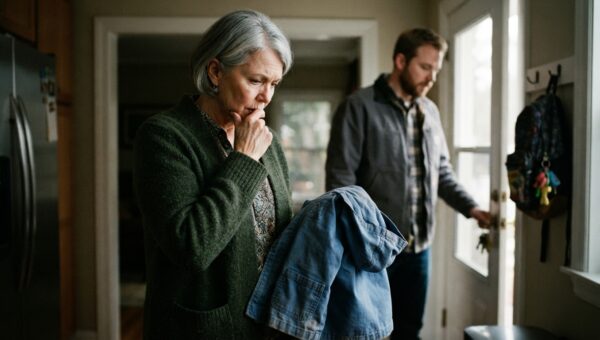
I spent Sunday afternoon sorting through Mom’s remaining boxes in the spare room. At the bottom of a cardboard carton filled with old recipe cards and Christmas napkins, I found her blue tin tea box. Inside wasn’t money or jewelry. It was a small stack of faded photographs of our grandparents, along with a grocery receipt from 1984 with a note scribbled on the back in her familiar, sharp cursive: Always keep your own records.
I set the tea box on the shelf beside my desk, closed the ledger, and finally picked up the keys to my car to drive down to the mechanic.