PART 1
The bleachers at the stadium were packed with parents holding up phones and wearing custom shirts with their kids’ names on them. I sat three rows back from the aisle, scanning the crowd for my mother, Helen. Her seat was supposed to be right beside mine. I had saved it with my canvas tote bag and a bottled water.
When my phone buzzed with a text message fifteen minutes before the processional started, I figured she was just stuck in traffic near the north gate. Instead, the screen read that the parking garages were a nightmare and the arena was entirely too crowded for her bad knees, so she had turned around and gone home.
I stared at the screen for a long moment. My chest tightened with a familiar, dull ache. Last month, when my brother David’s youngest son graduated from high school three hours away, Mom had driven the distance, walked all the way across the football field, and sat in the bleachers under the hot sun for two hours. She had taken dozens of photos and bought him a custom engraved watch. But for my daughter Maya, who had worked two part-time jobs while earning a full nursing degree with honors, a local arena with air conditioning and accessible elevators was apparently too crowded.
I texted her back that I understood, locked my phone, and pushed the disappointment down. Maya deserved to look out into the audience and see her mother smiling. I stood up when they called her name, cheered until my throat was raw, and took fifty pictures on my phone so she would have memories of the day.
When we got home that evening, Maya dropped her keys on the kitchen counter and went out to the front porch to check the mail. A minute later, she called out to me.
“Mom, come look at this.”
I stepped out onto the porch. Resting on the wooden bench was a small white florist box tied with a silver ribbon. There was no card attached to the outside. Maya untied the ribbon and lifted the lid. Inside lay a dozen yellow roses, still damp from the shop. Tucked right in the middle was a piece of heavy cardstock.
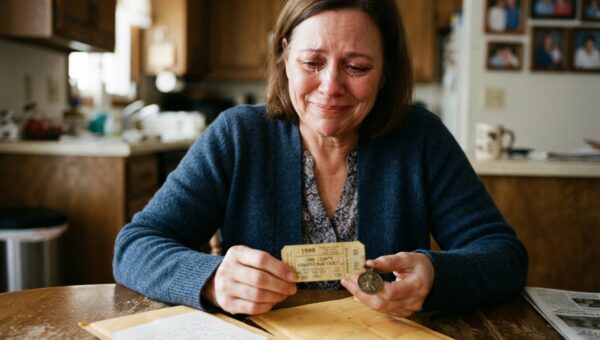
Maya pulled it out. It was a paper seat ticket for the graduation arena. Section 114. Row 22. Seat twelve.
The exact row and section where I had been sitting all afternoon.
Maya turned the ticket over. On the back, written in my mother’s shaky cursive, were words that stopped the air in my chest.
“I left before she saw me because I didn’t deserve to clap after what I did to her mother.”
Maya stared at the ticket, then looked up at me. Her eyes were wide and confused in the porch light.
“What does that mean, Mom?” she asked softly. “What did Grandma do to you?”
I stood there in the quiet evening air, unable to find my voice. I had spent twenty-two years protecting my mother’s reputation, making excuses for her coldness, and telling myself that the past was dead and buried. But standing on that porch with my daughter looking at me for an answer, I knew the lie had finally run out of road.
PART 2
I told Maya to go inside and get settled while I needed a few minutes to check the mail properly. She looked hesitant, sensing the sudden weight in the air, but she nodded and walked through the front door.
I stayed on the porch with the box of roses in my hands. The yellow petals felt fragile, almost mocking.
To explain what my mother meant, I had to go back twenty-five years to the year my father died. He had left behind a small brick house on the edge of town and a modest savings account intended to help me finish my nursing degree and get my start in life. My brother David was already married and settled, working a steady job at the county garage, while I was twenty-one, working nights at a diner and trying to pay for tuition one class at a time.
Two days after the funeral, my mother sat me down at the kitchen table. She had red-rimmed eyes and a cup of black coffee between her hands. She told me that the estate lawyer had found a complication. She said my father’s savings were tied up in back taxes and property liens that threatened to take the house unless someone stepped in immediately.
“Your brother has a family, Sarah,” she had told me, her voice trembling just enough to make me feel guilty for breathing. “David cannot afford a loan right now. But you are young. You have time. If you sign this release form, it transfers your share of the property and the remaining funds to David so he can settle the debts. I promise you, it is just a formality on paper. Once the estate is clear, I will make sure you get every penny back.”
I was twenty-one, grieving my father, and desperate to keep my mother from crying. I trusted her. I signed the papers without reading the fine print, believing I was helping save our family home.
A month later, David bought a brand new pickup truck. Six months later, he and his wife put an addition on their house. When I gently asked my mother about the timeline for getting my share back, she changed the subject, telling me I was being selfish and ungrateful for questioning family loyalty.
Within a year, the communication between my mother and me had withered to polite phone calls on holidays. Whenever I tried to bring up the documents, she would either hang up or tell relatives that I was turning into a bitter, money-hungry daughter. I eventually stopped asking because the fighting hurt worse than the loss. I finished my degree on my own, working double shifts, raising Maya as a single mother after my husband left, and never asking my family for a single dime.
I had buried that anger so deep that I almost forgot it was there. But holding that graduation ticket on the porch, I realized why my mother had kept her distance from Maya all these years. It was not because she was busy or tired. It was because every time she looked at my daughter, she had to look at the exact future she had stolen from me to hand to my brother.
PART 3
I didn’t sleep that night. I sat at the kitchen table with the kitchen light off, watching the shadows shift across the floorboards as the hours ticked past. By seven in the morning, I had made up my mind. I grabbed my car keys, pulled the folder of old estate papers from the back of my filing cabinet—documents I had kept out of stubborn pride rather than any hope of justice—and drove across town to my mother’s house.
Her sedan was parked in the driveway. The house was quiet, the front blinds still drawn against the morning sun.
I walked up the concrete steps and knocked once, hard and steady. A few seconds later, the lock clicked. The door swung open just a few inches, held by the security chain. My mother’s face appeared in the gap, pale and lined with exhaustion. She looked smaller than she had at David’s house, her silver hair unbrushed, wearing a faded cotton bathrobe.
She took one look at me, and the last bit of color drained from her cheeks. She didn’t ask why I was there. She already knew.
“You were at the arena yesterday,” I said, my voice remarkably steady. “You sat in Row 22.”
Helen swallowed hard. She didn’t try to deny it. Her fingers tightened around the edge of the door frame. “I wanted to see her graduate, Sarah. I really did. I drove all the way there. But when I got inside and sat down in that seat, I looked up at the stage, and I saw you sitting there clapping for her. And all I could think about was the day I sat you down at my kitchen table and lied to your face.”
“You wrote it on the back of the ticket, Mom,” I said, holding up the heavy cardstock so she could see it through the crack in the door. “Twenty-five years you let me believe I was just unlovable. Twenty-five years you made me feel like I was the difficult one in this family.”
Helen dropped her forehead against the wooden door frame. A heavy sob broke out of her throat, ragged and wet.
“David came to me last month,” she whispered, her voice cracking. “He’s losing his shop. He wanted me to talk to you about helping him out again. He said you were doing well as a head nurse. And sitting in that arena yesterday, watching Maya walk across that stage with her head held high, knowing she did it all entirely on her own because I robbed you of your start… I couldn’t walk down those stairs, Sarah. I felt like a ghost.”
“You didn’t just rob me of a start,” I said, stepping closer to the door. “You robbed Maya of a grandmother who cared about her as much as she cared about David’s kids. You made her feel like she was second best her whole life.”
“I know,” Helen wept, her shoulders shaking under the faded robe. “I know I did. There’s no excuse for what I signed away. I favored David because he always needed me more, and I ruined everything else.”
“You’re right,” I told her, my heart aching with a strange, heavy mixture of grief and relief. “You did ruin it. And an apology written on the back of a ticket doesn’t fix twenty-five years of quiet cruelty.”
I reached forward, unlatched the security chain from the inside through the gap in the door, and pushed the door open the rest of the way. Helen stepped back, trembling, looking up at me like a stranger.
I didn’t yell. I didn’t scream or demand money. I simply laid the old estate papers and the graduation ticket down on the entryway table beside her telephone.
“I’m done making excuses for you, Mom,” I said quietly. “And I’m done hiding your secrets. David is your problem now. Do not ever call my daughter again.”
ENDING
Driving back home, the morning traffic was beginning to clog the interstate, but the space inside my car felt lighter than it had in decades.
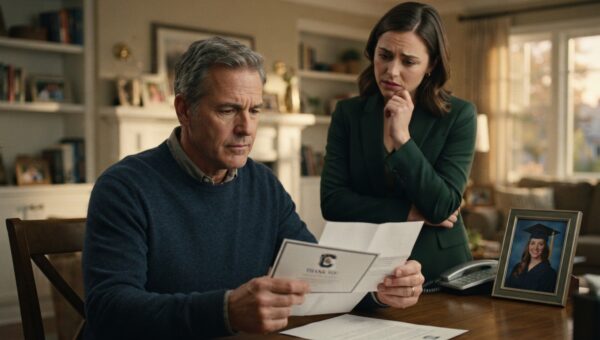
Maya was awake when I walked through the front door, sitting at the kitchen table with a mug of coffee. She looked up, her expression a mix of worry and curiosity.
“Are you okay, Mom?” she asked.
I pulled out the chair across from her and sat down. For the first time in my life, I didn’t gloss over the hard parts or try to protect someone who had never protected me. I told her about the house, the savings, the papers I had signed at twenty-one, and why her grandmother had spent all these years keeping her distance. I didn’t hide the ugly details, but I didn’t scream either. I just told the truth.
Maya listened quietly, her hand reaching across the table to cover mine. When I finished, she didn’t offer empty platitudes or fake comfort. She just squeezed my fingers.
“We don’t need her, Mom,” Maya said softly.
I looked down at the table. Resting beside Maya’s coffee cup was the small glass vase where she had put the yellow roses from the porch, trimming the stems so they stood tall in the water.
I reached out and touched one of the bright yellow petals. It was soft, firm, and completely real. For the first time in twenty-five years, the weight of my mother’s guilt no longer belonged to me. I left it where it belonged, locked inside a quiet house across town, while I sat at my own kitchen table with my daughter.