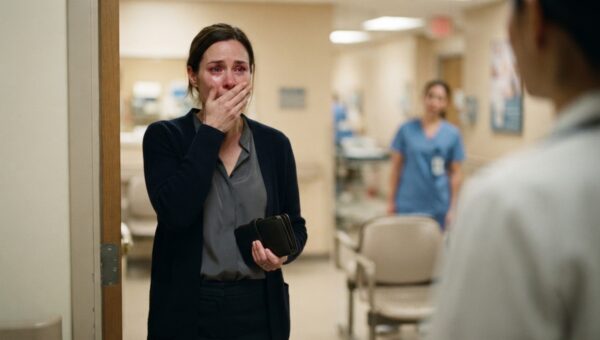
The fluorescent lights at the county clinic hummed with that specific, sickly buzz. It was 2006. I was ten years old, and my world felt like it was shrinking down to the size of a single throbbing molar. My father was sitting next to me on a cold plastic chair. He looked like he hadn’t slept in three days. The air smelled like antiseptic and wet wool.
When the receptionist called us up, she didn’t even look at us. She just pointed at her computer screen. The insurance, she said, was inactive. The cost for the extraction would be eighty dollars upfront. My father’s shoulders didn’t just sag. They looked like they had been hollowed out. He started to apologize, his voice cracking, but we were already turning toward the door when a heavy hand landed on the back of his chair.
“Wait,” an older man said. He was sitting in the corner, counting out small, crumpled bills. He didn’t look rich. He looked like he had been working on engines his whole life. “How much are they short?”
When the receptionist told him, he just nodded. He slapped sixty-eight dollars onto the counter. A teenager in a hoodie, who I’d never seen before, didn’t say a word but tossed a twelve-dollar bill on top of it.
I remember the sound of the coins hitting the laminate. That was the day I learned that grace isn’t just something you pray for. It’s something you move around.
Two decades later, I am a registered dental hygienist in a suburban practice in Pennsylvania. My life is organized by charts, insurance codes, and the steady, predictable rhythm of prophy cleanings. I like it that way. I like knowing the rules. I like knowing that if you follow the process, you get the result.
That order fell apart on a rainy Tuesday. Chloe Abbott walked into Exam Room Three with her son, Toby. Toby was seven, but he looked smaller, tucked into his mother’s side like he was trying to disappear. His left cheek was ballooned out, red and angry. He was clutching a rabbit toy that had seen better days. One ear was held on by a single thread.
The front desk buzzed my room. The tone was cold. Chloe’s insurance had a lapse due to some corporate paperwork error.
The clinic manager was firm. No deposit, no service. I watched the portable reader blink *DECLINED* against the white wall.
“I have another job tomorrow,” Chloe whispered to the receptionist. Her voice was thin, like paper. “I can pay the rest on Friday.”
The receptionist shook her head. “Policy is policy, honey.”
I looked at Toby. He was trembling. I looked at the receipt in the printer tray. Then I looked at the wall, and for a second, the modern paint seemed to peel away, and I was back in that drafty clinic in 2006. I saw my father’s back. I saw the old man’s hands.
“Stop,” I said, stepping into the hallway. I looked at the receptionist. My heart was thumping, but my voice stayed steady. “Put it on my tab.”
I didn’t think about my own rent. I didn’t think about the clinic’s policy. I just walked back into the room and closed the door.
I used the pediatric gel I’d bought myself because the office stock was too harsh. I talked to Toby about his rabbit the whole time. When I pulled the tooth, the tension in the room finally broke. Toby didn’t even cry.
Three days later, Leo Vance walked in for his routine periodontal maintenance. I’d known Leo for a while. He was retired, used to be a mechanic, and he always had grease under his fingernails that no amount of scrubbing could touch. He was a quiet man. He liked to talk about his garden, but he never talked about himself.
I led him to the chair. He moved with a heavy, rhythmic limp. As I was prepping the tray, he reached into his back pocket for his ID. He pulled out a worn leather wallet, and a small, yellowed scrap of paper drifted out, landing right on my sterile field.
I reached out to brush it aside, but the ink caught my eye. It was a receipt. A carbon copy from the county clinic. I picked it up. My breath caught. The date was twenty years old. There were notes in the margins, written in a hand that was shaking even back then. *68 dollars from the old man, 12 from the kid. Paid back at 2 dollars a month.*
I looked at the receipt. Then I looked at Leo. I looked at his hands, those same hands that had been counting wrinkled bills in a waiting room when I was ten years old. The silence in the room suddenly felt like a physical weight.
“Leo?” I whispered.
He looked up, blinking. He looked at the paper in my hand, then at my face. His brow furrowed, and then, the recognition hit him. It wasn’t a movie moment. There was no music. There was just the sound of the air conditioner and the realization that the past hadn’t stayed buried.
“You were the girl,” he said. His voice was gravelly, quiet. “With the tooth.”
I nodded. I couldn’t speak. I felt like the floor was tilting. I remembered the twelve-dollar bill. I remembered the feeling of being saved before I even knew I was drowning.
“I kept it,” Leo said, nodding toward the receipt. “I always wondered if you made it.”
I looked down at the paper. The ink was fading, but the numbers were still clear. That twelve-dollar bill had felt like a mountain back then. Now, it was just a smudge of carbon. I looked at Leo, really looked at him, and saw the man who had turned a bad Tuesday into the reason I became a hygienist in the first place.
“You saved me,” I said.
He shook his head, looking at his own boots. “No. You just needed help.”
I finished his cleaning, but I didn’t bill him. I went to the manager’s office, and I lied. I told them his insurance had covered it, and I used my own employee wellness credit to wipe the balance. When he tried to protest at the front desk, I just shook my head.
“It’s paid in full,” I said. “Six months at a time.”
The following week, Chloe and Toby came back for their checkup. I waited until I knew Leo would be in the lobby. I walked them out together. I didn’t tell them the whole history, not really. I just introduced them.
“Leo, this is Toby,” I said.
They stood there for a second. The old mechanic and the seven-year-old boy with the rabbit. Leo reached out and touched the rabbit’s ear. He didn’t say much. He didn’t have to. The chain was moving. It was visible, like a thread running between them.
The clinic changed after that. I don’t know if it was because of what I did or just the atmosphere, but the owner finally agreed to start a fund. We call it the twelve-dollar account. It’s a glass jar on the front desk. People drop in spare change, or five dollars, or sometimes a twenty. It’s for the people who walk in with insurance lapses and swollen cheeks.
I still keep the original receipt. It’s not in my wallet anymore. I keep it in my locker, taped right next to a photo of the three of us in the waiting room.
Sometimes, when the office gets loud and the schedule is packed, I look at that jar. I watch people put money in. I watch the way they look when they realize they don’t have to worry about the bill for a few minutes. I think about that old county clinic. I think about the hum of the lights and the smell of antiseptic.
I’m thirty now. I know the rules. I know that the world is mostly made of bills and ledgers and cold, hard math. But every time I see someone help someone else, I’m reminded that the math doesn’t always have to add up. Sometimes, it just has to be enough.
I am still here. I am still doing the work. And every Tuesday, when the rain hits the windows of the clinic, I find myself waiting for the sound of a door opening. I wait for the next person who needs a twelve-dollar miracle. I wait to see who will be the one to pay it forward next.
The jar is nearly full today. I’ll take it to the manager tomorrow. I’ll make sure the records are straight. But tonight, it’s just quiet. And for the first time in twenty years, I don’t feel like I’m in debt to anyone at all.