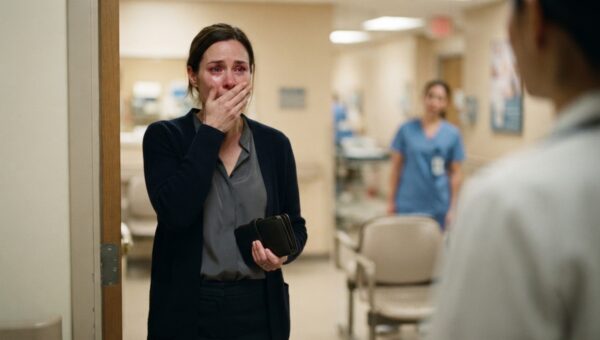
The plastic tablecloths were flapping in the breeze, the sound rhythmic and dull against the chatter of the birthday party. It was supposed to be a perfect day. My daughter, Ariel, had just turned three, and the backyard in our Sacramento home was filled with the kind of noise that used to make me feel content. I stood by the grill, checking the burgers, feeling the heat of the afternoon sun on my shoulders.
It felt like a standard Saturday. My father was laughing at something my stepmother, Clara, said, while Glen, my husband, was busy pouring drinks for the neighbors. Everything was steady. It was the kind of steady that makes you stop paying attention.
Ariel came running over, her dress smeared with a bit of chocolate frosting from the cupcakes. She looked up at me with those wide, inquisitive eyes that make you feel like the center of the universe. She didn’t want a refill or a hug. She just tugged at my apron and pointed a tiny, icing-covered finger toward the kitchen patio door. She was looking at the glass where Clara was standing inside, watching the party from the safety of the AC. My daughter made a sound, a little giggle, and then she said it.
“Daddy’s in there,” she whispered, pointing right at Clara’s stomach.
I laughed. I actually laughed. It was the kind of laugh that comes when you think a kid is being cute.
I assumed she was playing a game about a baby or maybe she was just confused because Clara had been talking about her recent weight gain earlier that morning. I patted her hair and told her to go play with her cousins. But Ariel didn’t move. She just kept pointing at the glass.
“Daddy’s hiding with Grandma Clara,” she said, her voice clear and insistent.
I looked up at the glass, and for a second, I didn’t see anything but my own distorted reflection. Then, the sun shifted. The light hit the tinted surface at a sharp, downward angle. The glass turned into a perfect, dark mirror of the interior. I saw the kitchen. I saw the pantry. And there, tucked behind the door frame, were two figures. I didn’t need to squint. I saw the way his hand was pressed against her waist, the way she was leaning into him with a kind of familiarity that only comes after months of practice. It wasn’t a hug. It was a secret.
My brain didn’t scream. It didn’t do any of those things you see in movies. It just went quiet. Everything became very small. I watched him reach up and brush a strand of hair off her forehead, a move so practiced and tender it made my skin crawl. It was like watching a ghost move through my own house. I stood there, holding a pair of metal tongs, and for a full minute, I forgot how to breathe. I wasn’t just Maya, the graphic designer who kept everything organized. I was just a person watching their life get taken apart in a reflection.
I turned away before anyone could see my face. I walked over to the table and set the tongs down with a clatter that sounded like a gunshot in my own ears. I didn’t go to them. I didn’t cause a scene.
I just went inside. The house was cool and smelled like the lemon cleaner I’d used that morning. I walked into the mudroom, my heart beating so hard it felt like it was bruising my ribs from the inside. Glen’s tool pouch was hanging on the hook, right where he always left it.
I didn’t think twice. I reached into the side pocket. I pulled out a set of keys I didn’t recognize. They weren’t house keys. They had a plastic fob with a logo for a resort in Napa, the kind of place they’d claimed was booked solid for months. I reached deeper and found the folded receipts. They were dated for the last six weekends. I stood there in the quiet mudroom, holding the proof of my own obsolescence. It wasn’t just an affair. It was a second life.
I sat down on the floor, the tiles cool against my legs. I felt like I was unraveling, thread by thread. I thought about the way Glen had been talking about my father’s health, how he’d been so insistent that I sign those new deeds for the estate. He had been planning this for a long time. He wasn’t just betraying me as a wife. He was cannibalizing my family. He was going to leave me with nothing, and he was doing it with the woman who had helped raise me. The irony was so sharp it felt like a physical blade.
I stood up and went to the smart-display in the kitchen. I knew how to access the logs. I didn’t want to see it, but I needed to know. I pulled up the history, the files categorized by date and time. There it was. The audio was clear as day. I listened to their voices, the way they spoke about me like I was an obstacle to be cleared, a business hurdle. They were talking about the joint savings account, about how they would transfer the bulk of it once the birthday party was done and I was distracted by the cleanup.
“She’s too busy being a mom to notice the math,” Glen said. His voice sounded different, cold and transactional.
I closed the tab. I felt sick, but the sickness was turning into something else. It was turning into a cold, hard focus. I had about twenty minutes before the party hit its peak. I went to the computer in my office and started the transfers. I moved everything I could into the personal account I’d kept hidden since before we married, the one for my freelance work. I locked the investment portfolios. I changed every password. By the time I walked back out onto the patio, I wasn’t the same person who had been flipping burgers.
The party was still going. My father was holding Ariel, his face full of that easy, grandfatherly joy that made my chest ache. Clara was standing near the edge of the pool, looking toward the house. When she saw me, her smile was perfect. It was the same smile she’d given me at my high school graduation, at my wedding, at my daughter’s baptism.
“Everything okay, Maya?” she asked. “You were gone a long time.”
I didn’t answer her. I walked over to the patio screen. I had the Bluetooth connection ready on my phone. I didn’t say a word to the group. I just pressed play. The audio of their conversation, their plans, their laughter, filled the entire backyard. It was loud. It was undeniable.
The silence that followed was heavy, a suffocating thing. My father’s face went gray. He stood up, setting Ariel down gently, and walked over to where Glen was standing. Glen looked at the screen, then at me, his mouth opening and closing like a fish. He didn’t have a defense. He just looked smaller, suddenly.
“Get out,” my father said. It wasn’t a shout. It was just a command.
Clara tried to speak, her voice trembling, but my father just held up a hand. He didn’t even look at her. He looked at me, and in his eyes, I saw the same heartbreak I was feeling, but for a moment, we were united in the sheer, ugly truth of it. I reached into my bag and pulled out the separation papers I had printed weeks ago, a precaution I’d hoped I’d never use. I handed them to Glen.
“The accounts are locked,” I said. My voice sounded steady. “Don’t come back here.”
He tried to argue. He reached for me, a desperate look on his face, but I stepped back. I didn’t want him near me. I didn’t want his touch, his charm, or his lies. The neighbors were staring, their faces frozen in shock, but I didn’t care. I turned to my father and took Ariel’s hand.
“We’re going to stay at your place for tonight,” I told him.
He just nodded. He didn’t look at Clara again. She was standing by the pool, looking at her reflection in the water, a ghost in her own life.
The next few hours were a blur of packing and disbelief. I didn’t take much. Just the things that really mattered. I didn’t want the furniture we’d bought together. I didn’t want the life we’d built. I felt like I was shedding a skin that didn’t fit anymore.
When I finally pulled out of the driveway, the house looked like it belonged to strangers. I didn’t look back. I couldn’t. I had Ariel in the backseat, sleeping against the window, her small hand clutching a stuffed bear. That was all I needed. I had my daughter. I had my life back.
Now, I sit here on the front porch of my father’s guest house. The sun is dipping below the horizon, painting the sky in colors that don’t match the mess I feel inside, but they’re beautiful anyway. My moving boxes are stacked neatly by the door, a temporary fortress against the world. I don’t know what tomorrow looks like. I don’t know how I’ll tell Ariel where her daddy went when she’s old enough to ask. But for the first time in years, the air feels clean. I’m holding my daughter’s hand, and I’m ready for the dark to come, because at least now, I know exactly what I’m facing. There are no more reflections to hide behind. Just me, her, and the truth of what we’ve survived.