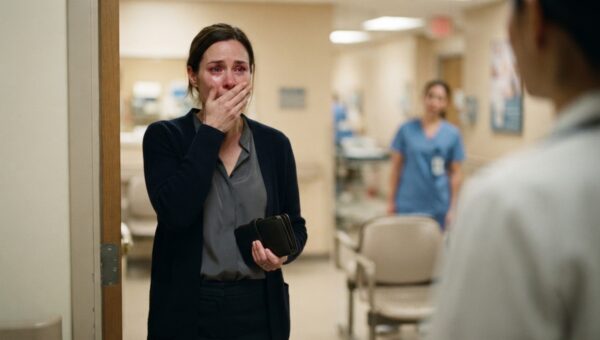
“Are you sitting down?” my mother asked at 6:12 p.m. as I stepped out of the office elevator in downtown Seattle.
I didn’t answer. I just stood there, watching the rain blur the lights of the city across the glass facade of the building. My mother, Eleanor, was breathing hard on the other end of the line, and behind her, I could hear the faint, rhythmic sound of waves crashing and the high-pitched, manic laughter of my sister, Chloe.
“We just checked out of the resort,” Eleanor said, her voice dripping with that familiar, saccharine tone she used whenever she felt like she had finally won a war. “And I have to say, the concierge was so impressed with your American Express card. It went through without a single hitch, Kendra. Not that I expected anything less from you.”
I felt my jaw tighten. I didn’t say a word. I just waited.
“We decided to book the penthouse suite for the rest of the week,” she continued, her voice rising in volume. “And Chloe just bought out that boutique on the beach. You know, the one you said was too expensive for your last birthday? Honestly, it’s about time you did something useful for this family. We’ve all been through so much, and you’ve been so stingy lately. Don’t worry, we’ll be home on Sunday.”
I looked down at my phone screen. The notification center was already lighting up.
First, it was the flights. Then, the resort. Then, the boutique. The numbers were climbing so fast the screen was flickering. $14,000. $22,000. $45,000. $99,000.
I didn’t feel rage. I felt a weird, icy kind of clarity.
“Don’t laugh too soon, Mom,” I said into the phone.
I hung up before she could respond. I didn’t need to hear her reaction. I knew exactly what was coming.
I had spent the last three years of my life working as a senior financial compliance analyst for one of the largest firms in the Pacific Northwest. My job was to find the holes in the systems, the places where people thought they could hide their tracks. My parents had always viewed me as a bottomless ATM, someone who existed to subsidize their champagne taste on my modest salary. They never understood that I wasn’t just working a job. I was building a fortress.
When I started at the firm, I had taken my personal credit lines and registered them under our corporate compliance oversight program. It was a niche protocol, something designed to protect high-level executives from identity theft, but it worked just as well for someone like me. Any unauthorized commercial charge over $50,000 didn’t just trigger a bank alert. It triggered an immediate, automated federal audit for corporate identity theft and asset misappropriation.
I walked to my car, my heels clicking rhythmically against the concrete. The city air was crisp, smelling of wet asphalt and pine. I didn’t feel like a victim. I felt like a technician finishing a long, complicated repair.
Three days later, the alerts started coming in earnest.
I was sitting in my living room, watching the sun dip behind the Olympic Mountains. My phone didn’t stop buzzing. My aunt, my cousins, and my father all started sending messages.
They were frantic, confused, and angry. They wanted to know why I had “done this” to my mother. They wanted to know why I was “being so cruel” during such a special family trip.
I muted the notifications. I didn’t read the messages. I didn’t need to. I knew the script by heart.
I spent those three days in a state of quiet, detached focus. I finished my reports, I went to the gym, and I kept my house perfectly clean. I lived my life exactly as I always did, because I knew that everything I needed to do had already been set into motion the moment the first charge cleared the $50,000 mark.
The reversal didn’t happen all at once. It was a slow, systematic dismantling of a delusion.
The federal compliance protocol was a beautiful thing. It didn’t care about family dynamics. It didn’t care about birthdays or vacations or the fact that my mother was a socialite who thrived on manipulation. It only cared about the data. And the data said that $99,000 had been funneled through a corporate-linked account for personal luxury goods. That was wire fraud. That was a felony.
By the time Sunday evening rolled around, I was standing in the arrivals terminal at Seattle-Tacoma International Airport. I wasn’t there to pick them up. I was there to witness the end of an era.
I stood in the shadows near the baggage claim, watching the crowd. They looked tired, tanned, and smug. Eleanor was leading the pack, her designer luggage trailing behind her like a royal procession. Chloe was scrolling through her phone, probably uploading the last of the photos from the trip.
They stopped at the rental car counter.
I saw the look on the clerk’s face when he handed them their cards back. He looked confused, then apologetic, then terrified. Eleanor’s face went from annoyance to confusion to pure, unadulterated panic in the span of five seconds.
Then, the airport security officers approached.
They didn’t rush. They didn’t scream. They just walked up, checked the names against their clipboards, and took the bags. Two bank investigators in suits stepped out from behind a pillar, followed by a federal agent.
I stepped out from the shadows just as Eleanor started to shriek.
“Kendra!” she screamed, pointing a manicured finger at me. “Tell them! Tell them it’s a mistake! Tell them you gave us the card!”
I didn’t move. I didn’t flinch. I just watched the scene unfold with the same detached interest I gave to any compliance audit. The investigators were cold. They were efficient. They weren’t interested in her excuses. They were interested in the subpoena that had been issued three days ago.
“I can’t help you,” I said, my voice steady and quiet.
“You’re killing us!” she yelled. “We’re your family!”
“You aren’t family,” I said. “You’re a liability.”
I turned around and walked toward the exit. I didn’t look back when she started to sob. I didn’t look back when I heard the handcuffs click. I just kept walking until I was outside, in the cold, biting night air of the Seattle evening.
I pulled my phone from my blazer pocket. I saw the last of the notifications from the bank: a system-generated alert confirming the final freeze on all associated accounts. I didn’t read it. I didn’t need to.
I tapped the screen once, twice, three times. I permanently blocked my mother’s number. Then my father’s. Then Chloe’s.
I stood there for a moment, listening to the hum of the airport and the distant roar of a jet engine. I took a long, slow breath, tasting the salt and the cold. For the first time in my life, there was nobody else in my head. There was just the city, the night, and the absolute, terrifying beauty of being entirely, completely alone.
I slid my phone back into my pocket and started the walk to my car. I didn’t look back at the terminal. I didn’t feel a need to check if they were still there. They were someone else’s problem now.
I drove home in silence. The radio was off. The streets were empty. When I walked into my apartment, it was quiet. It was peaceful. It was mine.
I poured a glass of water and stood on the balcony, watching the lights of the city twinkle against the dark water of the sound. I thought about the money. $99,000. It wasn’t just a number. It was the price of my freedom. It was the cost of knowing exactly who they were and finally, finally, doing something about it.
I sat down on the edge of the balcony chair, the metal cold against my legs. I felt a strange, hollow sensation in my chest, a lingering echo of the years I’d spent trying to earn their love. It wasn’t regret. It was just the realization that the person I had been, the girl who thought she could fix them, the girl who thought she could buy their affection, was gone.
I looked at my reflection in the glass door. I looked tired. I looked older. But I looked like someone who finally understood the math.
The city lights were still blurring. The rain was starting to fall again, a soft, insistent mist that coated everything in a layer of gray. I didn’t care. I felt clean.
I knew that tomorrow, the lawyers would start calling. I knew the extended family would reach out with their accusations and their pleas. I knew there would be a long, drawn-out process of liquidations and legal hearings. But none of that mattered.
The weight was gone.
I sat there for a long time, listening to the city breathe. I wasn’t happy. I wasn’t sad. I was just present. I was the witness to my own life, and for the first time, I was the one who had written the script.
I finished my water and set the glass on the table. It made a sharp, clean sound against the stone. I turned off the balcony light and walked inside, closing the door on the night.
I was still sitting in the dark when my phone vibrated one last time against the table. I didn’t reach for it. I knew what it was. It didn’t matter.
I closed my eyes and let the silence take over. It was the first time I had ever been truly alone, and honestly, it felt like the best thing I had ever owned.