The smell of the rehabilitation center is what gets to you first. It is a mix of industrial cleaner and stale coffee, a scent that seems to cling to the back of your throat. My name is Artie Vance, and for fifty-one years, my world smelled like talcum powder, bay rum, and the crisp, clean scent of hot steel on damp hair.
I spent five decades behind the first chair at Vance’s Barbershop here in Cleveland. I was the guy who knew how you took your coffee and exactly how much to take off the sides before you even sat down.
That all ended on a Tuesday in March. I was trying to be too clever with a gutter job, and the aluminum ladder decided it had enough of my weight. I hit the concrete hard enough to snap my hip like a dry twig. When I woke up, the shop was gone, the lease was over, and I was just another old man in a bed with wheels.
By July, the silence of the rehab ward was starting to feel permanent. I sat in my room, staring at the drop ceiling tiles, convinced that the only things left of my life were a pile of medical bills and a pair of German steel shears sitting in a drawer at my house, gathering dust.
I kept telling myself it was fine. I had a good run. I did my best for the neighborhood. But honestly, it felt like I had just drifted off into a fog where none of the work mattered anymore.
Then came that Saturday in mid-July. I was sitting in my armchair near the window, trying to work a rubber band with my fingers to keep the dexterity up, when the double doors at the end of the hall swung open. I heard the noise before I saw them. It was a loud, booming kind of sound that had no business being in a place as quiet as a tomb.
Danny, Mateo, and Big Mike were walking down the hallway like they owned the place. They were carrying white bakery boxes and laughing about something that sounded like a dispute over clipper maintenance. Danny was the one who spotted me first.
He stopped dead, his face breaking into a wide, bright grin that made him look like the same twenty-year-old kid who used to sweep my floors.
“We figured we’d find you holding court in the back row, Artie,” Danny said. He didn’t wait for an invite, just pulled up a plastic chair and sat down. Mateo and Big Mike followed, setting the boxes on my bedside table. The room suddenly felt smaller, warmer, and significantly louder.
I tried to act like I was bothered by the intrusion. I sat up straight, pulled my shoulders back, and gave them my best ‘master barber’ glare. “You boys have nothing better to do than rattle the nerves of a broken man?” I asked, but my voice wasn’t as steady as I wanted it to be.
They didn’t buy the act. Big Mike just shook his head and started opening the bakery boxes. “We heard you were stir crazy, Artie.
We brought the good stuff. Plus, we needed a consult on some new blade adjustments.”
For the next hour, the rehab center ceased to exist. We weren’t in a facility. We were back in the shop. They traded stories about nightmare clients, difficult permits, and the constant, never-ending battle to keep the shop floor swept clean. It was like music. I listened to them talk about their own shops, about the mistakes they were making and the victories they were finding, and I realized something that made my chest tighten. They weren’t just mimicking me. They were carrying the work forward.
“Look, Artie,” Danny said, his voice dropping into that serious tone he only used when he was about to talk shop. “We didn’t just come for the coffee and gossip. We wanted to show you something.”
He reached into his pocket and pulled out his phone. He tapped the screen a few times, then held it up in front of me. I squinted, adjusting my glasses. It was a photo of his new shop, taken from the back corner. It looked clean, professional, and successful. But my eyes went straight to the first chair.
Above the headrest, there was a brass plaque. It was polished to a mirror finish, catching the light in a way that made the engraving stand out. I leaned in closer, and my breath hitched.
*“Never charge a man whose shoes tell you he’s looking for work, or a man burying his father.”*
It was my rule. My secret “lost ticket” rule. I had never written it down. I had never told a soul, not even my late wife, how many times I had pulled a ticket from the drawer and marked it as lost because I saw the wear on a man’s heels or the hollow look in his eyes after a funeral. I had kept it as a quiet ledger between me and the cash box.
“I saw you do it a hundred times,” Danny said quietly. “I didn’t understand it back then. I thought you were just bad at business. But then I opened my own place, and I saw a guy walk in with mud on his boots and a look that said he’d lost everything. I looked at the chair, and I thought of you.”
Mateo and Big Mike were nodding. “Same at my place,” Mateo added. “It’s not just a sign. We pooled the profits from our first month, and we started a community fund for exactly that. No questions asked. Just a clean cut and a fresh start.”
I couldn’t speak. My throat felt like it was full of sand. I looked from the phone to their faces, and I saw the same stubborn, honest pride I had tried to teach them since they were teenagers. I had been sitting here for months, feeling like a ghost, while they were out there building a whole world on the foundation I thought I had lost.
“There is one more thing, Artie,” Big Mike said. He reached into his jacket and pulled out a thick envelope. He set it on the bed and opened it to show me the paperwork. It was my account statement from the rehabilitation facility.
“The balance is cleared,” he said. “Every cent. We used the shop reserve fund. You didn’t just teach us how to cut hair, Artie. You taught us how to be men who look out for their own.”
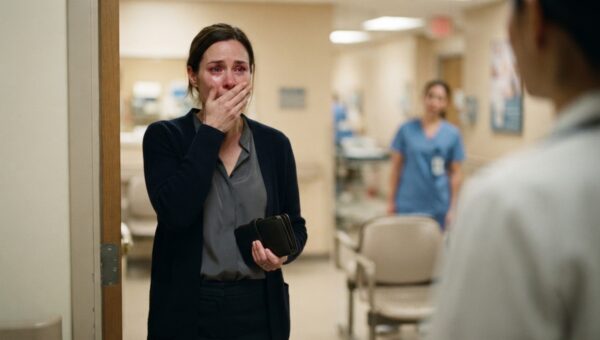
I looked at the paper, then back at them. I tried to find the words to scold them for being reckless with their money, to tell them they were too young to be taking on an old man’s debts. But the words just wouldn’t come. My hands were shaking, and for the first time in my life, I didn’t care who saw it.
“I didn’t know,” I whispered. “I honestly didn’t know you were listening that close.”
Danny reached out and put a hand on my shoulder. His grip was firm, just like mine used to be. “We weren’t just listening, Artie. We were watching. And you were never a bad businessman. You were a good man.”
They stayed for another hour, talking about the future, about how they wanted to bring me in for a guest spot once I was on my feet, and about the state of the local barbershop scene. When they finally left, the room felt empty again, but it didn’t feel lonely.
I sat there in the silence, but it was different now. The walls didn’t feel so sterile. I looked over at my bedside table. Tucked into the corner of the corkboard I had pinned to the wall, I had a single, yellowed paper ticket stub. It was the only thing I had managed to pack in my rush to get to the hospital.
I reached out and traced the edge of it with my thumb. It was just a scrap of paper, but it was a receipt for fifty-one years of grace. I knew then that I would be out of this place soon. Not because of the physical therapy, but because I had work to do. I had to get those German steel shears out of the drawer and get them to Danny. He earned them.
The sun started to dip lower in the sky, casting long, warm light across my knuckles. I leaned back in the chair and closed my eyes. For the first time since the ladder fell, I wasn’t just waiting for the day to end. I was looking forward to the next one. The shop wasn’t gone. It was just spread out across the city, tucked into the hearts and chairs of three men who knew exactly what a haircut was really worth.
I felt a quiet, heavy peace settle into my bones. It was a strange, almost uncomfortable feeling to have all that worry suddenly stripped away, replaced by the simple fact that I hadn’t been forgotten. I opened my eyes and looked at the brass plaque on the phone screen one last time before the battery died. It wasn’t about the money. It never had been. It was about making sure that when a man sat in that chair, he left standing a little taller than when he arrived. And if that was the legacy I was leaving behind, then I’d done just fine.