PART 1
The radiator in the hallway gave a dry, metallic clank and then went cold again. I pulled my wool cardigan tighter around my shoulders and looked at the kitchen clock. It was nearly five in the afternoon, but the light fading through the frost on the window was already the color of wet slate.
My son Marcus stood by the counter, scrolling through his phone while he helped himself to the last of the ginger ale.
He wore a crisp fleece vest that cost more than my monthly grocery budget, and his breath puffed small clouds of vapor into the air.
“The furnace needs a complete overhaul, Mom,” Marcus said, not looking up from his screen. “Repair guys aren’t cheap. And since we already finalized the deed transfer last month, the liability is on my end now anyway. I’m just saying, it’s a money pit.”
I didn’t answer right away. I kept my hands wrapped around my chipped ceramic mug of lukewarm tea, feeling the chill radiating off the linoleum floorboards.
Just a month ago, this house had been mine. Free and clear, purchased with the insurance payout after my husband Arthur passed away five years prior. Arthur had spent forty years tending the tomato garden by the back fence, hammering every shingle on the roof with his own hands, and making sure I would always have a solid roof over my head.
Then Marcus came around with his smooth talk and his tailored suits. He told me about a phantom medical lien. He sat right at this kitchen table and swore up and down that the county health department was going to slap a massive judgment on the property because of an old zoning dispute over the septic tank.
“Protect it, Mom,” Marcus had urged, leaning in with his eyes wide and earnest. “Sign it over to my revocable trust temporarily. Just until the legal smoke clears. You’ll still live here, nothing changes, but the county won’t be able to touch a dime of your equity.”
I had trusted him. He was my only son. I signed the papers in front of a notary public he brought right to our living room, believing I was guarding my late husband’s legacy against some imaginary bureaucrats.
Now, the furnace was off, the deed was in his name, and Marcus was looking at me like I was a tenant who had outstayed her welcome.
“Pack your things,” Marcus said casually, finally dropping his phone into his pocket. “You’re going to the Maple Grove facility across town.
It’s heated, meals are provided, and you won’t have to worry about frozen pipes.”
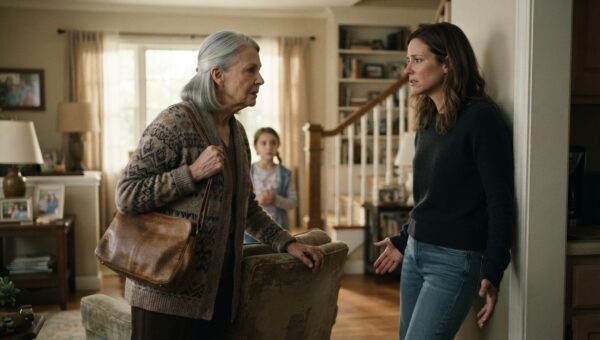
I stared at him. “Maple Grove? Marcus, that’s an assisted living home. I am seventy-one years old, not an invalid. And this is my home.”
“It’s my asset,” Marcus corrected with a thin, smug smile. “And honestly, Mom, you couldn’t afford the maintenance on a garden shed, let alone a three-bedroom house on a fixed widow’s pension. Be ready by ten tomorrow morning. The movers are coming.”
PART 2
The front door clicked shut as Marcus left, taking the warm air and the sound of his car engine with him.
The house plunged into a deep, heavy silence. I sat in the dark kitchen for an hour, watching the frost creep across the window glass in delicate, fern-like patterns. My fingers were stiff, and my chest ached with a cold fatigue that had nothing to do with the weather.
He figured I was just a helpless widow who would pack two suitcases and shuffle off to a small room without making a sound.
He didn’t know what I had kept hidden in the bottom of the cedar chest in the spare bedroom.
When Arthur was alive, he didn’t trust digital files or cloud storage. He believed in paper, signatures, and heavy ink. In the back of that cedar chest, beneath three wool blankets and a pile of old tax returns, sat Arthur’s battered leather diary. It wasn’t a journal about his feelings. It was a meticulous record of every contractor he hired, every loan he paid off, and every conversation he had with Marcus regarding the property boundaries and the original trust setup.
More importantly, it held the handwritten notes from the family lawyer detailing the original conditions Arthur had set before he died.
I stood up, my knees popping in the quiet room, and walked down the unheated hallway. The air inside the spare bedroom smelled of cedar and old dust. I pulled open the heavy lid of the chest, lifted the blankets, and felt my fingers brush against the familiar pebbled leather of Arthur’s book.
I tucked the diary safely inside the front pocket of my heavy winter coat.
At 2 AM, flashlight beams sliced across my dark hallway.
The house was freezing, my breath faint in the air as I pressed the diary against my chest and stepped back into the shadows of the linen alcove. Marcus must have given a spare key to his real estate agent or a contractor, because the heavy front deadbolt turned with a loud, brassy scrape.
Boots crossed the hardwood floor, and one flashlight began moving straight toward the alcove where I was hiding.
I held my breath, listening to the heavy thud of footsteps. Through the gaps in the linen shelves, I saw a stranger in a bright yellow parka shining a light up at the ceiling joists, talking on his phone to someone who sounded very much like my son.
“Yeah, Marcus, the layout’s wide open,” the man said into his phone. “We can easily knock out this partition wall by Tuesday. The old lady cleared out yet?”
“She’ll be gone by noon tomorrow,” Marcus’s voice crackled through the speaker on the man’s phone, loud enough for me to hear every word. “Just make sure the locks are changed by two o’clock. I don’t want her wandering back in here once the movers drop her off.”
PART 3
I waited until the footsteps moved toward the kitchen, then slipped quietly out the front door into the freezing night air, pulling my wool cap down over my ears.
I didn’t go to a neighbor’s house. I drove straight down to the downtown precinct in my old sedan, the engine coughing twice before catching in the cold.
The desk sergeant looked up from his computer as I walked in, clutching Arthur’s battered leather diary like a shield. I placed the book on the counter, opened it to the page marked with a yellow legal tab, and laid out the certified copy of the original trust deed alongside the fraudulent transfer papers Marcus had tricked me into signing.
“My son used a nonexistent medical lien to fraudulently induce a deed transfer under false pretenses,” I told the sergeant, my voice steady and clear. “And as you can see from my late husband’s registered trust stipulations, the property cannot be alienated or transferred without the secondary signature of the estate executor, which was never obtained.”
The sergeant looked down at the documents, then up at my face. He didn’t see a helpless old woman. He saw a homeowner reporting a crime.
By nine o’clock the next morning, while Marcus and his contractor were standing in my kitchen measuring for demolition, two county sheriff deputies knocked firmly on the front door.
I walked up the front steps right behind them, unlocking the storm door with my own key.
Marcus dropped his tape measure with a loud clatter as he stepped out of the hallway. His face went pale, his mouth opening and closing as he stared past the deputies at me.
“Mom? What is this? What are you doing here?” Marcus stammered, his polished veneer shattering in an instant. “You’re supposed to be at Maple Grove.”
“I’m right where I belong, Marcus,” I said, stepping past him into the living room.
One of the deputies stepped forward, holding a folded set of documents. “Mr. Marcus Vance? We have an administrative stop on this property transfer pending a full fraud investigation by the district attorney’s office. You are trespassing on a disputed estate.”
Marcus turned to the deputies, his hands flying up in panic. “This is my house! She signed the deed over legally! She’s losing her mind, she doesn’t know what she’s signing!”
“She knew exactly what she was signing when she set up the original family trust with me twelve years ago,” a deep, calm voice interrupted from the doorway.
It was Mr. Henderson, the retired family attorney who had drafted Arthur’s original documents, standing on the porch with a briefcase in his hand. He stepped inside, nodded to the deputies, and looked straight at Marcus.
“Your father left very strict instructions, Marcus,” Mr. Henderson said quietly. “Attempting to defraud the primary beneficiary revokes all standing inheritance rights immediately. You don’t own this house. And as of this morning, you don’t have any claim to your father’s business holdings either.”
ENDING
Marcus stared at the lawyer, then at the deputies, before his eyes finally landed on me standing by the fireplace.
He didn’t say another word. He grabbed his fleece vest off the kitchen counter, shoved his phone into his pocket, and walked out the front door without looking back, slamming the screen behind him.
The deputies left after taking our statements, and Mr. Henderson stayed long enough to help me relight the pilot light on the old furnace.
By late afternoon, the house had finally warmed up. The radiator hissed softly, a familiar, steady sound that filled the rooms. I walked over to the kitchen counter, picked up my chipped ceramic mug, and poured myself a fresh cup of tea. Outside the frost-covered window, the old tomato garden lay dormant under a blanket of winter snow, waiting quietly for spring.