PART1
For twenty-three years, my life was measured in cooking my younger brother Julian’s meals, folding his laundry, cleaning his room, and standing just outside every family photograph. My parents made sure I understood my place early on. Julian was the brilliant one, the golden boy, the one they called ‘the one who mattered.’ I was simply expected to fade into the background and keep the household running.
When I turned twenty, I stopped asking for college tuition and started buying groceries. When I turned thirty, I watched my friends build careers while I scrubbed grease off the kitchen range so Julian could study undisturbed in his oversized room upstairs.
My mother reminded me almost daily that a daughter who stayed home was a daughter who knew her duty. My father barely looked at me unless he needed his coffee refilled or his car keys found. Julian didn’t even look up when I brought his plates anymore. To them, I was furniture with a heartbeat.
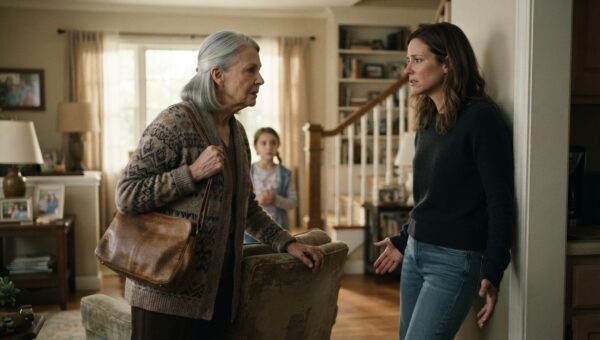
The only person in that house who ever saw me was my grandmother, Clara. She lived in the small converted cottage behind our garage, away from the constant noise and the shrine my parents built around Julian. Whenever I managed to slip away with a tray of tea and butter toast, Grandma Clara would pull me down beside her on the floral settee, touch my calloused hand, and whisper that a day would come when the scales would balance.
I used to smile just to comfort her, thinking she was just being an old-fashioned grandmother trying to make me feel better about my endless chores.
Then Grandma Clara passed away quietly in her sleep at eighty-eight.
The funeral was a stiff, gray affair where my mother wept theatrically for the neighbors while making sure Julian sat in the front center seat. I stood two rows back, holding a black umbrella that belonged to nobody. The will reading was scheduled for the following Tuesday at the offices of Mr. Henderson, the family attorney downtown, a man whose silver hair and stern glasses had intimidated me since I was a teenager.
We arrived in two cars. My father drove Julian in his sedan, while I followed behind in our old station wagon, the one with the rattling muffler. Inside Mr. Henderson’s walnut-paneled conference room, the air smelled of old paper and peppermint.
My mother immediately took charge, guiding Julian to the plush leather chairs as if they were taking seats at a coronation.
I stood near the heavy oak door, my fingers worrying the hem of my cardigan. My mother turned, gave me a cold, dismissive stare, and gestured sharply toward the dark hallway outside the glass partition.
“Wait out there, Clara,” she whispered harshly, as if talking to an unruly dog. “This is family business. We don’t need hired help hovering.”
For a second, my knees locked. Twenty-three years of automatic obedience surged through my muscles. I almost turned toward the hallway. I almost stepped backward into the shadows just to keep the peace.
Then Mr. Henderson looked up from his thick manila folder. He adjusted his glasses, stared straight past my mother, and said in a voice that cut through the silence, “No, she stays.”
PART 2
My mother’s mouth dropped open, a small, indignant sound escaping her throat. “Mr. Henderson, surely there’s some mistake.
Clara is just—she’s our daughter, of course, but she has no business hearing legal matters meant for the head of our household and her brother.”
“Sit down, Helen,” Mr. Henderson said, his tone flat and unyielding. He didn’t raise his voice, but the absolute authority in it made my father flinch. “I am reading the final testament of Clara Mae Vance, and every named beneficiary must be present from the first word to the last.”
I didn’t move toward the hall. My feet felt suddenly rooted to the patterned carpet, though my heart hammered against my ribs like a trapped bird. Julian shifted uncomfortably in his chair, checking his watch as if this were an annoying delay before a golf game. He had never once doubted that Grandma’s modest savings and the old property would land directly in his lap, designated for his upcoming business venture.
Mr. Henderson opened a heavy, cream-colored envelope sealed with dark green wax. He unfolded a crisp sheet of heavy parchment covered in my grandmother’s spidery, determined handwriting.
“I, Clara Mae Vance,” the lawyer read aloud, his voice echoing in the quiet room, “being of sound mind, make this my last will and testament, knowing full well what my son Robert and his wife Helen have done to my granddaughter Clara.”
The temperature in the room seemed to drop ten degrees. My father sat up straight, his face reddening instantly. “That’s absurd. Mother was losing her mind toward the end. She didn’t know what she was writing.”
“Mr. Vance,” Mr. Henderson said without looking up, “I witnessed this document myself, notarized and recorded two weeks before your mother passed. She was sharper than either of us.”
He continued reading. As the words filled the room, a cold, heavy silence settled over my parents. Grandma hadn’t just left a sentimental trinket or a small cash gift. She had documented everything. She listed the years I spent cooking, cleaning, and managing the household without a dime of pay. She detailed how my parents had systematically stripped away my independence, forcing me to drop out of community college at nineteen while funding Julian’s sports cars and European vacations.
My mother was shaking her head furiously, her lips pressed into a thin, white line. “This is slander. Lies. The girl poisoned her mind against us.”
“Quiet, Helen,” my father hissed, though his own hands were trembling as he gripped the armrests.
Mr. Henderson turned the page, his expression solemn. “Furthermore, Clara’s inheritance is not merely financial. It concerns the true ownership of the homestead property, and a very specific ledger kept locked away.”
PART 3
Julian finally leaned forward, a nervous laugh escaping him. “Look, this is ridiculous. Grandma’s house and land go to the family estate, which means me. Everyone knows that. What ledger?”
Mr. Henderson folded the parchment slowly and laid it flat on the desk. He looked directly at me for the first time since I walked in. “Clara, your grandmother left specific instructions for you. She knew your parents would try to sweep this aside.”
The lawyer reached beneath his desk and placed a heavy, worn leather-bound book on the polished wood. It was the black ledger Grandma always kept hidden in her cottage, the one I had dusted around for years without ever daring to open.
“That belongs to the family,” my father shouted, half-rising from his chair. “That’s private property!”
“It is property belonging to the estate’s sole executrix and primary heir,” Mr. Henderson corrected smoothly. “Which is Clara.”
I stared at the black leather book. My hands felt cold as I stepped forward and touched the textured cover. Inside were decades of meticulous records. Every mortgage payment my grandparents made before signing the deed over under false pretenses. Every receipt for repairs I had paid for out of the meager grocery allowance my father doled out like an allowance to a child. And tucked into the back pocket, signed bank transfers showing Julian draining Grandma’s retirement account to fund his failed startup three years ago, while my parents blamed me for ‘losing track of household funds.’
My father’s face went completely pale. The blustering anger drained out of him in an instant, leaving him looking suddenly old and small. My mother stared at the floor, refusing to meet my eyes. Julian looked between the lawyer and the ledger, his mouth opening and closing like a fish out of water.
“You… you knew?” Julian stammered, looking at me.
“I didn’t know the half of it,” I whispered. My voice didn’t shake. For the first time in twenty-three years, it didn’t shake at all.
Mr. Henderson slid a second set of papers toward me. Deed transfers, bank account reorganizations, and legal notices revoking my father’s power of attorney over the remaining properties. “You have sole control now, Clara. You can choose how to proceed with the property, the accounts, and the legal restitution.”
ENDING
My parents left the office ten minutes later without a word, walking out into the bright afternoon sunlight separately, my father refusing to look at Julian, who muttered curses under his breath about ruined plans.
I stayed behind to sign the final documents, the scratch of my pen the only sound in the quiet room.
When I drove back to the house that evening, the old station wagon felt lighter. I didn’t go inside through the kitchen. I walked around to the back, past the main house where the windows were dark and shuttered, and unlocked the door to Grandma Clara’s cottage.
The smell of peppermint and old paper still lingered in the air. I set the black ledger on the small floral settee, sat down in the quiet, and picked up the cold porcelain teacup left on the side table. For the first time in my life, nobody was calling my name from the other room.