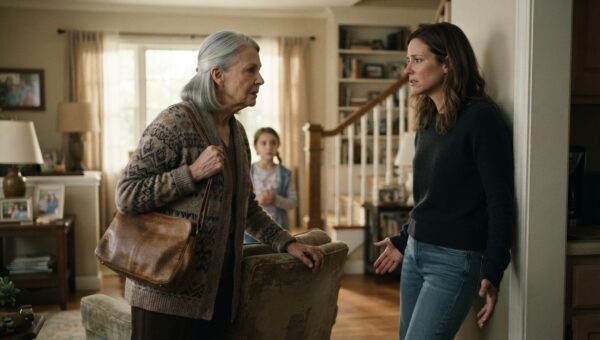
The smell of stale coffee and damp wool still lingered in the hallway of Mother’s house when the front door clicked shut behind the last of the mourners. We had just finished burying her on a gray Tuesday that felt three sizes too big for our boots. Leo and Sam, my two boys, were out by the station wagon loading up the extra folding chairs we had borrowed from the church basement.
I stood alone in Mother’s study, my hand resting on the smooth walnut edge of her old roll-top desk where she used to keep her seed catalogs and her checkbook registers. That was when Richard walked in without knocking, his shoes heavy on the hardwood floor.
Richard didn’t look like a grieving brother. He looked like a man running late for a flight he couldn’t afford to miss. He tossed a thick manila folder onto the blotter right where Mother’s reading glasses sat folded in half. The cardboard was warped at the edges and smelled faintly of a damp attic. He didn’t say hello or offer me a cup of tea or ask how the boys were holding up after losing their grandmother. He just crossed his arms and stared at me like I was a tenant behind on the rent.
“I had my lawyer draw up the paperwork this morning,” Richard said, his voice flat and hurried. “You need to sign the quitclaim deed by Friday, Eleanor. The whole place is mine now.”
I picked up the top paper just to see what kind of nonsense he was printing out on his office computer. It was a standard property transfer form, all filled out with the legal description of the nine million dollar estate we had all grown up in. But clipped to the back of it were three faded, yellowed slips of paper from a bank that went out of business back when Bill Clinton was in his first term. The numbers typed onto those old carbon copies totaled $570,000. My fingers felt clumsy against the thin, brittle paper.
“What is this supposed to be, Richard?” I asked, looking up from the desk.
Richard leaned his hip against the corner of the bookshelf, right where Mother kept her leather-bound Bible. “That’s my buyout,” he said, not even blinking. “Nineteen ninety-four. I handed over five hundred and seventy grand to clear the title so the old man and Mother wouldn’t lose the farm.
That first fifty percent share Mother gave me years ago wasn’t just a gift. It was a down payment on a purchase contract we made verbally. I bought out her half thirty years ago. You and the boys got the other fifty in the revised will, but the property itself belongs to me in full.”
I stared at him. The sheer gall of it hung in the air between us like woodsmoke in a closed kitchen. “You didn’t buy anything,” I said, my voice dropping an octave. “That loan was taken out against this exact property because your printing shop went belly-up and the bank was going to seize your equipment. Mother and Dad signed the papers to save your skin.”
Richard shook his head, a tight, ugly little smile pulling at the corner of his mouth. “Try proving that without a lawyer, Ellie. The bank slips have my name on the deposit side.
Try telling a judge that half a million dollars cash wasn’t a purchase. Sign the deed, take your little fifty percent cut of whatever’s left in the bank accounts, and let me sell the property like I’m supposed to.”
“I’m not signing anything,” I said.
Richard leaned in close, his breath smelling of stale mints and cold sweat. “Sign the quitclaim deed or I’ll drag you through probate until you’re bankrupt, and you won’t even have enough left to pay for your sons’ gas to college.”
He turned on his heel and walked out, leaving the screen door to bang shut against the frame. I stood there in the quiet of that room for a long time, listening to the grandfather clock in the hall tick off the seconds. Mother had always said Richard had a head like a sieve when it came to honesty, but this wasn’t forgetfulness. This was a robbery dressed up in legal jargon.
Three days later, I sat across a scarred oak table from Attorney Harris in his cramped downtown office. The air in his office always smelled like old paper and peppermint lozenges, just like my grandfather’s workshop used to. Harris had represented my parents back when they bought the acreage in the seventies, and his eyesight was failing him, but his mind was sharp as a rusty fishhook. He adjusted his thick plastic glasses and peered down at the copy of the quitclaim deed Richard had sent me.
“He’s pushing hard because the land value jumped past nine million after the county rezoned the north pasture last spring,” Harris said, tapping a yellow legal pad with his fountain pen. “People get very creative when nine figures are sitting in their backyard, Eleanor. Did your mother ever mention a purchase agreement to you back in the nineties?”
“Never,” I said, my hands locked tightly in my lap. “Mother told me everything. When Richard’s shop tanked in ninety-four, Dad wanted to let him sink. Mother was the one who insisted they help him. They took out a home equity line against this property to bail him out of his debts. The bank required Richard’s name on the deed temporarily as part of some restructuring maneuver the loan officer cooked up so he could qualify for a commercial rider, but it was always Mother’s roof over our heads.”
Harris nodded slowly, pulling an old metal file box from the floor beside his chair. “Your mother anticipated this. She wasn’t born yesterday. Before she updated her will last winter, she came in here with a very specific set of instructions and a locked briefcase.”
He slid a manila envelope across the table toward me. Inside were the original bank origination documents from the autumn of 1994, bearing the signatures of both my parents and the loan officer who had retired twenty years ago. More importantly, there were the canceled checks and ledger stubs showing that every single monthly amortization payment on that $570,000 loan had cleared out of my parents’ joint checking account, not a single cent from Richard’s personal accounts.
“We have the paper trail,” Harris said softly. “But Richard has those deposit slips showing he physically walked the cash or the draft into the teller window. In probate court, possession of a deposit slip without the loan history can look ambiguous if we don’t nail down the source. He’s betting we won’t have the stamina to dig up thirty-year-old microfiche from a defunct branch.”
“We’ll find it,” I said. “Every last page.”
The formal claim was filed in probate court by the end of the week. Richard didn’t even wait for the preliminary hearing; he sent Vanessa, his wife, to corner me in the parking lot behind the grocery store while I was loading bags of groceries into the back of my old sedan. Vanessa stood by my passenger door with her sunglasses pushed up into her hair, looking like she was attending a charity luncheon rather than a family dismantling.
“You’re being unreasonable, Eleanor,” Vanessa said, tapping her acrylic fingernail against my side mirror. “Richard is under a lot of stress with his business expansion in the city. If you just sign the papers, he promised to throw another ten thousand dollars your way from the liquid accounts. Think of Leo and Sam. They need tuition money, don’t they?”
“Keep your hands off my car, Vanessa,” I said, my voice shaking slightly as I slammed the tailgate down. “And tell Richard that if he wants to talk to me, he can do it in front of a judge where we’re under oath.”
Vanessa scoffed, her face tightening up. “You think you’re so smart just because Mother left you half the deed. You’re going to lose everything once Richard’s lawyers show those bank slips to the bench. You’re just a stubborn woman who doesn’t know when she’s beat.”
She walked away clicking her heels against the asphalt, leaving me standing there with my hands still gripping the edge of the grocery cart. I didn’t cry. I just got in the car, drove straight back to Mother’s house, and spent the entire night down in the damp basement with a flashlight and four heavy plastic bins of archived financial ledgers from my parents’ small business.
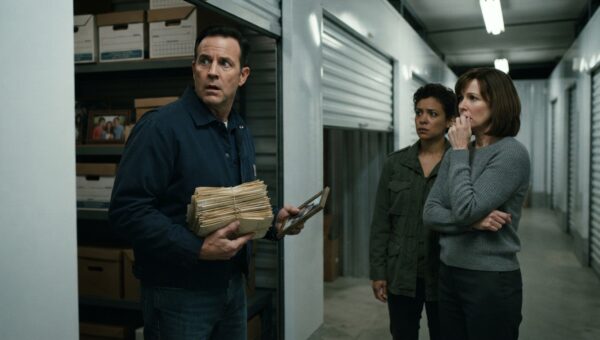
The house was dead quiet except for the hum of the old refrigerator upstairs. I went through box after box of tax returns, canceled checks, and handwritten ledger books from nineteen-ninety through two-thousand. Around three in the morning, my fingers brushed against a stiff cardboard envelope tucked into the back of a ledger labeled *1994 Farm and Home Expenses*. Inside were the original carbon copies of the loan payment stubs, matching the exact dates and amounts of the $570,000 draw that Richard was trying to claim as his own purchase money. Every single slip was stamped with my father’s initials and signed by Mother in her neat, looping cursive.
And right underneath those stubs was a small, gray cassette tape with a handwritten label in Mother’s hand: *For Eleanor. If Richard tries it.*
The probate courtroom two weeks later smelled like floor wax and wet wool from the rain outside. Judge Harrison sat behind a high mahogany bench, looking bored and tired as he shuffled through our thick briefs. Richard sat at the plaintiff’s table in a sharp navy suit, whispering something to his young attorney who looked like he had graduated law school five minutes before the hearing started. I sat beside Attorney Harris, my fingers resting on the small cassette player Harris had borrowed from the county archives to make sure it could patch into the courtroom audio system.
Richard’s attorney stood up first, smoothing down his tie with a practiced flick of his wrist. “Your Honor, we present clear, physical evidence of a purchase arrangement executed in nineteen-ninety-four. Mr. Richard Vance deposited five hundred and seventy thousand dollars directly into the property’s lien clearance account, establishing his rightful claim as the sole purchaser of the disputed equity. The respondent has produced no documentation to counter these original bank deposit slips.”
He held up the yellowed slips like a fisherman showing off a prize trout. Richard sat back in his chair with a smug, self-satisfied look, his arms crossed over his chest just like he had back in Mother’s study.
Judge Harrison peered down over his half-moon glasses. “Mr. Harris, what do you have to say to this? Half a million dollars in deposit slips is fairly direct physical proof of capital injection.”
Attorney Harris stood up slowly, leaning his weight on his old wooden cane. He didn’t raise his voice. He didn’t need to. “Your Honor, the deposit slips are entirely accurate as to where the physical paper went, but they represent a bank loan secured against my deceased client’s own property equity to bail out the petitioner’s failing business enterprise. We enter into evidence the original loan origination documents from October nineteen-ninety-four, signed by Margaret and Arthur Vance, alongside thirty years of canceled checks proving that every single cent of the amortization schedule was paid from the parents’ joint account, not from the petitioner’s funds.”
Harris handed the heavy manila folder up to the bailiff, who carried it to the bench. Judge Harrison flipped open the aged pages, his eyebrows drawing together as he scanned the signatures and the bank stamps.
Richard’s face lost some of its color. He leaned forward, whispering urgently to his lawyer.
“That’s not all, Your Honor,” Harris continued, his voice steady and dry. “The petitioner claims this was an unwritten purchase agreement. But Mrs. Margaret Vance was thorough. Before her passing, she left a formal deposition recorded on magnetic tape, detailing the exact nature of the transaction and her explicit intent regarding her children.”
Harris pressed a button on the portable recorder sitting on the defense table.
The courtroom was so quiet you could hear the rain tapping against the tall stained-glass windows outside. Then Mother’s voice filled the room, clear and steady, cutting through the stale air with the unmistakable authority she had carried her entire life.
“If you’re listening to this, Richard is trying to pull his fast ones again,” Mother’s voice said from the small speaker, sharp and dry as autumn corn husks. “I gave him that first fifty percent share of the deed back in ninety-four as an outright gift of gratitude for helping us secure the bank signature during the crisis, but he never paid a thin dime toward that loan. I paid every cent of that mortgage with my own hand from the farm account. The remaining fifty percent belongs entirely to Eleanor and her boys, Leo and Sam. Let him try to take what isn’t his in front of God and the court.”
The tape clicked off, leaving a ringing silence in the room that felt heavier than lead.
Richard stood up half out of his chair, his face dark with fury. “That’s hearsay! That tape was made without my presence, “
“Sit down, Mr. Vance,” Judge Harrison said, his voice like the crack of dry ice. He didn’t look at Richard; he kept his eyes fixed on the financial ledgers and the loan papers spread across his desk. He spent a full minute turning the pages, examining the canceled checks from nineteen-ninety-five, nineteen-ninety-six, all the way through the final payoff in two-thousand-and-four.
When the judge finally looked up, his expression was cold enough to freeze water.
“The petition brought by Richard Vance is dismissed with prejudice,” Judge Harrison said, striking his gavel once against the wooden block with a sharp, final crack. “The court finds that the five hundred and seventy thousand dollar transaction was a collateral loan secured by the decedents against their own property, and that the petitioner holds no claim beyond the initial fifty percent gifted by his mother during her lifetime. The remaining fifty percent share of the estate is confirmed in full legal standing to Eleanor Vance and her designated heirs, Leo and Sam. Furthermore, the petitioner is ordered to cover all reasonable estate legal fees incurred by the respondent.”
Richard sat down hard in his chair, his mouth opening and closing like a landed fish. His lawyer was already gathering his folders into his briefcase without looking at him.
Outside the courthouse, the rain had stopped, leaving the pavement shining under a pale, watery late-afternoon sun. Richard caught up with me near the bottom of the limestone steps, his breath coming fast and his tie slightly crooked.
“Ellie, come on,” Richard said, his voice dropping into that wheedling tone he used when he wanted a favor from Dad back in the old days. “We’re family. We can settle this without the state taking a bite out of the legal costs. Let’s just split the difference on the appraisal, “
I didn’t stop walking. I didn’t even look at him. “The judge made his ruling, Richard. Talk to your lawyer about the legal fees.”
He reached out to grab my forearm. “You’re being a cold bitch about this, Ellie. Mother wouldn’t have wanted us fighting like this.”
I pulled my arm away and turned to face him, looking right into his panicked, small eyes. “Mother left a tape recording, Richard. She knew exactly what you were.”
He dropped his hand, his mouth working silently as I turned my back on him and walked toward the car where Leo and Sam were waiting by the open door.
An hour later, I was sitting on the wooden back terrace of the estate with my two boys. The sun was dipping below the tree line across the north pasture, throwing long golden light across the weathered boards of the porch where my father used to sit and clean his boots every Sunday afternoon. Sam handed me a cup of lukewarm tea in one of Mother’s old blue ceramic mugs, the glaze chipped right along the rim where she had dropped it back when we were kids.
In my lap sat Mother’s handwritten garden notebook, the pages stiff and smelling of dried lavender and old ink. The property was ours now, legally and permanently secured, just like she had planned it all along. I took a long, deep breath of the cool evening air, listening to the crows settling into the oak trees down by the creek, and for the first time since the funeral, my shoulders finally stopped aching.