PART1
My husband, Ernest, died on a gray Tuesday. I buried him in his white linen shirt, his wooden rosary between his stiff fingers, and the folded photograph from our thirtieth anniversary trip to Key West tucked into his breast pocket. I cried for seven days straight in that empty house until my ribs ached. On the eighth morning, I went online and bought a ticket for a continuous, three-hundred-and-sixty-five-day world voyage on a mid-sized passenger liner sailing out of PortMiami.
It was not a whim. It was not grief making me reckless. It was raw survival.
For forty years, I had served as the unpaid backbone of everyone else’s life. Wife, cook, nurse, driver, round-the-clock babysitter, bank, and emotional sponge. When Ernest suffered his first stroke six years ago, I sold my mother’s heirloom pearl and diamond earrings just to cover the uncovered physical therapy bills. When our son, Austin, was let go from his logistics job three years back, I emptied eleven thousand dollars from my personal savings so his mortgage wouldn’t lapse. When Austin’s wife, Chloe, had their daughter, Mia, eighteen months ago, I gave up my own bed and slept on their lumpy pull-out sofa for four months straight just so Chloe could sleep through the night.
None of that bought me a shred of basic dignity. On the afternoon of Ernest’s funeral, Austin did not hug me.
He did not ask how I was holding up after sitting by his father’s hospice bed for three weeks. He stood by my kitchen counter, looked around at the solid pine cabinets, and said, “Mom, have you thought about what you are going to do with the house? It is way too big for one person, and Chloe and I really need the yard for Mia.”
I still had cemetery mud on the heels of my black pumps. I did not say a word. I knew that if I opened my mouth, forty years of swallowed silence would turn into a scream I could never take back.
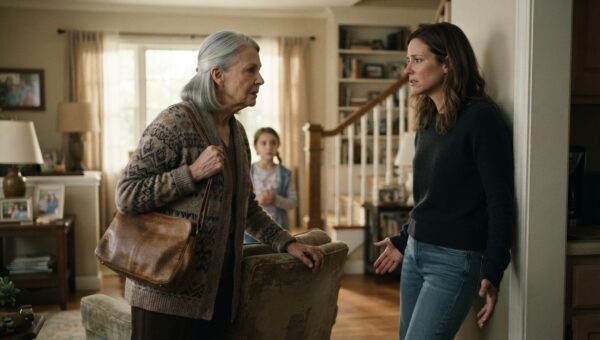
Exactly one week later, at half past four on a sweltering Monday afternoon, my front door swung open without a knock.
Austin had used his emergency key. Behind him walked Chloe, wearing oversized sunglasses pushed up into her highlighted hair. Austin was carrying two plastic pet carriers, and Chloe had a third, metal wire crate tucked awkwardly under her arm.
Chloe didn’t look at my face. She didn’t say hello. She just set the metal crate down hard on my clean wool rug, slid the two plastic carriers right beside it, and pulled a folded sheet of yellow legal paper out of her tote bag.
“There are your instructions, Martha,” Chloe said, tossing the paper onto my entryway table. “The French bulldog needs his prescription ear drops twice a day, or he scratches until he bleeds. The cockatoo screams if you do not cover the cage by eight sharp, and the cat only eats the wet food in the green cans. We leave for Cabo on Thursday, but the house painter is coming tomorrow morning, so they have to stay here starting now. Austin will bring the dog food sacks over after work tomorrow.”
Austin stood in the doorway, checking a text on his phone. He did not look at the framed portrait of his father that still had a black ribbon draped over the corner.
“Austin,” I said, my voice barely above a murmur. “I just buried your father nine days ago.”
“Mom, please don’t start,” Austin sighed, not even glancing up from his screen. “You are home all day anyway. It is not like you are doing anything. Helping us out saves us eight hundred dollars in boarding fees. We really need this trip after how stressful Dad’s decline was on everybody.”
I stood there, staring at the three cages on my floor. Inside the plastic crate, the bulldog let out a wet, labored snort. The white cockatoo shifted on its wooden perch, feathers rustling.
My mourning had officially ended. In its place came a clear, cold calm that I had never felt in my entire life.
“All right,” I said quietly.
“Thanks, Mom,” Austin said, turning toward the door. “Make sure you pick up the mail on Thursday, too. I had our packages forwarded here while we are in Mexico so porch pirates don’t grab them.”
They walked out, pulling the door shut behind them without looking back.
They thought I was trapped. They thought I was the same soft, guilty mother who would stay right where they left me, scrubbing dog drool off baseboards and watering their plants while they drank margaritas on a Mexican beach.
What Austin did not know was that the house was entirely in my name. The deed had been cleared of the mortgage five years earlier, and the title had been transferred solely to me through our family trust when Ernest went into hospice. Austin also did not know that three days after Ernest died, I had signed a full-service, twelve-month lease agreement with a corporate housing agency that placed traveling surgical nurses at the regional medical center four miles away.
The lease was set to begin on Friday morning.
The ship, the *Pacific Solitude*, was scheduled to cast off from Terminal B in Miami at six o’clock on Thursday morning.
By dawn, when that ship pulled away from the dock and into the open Atlantic, my absence was not just going to surprise them. It was going to dismantle their entire comfortable reality.
PART 2
The next forty-eight hours were a quiet, methodical blur.
First, I dealt with the animals. I did not neglect them, but I was not going to be Chloe’s unpaid kennel maid. On Tuesday morning at nine, I loaded the three crates into the back of my station wagon and drove straight to the luxury pet resort two miles from their subdivision. I handed the manager Chloe’s detailed yellow legal pad, along with their names and home address.
“My son and daughter-in-law are dropping off their credit card for the stay when they leave for the airport on Thursday,” I told the desk attendant calmly. “They asked me to bring the animals ahead of their painters.”
The facility took the dog, the cat, and the cockatoo without hesitation. They had Austin’s contact information on file from two years back. The bill would run Austin and Chloe nearly two hundred dollars a day, and it was tied directly to their account.
Next, I drove to the corporate leasing office downtown. I handed over three sets of house keys, the alarm codes, and the final walk-through sign-off sheet. The agency had already wired the first month’s rent of thirty-four hundred dollars, plus a full security deposit, directly into my newly opened, private checking account at a national bank Austin had no access to. Under the terms of the corporate lease, the house was strictly private property. Any unauthorized visitors, relatives, or trespassers would be removed immediately by private security and the local sheriff’s department.
On Wednesday, I spent my final afternoon packing.
I did not take much. Two sturdy suitcases filled with practical wash-and-wear clothes, three pairs of comfortable walking shoes, my medication, my passport, my tablet, and the silver-framed picture of Ernest smiling on the beach in Key West. Everything else in the house remained exactly as it was, protected under the lease inventory.
At four in the afternoon on Wednesday, Austin texted me: *Did you bring the packages inside? A box from Sephora and my new golf shoes should have arrived today.*
I did not reply.
Instead, I walked down to the end of my driveway and unscrewed the metal numbers from the brick mailbox post. I placed a temporary mail-forwarding order at the post office that routed all my personal mail to a secure international digital scanning service. For Austin’s forwarded packages, I simply wrote “Return to Sender — Not at This Address” across the shipping labels and left them in the outgoing bin at the local depot.
By seven that evening, a private car service picked me up from my empty curb. As the car pulled onto the highway toward Miami, I looked back at the house Ernest and I had lived in for thirty-two years. For the first time since his heart monitor stopped, the crushing weight in my chest lifted. I did not feel guilt. I felt the clean, crisp air of a woman who had finally paid every debt she ever owed, and several debts she never should have carried.
I boarded the ship at seven on Thursday morning.
My cabin was small, with a narrow balcony overlooking the water, a neat desk, and a queen bed with crisp white sheets. The engines hummed deep below deck, a low, steady vibration that felt like a heartbeat.
At eight-fifteen, the horn blew. The heavy ropes dropped into the water, and the liner slowly eased away from the concrete pier.
Right as the Florida shoreline began to shrink into a flat gray line, my phone lit up on the nightstand.
It was Austin.
I sat down on the edge of the bed, took a slow breath, and answered.
“Mom?” His voice was frantic, breathless, and sharp with fury. “Where the hell are you? We just got to your house to leave our car in the garage before our airport shuttle comes. There is a moving van in your driveway, and two strange women in scrubs are carrying boxes through your front door! They told me they live here!”
PART 3
I leaned back against the headboard, listening to the muffled roar of the ocean through the balcony door.
“They do live here, Austin,” I said evenly. “They signed a twelve-month lease.”
There was a dead silence on the line, followed by the sound of Chloe shrieking in the background. Austin’s breathing turned ragged.
“What are you talking about? A lease? What about our car? What about our flight to Cabo? Our shuttle leaves in twenty minutes!”
“You should probably call an Uber to the long-term airport parking lot,” I told him. “And you cannot park in my driveway anymore. If your car is on the grass when the leasing manager does her ten o’clock inspection, she will have it towed.”
“Are you out of your mind?” Austin roared. The panic was breaking through his anger now. “Where are the dogs? Where is Chloe’s cockatoo? Mom, Chloe is having a panic attack right on your sidewalk! Did you lock the animals inside with strangers?”
“They are at the Pet Spa on Oak Ridge,” I said. “I dropped them off Tuesday morning with Chloe’s instruction sheet. You can settle the bill with them directly when you get back from Mexico. Or before you leave, if you want them to keep them.”
“That place costs two hundred dollars a night!” Austin screamed. “We don’t have twelve hundred extra dollars for boarding! That was our spending cash for the resort! Why did you do this? Where are you right now?”
“I am on a boat, Austin.”
“What boat? Did you go to the lake?”
“No,” I replied, watching the Miami skyline dissolve into the mist. “I am on a cruise ship. We just cleared the harbor.”
“Turn around and come back!” he demanded, his voice cracking into that spoiled, entitled pitch he had used since he was sixteen years old. “You can’t just leave! Who is watching Mia on Tuesdays and Thursdays? Chloe’s mother works full-time! We already budgeted my salary around you babysitting! Who is going to watch the baby?”
“You and Chloe will,” I said. “She is your daughter.”
“Mom, you are being completely selfish! Dad hasn’t even been dead two weeks! How could you do this to your family?”
“Your father spent six years dying, Austin,” I said, my voice steady, completely drained of the old urge to appease him. “You came by once a month for twenty minutes, mostly to ask if we could co-sign your truck loan. On the day we put him in the ground, you asked me when you could have my house. On Monday, your wife threw three dirty animal cages at my feet and gave me a chore list. You didn’t want a mother. You wanted an unpaid servant who also held title to real estate.”
“Mom—”
“Do not interrupt me,” I said, and for the first time in his life, my son actually stopped talking. “The house is rented for the next year. The monthly income covers my cabin and my medical insurance. My bank accounts have been moved. The local authorities have a copy of the corporate lease, so if you break a window trying to get in, you will be arrested for trespassing on commercial tenants. Have a safe trip to Cabo, Austin.”
“Mom, wait! When does your cruise get back? Next Sunday?”
“September of next year,” I said.
I tapped the red button on the screen and hung up.
Ten seconds later, the phone began to buzz again. Text messages started flooding in, alternating between furious threats from Chloe and pleading voice memos from Austin. I didn’t open a single one. I went into the phone’s settings, switched off the primary cellular line, and connected to the ship’s quiet satellite Wi-Fi network.
Then I walked out onto my private balcony.
The salt air hit my face, warm and heavy. Below me, the deep blue water churned into white foam as the massive ship pushed southward toward the Caribbean.
ENDING
Over the next four months, the news from home came in small, manageable trickles through my sister, Brenda, who called me every two weeks from her home in Ohio. Brenda was the only person who had my digital cabin line.
Austin and Chloe never made it to Cabo.
They spent their flight departure window arguing on my front lawn until the corporate leasing director arrived with two private security guards. When Austin refused to move his SUV, the agency called a flatbed wrecker and had it hauled to an impound lot. Between the impound fees, the last-minute boarding balance at the luxury pet resort, and the non-refundable airline tickets they missed, they took a hit of nearly four thousand dollars in a single afternoon.
Without my free, five-day-a-week childcare, their house of cards collapsed under its own weight.
Chloe had to give up her part-time boutique job because infant daycare in their county cost almost sixteen hundred dollars a month, which was more than she brought home. Austin was forced to pick up weekend dispatch shifts to cover the difference on their oversized mortgage and his truck note. They tried to break the lease on my house by claiming I was mentally incompetent when I signed it, but my lawyer, whom I had retained before Ernest passed, promptly produced the clean medical evaluation I had quietly completed at the clinic two days before my departure.
The corporate lease stood firm. The rent continued to hit my private account like clockwork on the first of every month.
As for me, the ship carried me through places I had only ever seen in library books and travel magazines Ernest and I used to flip through at the doctor’s office.
In November, I drank black tea on a shaded terrace overlooking the harbor in Cartagena. In January, I watched the sun set behind the glaciers in southern Chile, wrapped in a thick wool blanket with a cup of hot broth in my hands. In March, I stood on the deck as we crossed into the quiet, boundless expanse of the South Pacific, the water so dark and clear it mirrored the stars at night.
I lost nine pounds of the nervous, exhausted weight I had carried during Ernest’s long illness. My sleep returned, deep and uninterrupted. I made friends—two retired teachers from Wisconsin and a widowed nurse from Wales who understood what it meant to sit beside a hospital bed until there was nothing left of you. We ate dinner together, took long walks along the promenade deck, and never once spoke about obligation or family guilt.
Austin sent an email to my scanned mail service around Easter.
It was five lines long. No insults this time. No demands. Just a picture of Mia walking in the grass, and a short note: *We had to sell the truck. Chloe is working from home now. Things are tight, but we are managing. We miss you. I am sorry about the way we acted after Dad died.*
I looked at the photograph of my granddaughter for a long time. She had Ernest’s rounded chin and wide, questioning eyes.
I replied with two sentences: *I am glad you are learning to manage. I will see you in the fall.*
I closed my laptop and stepped back out into the Mediterranean morning, where the coast of Spain was just beginning to rise out of the blue horizon.
I had given my family forty years of my life. I had carried their grief, paid their bills, and cleaned up their messes until my own soul was hollowed out. Now, with the sea wind in my hair and the sun warm on my skin, I was finally living the only life that had ever truly belonged to me.