PART1
The certified letter arrived on a Tuesday morning in late February, tucked between a flyer for water softener systems and the electric bill. I had soil under my fingernails and damp knees on my denim gardening jeans when I walked to the mailbox at the end of the driveway.
Inside the envelope was an official notice from the Whispering Pines Homeowners Association, signed personally by Evelyn Vance.
According to the letter, my corner lot was in persistent violation of Section 4, Paragraph B of the community covenants: failure to maintain an approved uniform turf grass lawn.
The itemized ledger showed eighty-four consecutive days of accrued penalties at one hundred dollars a day, totaling exactly $8,400. At the bottom, printed in bold legal block letters, was an additional $1,200 administrative and legal lien filing fee. If the balance of $9,600 was not remitted within thirty calendar days, along with a signed contract from an approved commercial contractor to strip my front and side yard down to bare dirt and lay uniform St. Augustine sod, the association would initiate formal foreclosure proceedings on my home.
I sat down on the front porch steps, the paper trembling in my hands.
Whispering Pines was supposed to be the quiet place David and I chose for our retirement after thirty-four years of teaching high school in Ohio. I taught biology, and David taught tenth-grade earth science. When we bought this corner lot in Sarasota County six years ago, the yard was an expanse of dying grass, scorched yellow under the Florida sun and saturated with chemical fertilizers that washed straight into the storm drains every time a summer squall rolled through.
After David was diagnosed with aggressive pancreatic cancer four years ago, we spent his good days outside. We dug out the dying turf by hand, shovel by shovel. We built raised berms, brought in organic mulch, and planted native beautyberry, blanket flower, dune sunflowers, and rows of aquatic milkweed beneath the canopy of two heritage live oaks that were already standing long before this subdivision was surveyed. It was our sanctuary. It became David’s project when his world shrank down to doctor appointments and weekly blood work. He placed the heavy coquina stones around the perimeter himself, resting between wheelbarrow loads.
“When I’m gone, Sarah,” he told me one evening while we watched zebra longwing butterflies gather on the firebush blossoms, “you won’t have to push a mower in this heat. You’ll just have to sit here and listen to the birds.”
David passed away fourteen months ago. Every single bloom in that yard was a living thread tied directly to his memory.
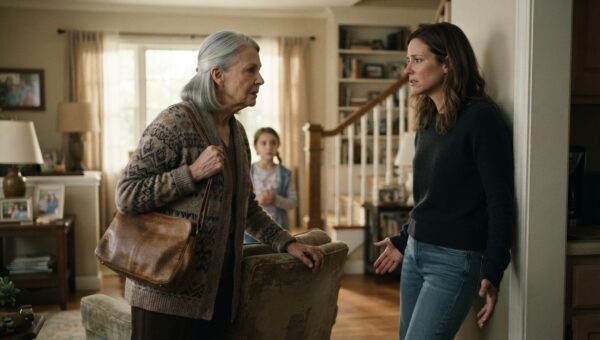
Evelyn Vance lived three doors down. She was sixty-seven, a retired corporate paralegal from New Jersey who walked the sidewalks every morning at seven sharp with a yellow clipboard and a digital camera hanging from a strap around her neck. She ran Whispering Pines with an iron fist, convinced that uniformity was the only thing standing between our neighborhood and property value ruin. To Evelyn, every yard needed to look like an unnatural sheet of golf course carpet, cut to precisely three and a half inches.
At first, I tried to handle it the way I thought good neighbors handled disagreements. When the first warning letters started showing up three months earlier, I baked a loaf of zucchini bread, walked down to Evelyn’s house, and knocked on her door.
“Evelyn,” I said gently when she answered, holding the warm plate out between us. “My yard isn’t neglected. It’s a drought-tolerant native pollinator habitat.
The live oaks need these groundcovers to protect their root systems, and David and I spent years establishing it. It cuts down on neighborhood water usage by nearly seventy percent.”
Evelyn did not take the bread. She adjusted her glasses, crossed her arms, and looked right past me toward the street.
“Rules are rules, Sarah,” she said, her voice flat and completely devoid of warmth. “This is an upscale planned community, not an overgrown swamp preserve. Your weeds look like a vacant lot, and they hurt resale values for everyone on this street. You agreed to the deed restrictions when you bought here. Either you sod that front yard with St. Augustine grass, or the board will take legal remedies.”
“It isn’t weeds,” I pleaded, feeling an ache rise in my throat. “It’s David’s garden. You know what we went through.”
“Personal circumstances do not override the bylaws,” she replied, and closed the door firmly in my face.
I thought my appeals to her humanity would soften her. That was my mistake. I treated Evelyn like a reasonable neighbor who simply didn’t understand ecology, failing to see that she didn’t care about the plants at all. She cared about dominance. And now, she had put a clock on my home.
PART 2
The panic lasted until midnight. After that, the biology teacher took over.
I spent thirty years teaching young people that science does not run on opinion; it runs on observable facts and written documentation. If Evelyn wanted to use administrative paper to intimidate me out of my home and bulldoze David’s sanctuary, I was going to fight her with paper she could not ignore.
The next morning, I took my property deed, our original HOA covenant packet, and every violation letter Evelyn had ever mailed me, and I drove down to the Sarasota County Agricultural Extension Office at the University of Florida research annex.
A young extension agent named Marcus looked through my file, examined the photos of my garden, and let out a long, quiet whistle.
“She sent you an $8,400 fine for this?” he asked, tapping a picture of my blooming coreopsis and native milkweed.
“She says it violates the HOA landscaping rule,” I said. “They’re threatening a lien on my house.”
Marcus stood up and walked over to a metal filing cabinet. “Mrs. Miller, Florida law doesn’t just protect what you planted. It explicitly forbids homeowners associations from doing what they are doing to you right now.”
He pulled a thick folder from the drawer and slid a document across the desk. It was Florida Statute 373.185, commonly known as the Florida-Friendly Landscaping statute. Marcus highlighted two specific sentences in bright yellow:
*A deed restriction or covenant may not prohibit or be enforced so as to prohibit any property owner from implementing Florida-Friendly Landscaping on their land, or create any requirement that is contrary to the implementation of Florida-Friendly Landscaping.*
“The state enacted this law specifically to protect the aquifer and stop subdivisions from wasting millions of gallons of potable water on turf grass,” Marcus explained. “If your landscape meets the nine principles of Florida-Friendly Landscaping, their covenants are legally void regarding your yard. And looking at your plant list, you’re not just compliant. You’re a textbook example.”
Over the next five days, Marcus conducted a certified on-site landscape audit of my property. He measured the root protection zone around my two heritage live oaks, documented the micro-irrigation drip lines David had installed, and cataloged forty-two distinct native Florida plant species. He submitted the audit directly to the Florida Department of Environmental Protection, which issued an official State Compliance Certification for my property, complete with a state registry number and an embossed gold seal.
Armed with that certification, I went down to the county clerk’s office and pulled the public records for Whispering Pines. I wanted to see exactly how and when Evelyn had amended the landscaping bylaws to add the mandatory St. Augustine sod requirement she was quoting against me.
What I found made my hands shake with cold anger.
The amendment mandating full sod replacement had been filed two years ago. But when I pulled the stamped board minutes from that specific October meeting, only two board members had signed in. The Whispering Pines bylaws strictly required a four-person quorum to pass any architectural rule change. Evelyn had simply drafted the rule, signed it herself as president, and filed it with the county recorder without a legal vote.
Even worse was the vendor registry. Every fine letter Evelyn sent me included a flyer for an “approved community vendor” named Suncoast Green Turf Management.
I looked up the corporate registration for Suncoast Green Turf Management on the Florida Division of Corporations database.
The registered owner and primary officer was a man named Bradley Vance.
Bradley was Evelyn’s thirty-eight-year-old son.
A search of public civil court records showed that Bradley’s commercial landscaping firm was currently facing two separate supplier liens for non-payment on bulk sod deliveries, totaling over sixty thousand dollars. Evelyn wasn’t just enforcing arbitrary rules. She was using HOA fines to bully older residents into hiring her son’s failing company to strip their properties.
PART 3
The Whispering Pines annual general meeting was scheduled for the first Thursday of March. It was held in the community clubhouse, with roughly seventy residents in attendance and the association’s retainage attorney, a man named Arthur Campbell, sitting at the head table next to the board.
Evelyn sat in the center of the dais, wearing a pastel blazer, her yellow notepad resting squarely in front of her.
“Before we open the floor to new business,” Evelyn announced into the microphone, her voice carrying cleanly across the packed room, “I want to remind everyone that the board is continuing to aggressively enforce covenant compliance. Uniformity protects everyone’s equity. Unchecked overgrowth and neglect will be met with immediate legal action, including liens and foreclosures where necessary.”
Several neighbors shifted uncomfortably in their folding chairs. Evelyn looked right down the center aisle, her eyes locking onto mine.
I stood up from my seat in the third row. I wore my best church dress, my shoulders straight, holding a manila folder containing six identical bound packets.
“I’d like to address that item under Section 6 of our meeting agenda, Madam President,” I said clearly.
Evelyn’s mouth tightened. “Sarah, individual violation disputes are handled privately with the management company, not during the general member meeting. You are out of order.”
“I am not out of order,” I replied, walking steadily toward the dais. “I am addressing association compliance with Florida state law and a pending $9,600 fraudulent lien against my property.”
“Mr. Campbell,” Evelyn snapped, turning to the attorney beside her. “Instruct the resident to sit down.”
Arthur Campbell was an older lawyer with tired eyes. He adjusted his reading glasses, looked at me, and then glanced at Evelyn. “If the matter involves a pending lien filed by this board, the homeowner has a statutory right to speak to the board before formal litigation commences. Go ahead, Mrs. Miller.”
I walked up to the table and placed five of the packets in front of the board members, handing the sixth directly to Mr. Campbell.
“On February twenty-second, Evelyn Vance issued an intent to lien against my home for $9,600, citing failure to install mandatory sod,” I told the room, turning slightly so my voice reached every neighbor sitting behind me. “I have in my hands an official audit from the University of Florida Agricultural Extension Office and a certified letter from the Florida Department of Environmental Protection.”
I pointed directly to the first tab in Mr. Campbell’s packet.
“Under Florida Statute 373.185, no deed restriction or homeowners association rule in the state of Florida may prohibit, restrict, or penalize any resident for installing Florida-Friendly native landscapes. Every dollar of the $8,400 fine issued against my property is an explicit violation of state law.”
Evelyn’s face turned an ugly shade of crimson. “That statute does not apply to private contracts signed under deed restrictions! Our covenants predate that interpretation!”
“The statute expressly voids any covenant that contradicts it, Evelyn,” Mr. Campbell interrupted quietly, his eyes scanning the state certification papers. His expression had gone completely still. “She’s entirely correct. The legislature amended that protection specifically to eliminate HOA overrides. We cannot enforce sod mandates against a certified native installation.”
A murmur rippled through the clubhouse crowd.
“That’s only the first issue,” I said, my voice steady and firm. “Tab two contains the certified county minutes from the October 2024 meeting where Mrs. Vance enacted the sod mandate. Whispering Pines bylaws require four directors present for a quorum. Only two were present. The rule was never legally enacted.”
Several residents began talking at once. A neighbor from across the street, a retired postal worker named George, leaned forward in his seat. “Wait a minute, was that rule never even voted on?”
“And tab three,” I continued, looking directly into Evelyn’s eyes, “is the corporate registry for Suncoast Green Turf Management, the exclusive vendor Evelyn Vance mandated every non-compliant homeowner hire to replace their yards. The owner is Bradley Vance. Mrs. Vance has been levying illegal daily fines while steering thousand-dollar sod replacement jobs directly to her son’s business without disclosing a direct conflict of interest to this board or the membership.”
A loud gasp cut through the room.
Evelyn slammed both palms down on the table, standing up so fast her folding chair scraped violently against the laminate floor. “This is an outrageous personal attack! You are slandering my family in an open meeting, Sarah!”
“I am not slandering anyone, Evelyn,” I said, keeping my hands resting calmly at my sides. “I am reading directly from public records. And Mr. Campbell has every single certified page in front of him.”
Mr. Campbell took off his glasses and looked at Evelyn. His face was pale. When he spoke, his voice was tight and completely drained of patience.
“Meeting is temporarily recessed,” he said into his microphone. “Board members, with me into the manager’s office immediately. Now.”
ENDING
The closed-door meeting lasted forty-five minutes.
The neighbors in the clubhouse didn’t leave. They stayed in their seats, talking in angry, energetic clusters. George walked over to me, shook my hand, and apologized. “Sarah, we had no idea. She sent two letters to my house last month threatening fines over my garden bed. We thought she had the legal right.”
When the office door finally opened, Mr. Campbell walked out alone and took the microphone at the front table. Evelyn was nowhere to be seen.
“For the record,” Mr. Campbell announced, speaking slowly and deliberately, “the board has formally voted to rescind all outstanding fines, notices, and legal lien actions against the property of Sarah Miller, effective immediately. The $8,400 fine and the $1,200 administrative fee are canceled with prejudice.”
A round of applause broke out in the room, scattered at first, then loud and sustained.
“Furthermore,” Mr. Campbell continued, “Evelyn Vance has tendered her immediate resignation from the board of directors and all association committees. The board has initiated a comprehensive review of all architectural guidelines to ensure full, transparent compliance with Florida Statute 373.185, and any vendor agreements associated with prior enforcement are officially terminated.”
I didn’t stay for the rest of the meeting. I collected my manila folder, walked out into the cool evening air, and made the short walk down the street to my corner lot.
The neighborhood was quiet. The streetlights cast long, soft shadows across the coquina stones David had carried, resting peacefully beneath the broad branches of our live oaks.
I walked past the gate and sat down on the cedar bench David had built for my sixtieth birthday. Around me, the night air was sweet with the scent of wild coffee blossoms and damp mulch. A faint breeze stirred the goldenrod and milkweed leaves, carrying the soft chirping of tree frogs hidden in the foliage.
For three months, fear had lived in my chest like a lead weight, waking me up in the early hours of the morning, making me wonder if I would have to sell the home where David spent his last days just to escape a tyrant with a clipboard.
I leaned back against the weathered cedar boards and let out a long, slow breath.
The garden was safe. The roots ran deep into the Florida soil, protected by the law of the state and the stubborn love of two retired teachers who knew how to dig in their heels. I rested my hand on the rough armrest David had sanded smooth with his own hands, looked out over the thriving sanctuary we built together, and knew that as long as I was breathing, nobody was ever going to tear it down.