The package arrived at the parish office on a rainy Tuesday afternoon while I was wiping down the laminate counter with a damp sponge. Father Thomas had left it on the edge of my desk alongside three bundles of weekly bulletins that still needed rubber bands. It was wrapped in heavy brown paper tied with cheap twine, the kind of parcel that came through the postal drop twice a week carrying donated hymnals or boxes of candles from the supply house over in Bakersfield.
I didn’t think much of it until I picked it up. It had that distinct, stale smell of old paper and dry sandwich crusts that always seems to settle into the bindings of books kept too long in damp basements. My fingers caught the rough edges of the cardboard corner as I snipped the twine with my desk shears.
Inside rested a single hardbound book with green buckram cloth stripped bare at the spine. The title was stamped in faded gold lettering that had nearly worn away entirely. When I opened the front cover, my own handwriting stared back at me from the white flyleaf, written in the hurried, blocky cursive I used back when my daughter was seven years old.
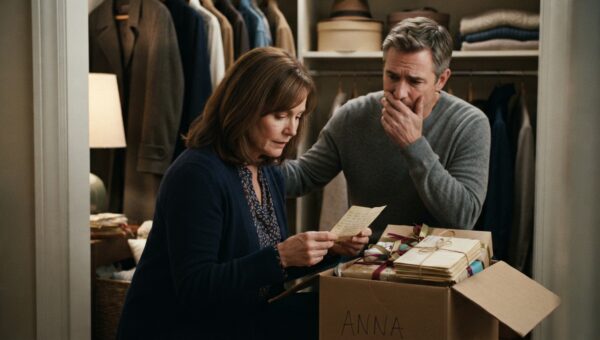
Tucked right into the middle pages was a crisp, folded five-dollar bill and a square piece of lined tablet paper covered in precise, careful handwriting. My thumb brushed the paper, and the years between that third-grade classroom and my seventy-two-year-old hands simply dissolved into the rainy afternoon air.
Back then, I was twenty-nine years old and living in a cramped rental house on the south side of town where the floorboards groaned every time the water heater kicked on. My husband had left six months prior with two suitcases and the title to our station wagon, leaving me to figure out how to pay the gas bill on what I made working the front desk at the dry cleaner down on Chester Avenue.
Every morning before the sun cleared the telephone poles, I stood at our Formica counter packing my daughter’s school lunch. I cut the bread thin, spread a skim of yellow mustard, and added whatever sliver of meat was left in the wrapper from the Sunday roast. And every single day, I cut a second sandwich.
I wrapped that second sandwich in a separate piece of wax paper and slipped it into a plain brown bag right alongside an apple or a bruised plum.
I didn’t talk about it with my daughter, and I certainly didn’t talk about it with the school administration. I just knew what I saw when I volunteered to help chaperone the afternoon recess period on alternating Thursdays.
The boy sitting in the wooden desk directly behind my daughter never went to the cafeteria with the rest of the children. His name was Julian Vance, though most of the teachers just called him by his last name when they handed out spelling worksheets. He always wore shirts that smelled faintly of kerosene and old laundry left too long in a wet heap, and his hair was cut in choppy, uneven patches that looked like they had been trimmed with kitchen shears in front of a bathroom mirror.
He sat with his hands folded flat on his laminate desktop while the other kids unwrapped their foil-wrapped ham and cheese or traded little bags of potato chips.
He stared straight ahead at the chalkboard with a hollow, sunken look in his eyes that I recognized instantly because I had seen it every time I looked in our pantry mirror during those first terrifying months after my husband cleared out our checking account.
The first time I quietly set the extra brown paper bag on the corner of his desk during morning homeroom, he didn’t look up at me. He just froze, his fingers tightening around a broken yellow pencil until his knuckles turned white.
I didn’t say anything grand or motherly. I just tapped the corner of the bag with my fingernail and kept walking down the aisle toward the supply closet.
That routine lasted for six months straight. Eighteen dollars a week out of a budget that didn’t have eighteen cents to spare for luxuries. I stopped buying my own morning coffee at the gas station and started walking the four blocks to work instead of taking the bus, convincing myself that the exercise was good for my circulation.
Julian ate every crumb of those sandwiches without ever making a sound about it. He never left a wrapper behind, either. He folded the wax paper neatly and tucked it into the side pocket of his canvas binder before the afternoon bell rang.
The day before he vanished from the school district entirely, he slid a heavy, worn library book across my kitchen table when I dropped off the kids’ coats. It was an old edition of American wildlife tales with the library stamps blacked out with heavy black marker.
He didn’t look me in the eye when he handed it to me. He just shoved it toward my elbow and muttered three words that stayed lodged in my memory for more than four decades.
“Please keep it safe.”
Two days later, his desk was empty. The teacher told the class that Julian’s family had moved up north toward Fresno, but everyone in the neighborhood knew the truth of it. The county welfare inspector had finally come out to the house on Elm Street after the utility company shut off the gas for nonpayment. The house was boarded up by the end of the week, and Julian simply dropped off the edge of the earth.
I kept that library book in the bottom of our cedar chest through all the years my daughter grew up, through her high school graduations, through my second job at the bakery, and right up until I retired and started volunteering down at the parish office on Elmira Street.
Last Tuesday, that same book found its way back to me through the mail slot, accompanied by the kind of return address slip only a municipal archivist could generate.
I unfolded the lined piece of paper resting inside the front cover and read the first line out loud to the empty parish office.
“Mrs. Alvarez, you saved me when everything else was falling apart.”
The handwriting was steady and deliberate, written with a fine-point fountain pen that didn’t bleed through the cheap paper.
“I spent twenty years looking for your name in old church directories after I got out of the foster system up in Redding,” the note continued. “I became a librarian because of those books you let me borrow, and because every child deserves to feel like somebody is watching out for them before the bell rings. The five dollars is for the interest on the lunches I couldn’t pay for back in third grade. Thank you for never asking questions.”
I sat down hard in my wheeled office chair, the old leather squeaking beneath me as the rain drummed a steady, heavy rhythm against the tall stained-glass window behind my desk. My hands were shaking just enough to make the crisp green paper of the five-dollar bill flutter against my thumb.
Forty-three years of wondering what happened to that quiet boy in the back row, compressed into four paragraphs of ink and paper.
I didn’t call him right away. I sat there for a long time watching the water run down the outside glass, letting the heavy, familiar ache in my chest settle into something that felt remarkably like peace. I thought about all those mornings I stood at the counter cutting bread in the dark, resenting the grocery bills, wondering if any of my sacrifices were actually making a dent in the world.
The parish administrator poked her head around the door frame around four o’clock, holding a stack of unopened mail.
“Everything alright in here, Clara? You look like you just saw a ghost.”
I held up the worn green book so she could see the frayed spine and the faint grease stain near the bottom corner.
“No ghosts,” I said, and my voice sounded clearer than it had in months. “Just an old debt getting paid in full after four decades.”
We talked for twenty minutes right there beside the bulletin board, and by the time she left to catch her bus, I had the municipal library’s main desk number dialed into my landline.
When the phone picked up on the third ring, a deep, measured man’s voice answered with the practiced quiet of someone who spent his entire life surrounded by stacks of hushed paper.
“Central Branch, Julian Vance speaking.”
I closed my eyes for a single second, listening to the faint hum of the fluorescent lights overhead and the distant rumble of traffic out on Chester Avenue.
“Julian,” I said softly into the receiver. “This is Clara Alvarez. You left a book on my desk a long time ago, and I believe it’s finally time we talked about the interest on that five dollars.”
There was a sharp intake of breath on the other end of the line, followed by a long, heavy silence that felt entirely sacred.
“Mrs. Alvarez,” he whispered, and the forty-three years between us vanished completely in the space of a single breath.
We met on Thursday afternoon after the library closed its doors to the public. The reading room was quiet, smelling of floor wax and old paper, the sunlight cutting long, golden slants across the rows of low wooden tables where children’s picture books were stacked neatly by age group.
Julian was standing by the circulation desk when I pushed open the heavy glass doors, his silver hair neatly combed, wearing a dark wool vest over a button-down shirt. He looked older, naturally, with deep lines around his eyes and the posture of a man who had spent his life carrying heavy loads, but when he saw me standing there in the doorway, his shoulders dropped five inches.
We didn’t hug. People of our generation and background don’t make grand cinematic gestures in public buildings. Instead, he walked slowly toward me across the linoleum floor, reached into his vest pocket, and pulled out the exact same worn library book I had kept in my cedar chest for half a lifetime.
“You kept it safe,” he said, and his voice cracked just a little on the last word.
“I told you I would,” I answered, reaching out to touch the frayed cloth of the spine.
We sat together at one of the low wooden children’s tables for nearly an hour, talking about the old neighborhood, about the dry cleaner where I used to work, and about the three foster homes he bounced through before he finally found his footing in high school. He told me how those six months of extra lunches were the only proof he had that the world hadn’t completely forgotten he existed.
“I didn’t care about the food half as much as I cared about the brown paper bag,” he told me, staring down at his large, calloused hands resting on the table. “My mother never packed me anything. When you put that bag on my desk every morning, it was the only time all day that I didn’t feel like a ghost.”
I reached across the wood and laid my hand over his, feeling the steady warmth of a man who had survived the worst of what life could throw at a child and had spent his entire adulthood making sure other kids didn’t have to walk that same dark road alone.
“You weren’t a ghost, Julian,” I said quietly. “You were just sitting in the wrong row.”
Before I left that afternoon, we walked back to his office behind the main circulation desk. On the wall beside his computer hung a framed photograph of a modest reading corner filled with colorful cushions, low shelves, and a small hand-lettered sign mounted on the wall above the bins of snacks and juice boxes.
“We call it the Alvarez Corner,” he said, nodding toward the sign with a quiet, knowing smile. “Every child who comes in here needing a little extra help gets a snack and a book they can keep, no questions asked. We’ve been running it for twelve years now.”
I looked at the little shelf of peanut butter crackers and juice boxes, then back up at the silver-haired man who had spent a lifetime paying forward a debt I had nearly forgotten making on a rainy kitchen floor forty-three years ago.
The five-dollar bill he had sent me in the mail was still tucked safely inside my purse, crisp and green and heavy with the weight of a debt that could never truly be repaid, only passed along.
When I walked out of the library doors into the late afternoon air, the sun was dipping low behind the brick storefronts of Chester Avenue, casting long, clean shadows across the pavement. I didn’t rush to my car. I stood on the top step for a moment, breathing in the smell of exhaust and distant pine, realizing with a sudden, quiet certainty that no act of true care is ever actually lost in this world. It just travels underground for forty years, waiting for the right moment to bloom.