The steam from the teakettle had just started to curl against the kitchen window when I reached for Richard’s winter coat to clear it off the bench before the weekend guests arrived. He always tossed it right there by the back door instead of hanging it in the hall closet, leaving the hem brushing the floorboards. I usually don’t bother going through pockets unless I’m hunting for stray tissues or grocery lists he swore he put somewhere safe.
His wallet was sitting on the counter where he always emptied his pockets before bed, but the heavy wool of the coat still held a bit of weight near the hem. My fingers brushed against something cold and metal deep down in the lining.
It wasn’t a house key or the small square key to his office filing cabinet downtown. It was a thin brass strip, notched at the tip, with a tiny brass tag dangling from a rusted ring. Stamped right into the metal in crisp block letters was the word Monroe, followed by the number eleven forty-seven. Monroe is twenty minutes up the state highway through the valley, a sleepy little railroad town where we never had any friends, bank accounts, or business to speak of. Richard did not bowl well enough to go every week, and I have said so for years. He always came home smelling like cheap lane wax and stale popcorn on Tuesday nights, kissing my cheek with lips that tasted like fountain cola, carrying his black vinyl bowling bag like a man who had just spent three hours throwing heavy spheres at maple pins.
I didn’t say anything to him that evening when he walked in at ten past ten, shaking the light autumn drizzle off his shoulders and kissing the top of my head while I sat reading by the floor lamp. I just laid the brass key flat on my bedside table under the corner of my prayer book. The house was quiet the way it always is after twenty-four years of marriage, the old refrigerator giving its familiar little hum from the corner, the floorboards settling under the weight of our routine. But the quiet felt different now, like thin ice over deep water. I waited until Thursday morning when he left for his hardware distributorship down in the parish seat, kissed me goodbye from the driver’s side of his sedan, and promised to pick up fresh perch on his way back for supper.
The post office in Monroe sits right across from the old brick depot where the freight trains used to load pulpwood before the mills closed down back in the nineties.
It’s a square concrete building with a faded green awning and a heavy brass door that groans on its hinges every time someone pushes through. The lobby smelled of damp floor wax and old paper leaflets curling against the bulletin board. Box eleven forty-seven was tucked down near the bottom row, right where you had to crouch on the speckled linoleum to get the key into the tumbler. The brass tongue turned with a soft, dry click that felt entirely too loud in the empty room.
Inside the metal box sat a thick bundle of manila envelopes held together by a faded yellow rubber band, along with a square package wrapped in brown butcher paper. My hands were shaking so badly I dropped the top envelope twice before I managed to catch it against my wool cardigan. I carried the stack over to the narrow wooden writing ledge by the pay phone, the one with the carved initials from twenty summers ago, and peeled back the rubber band.
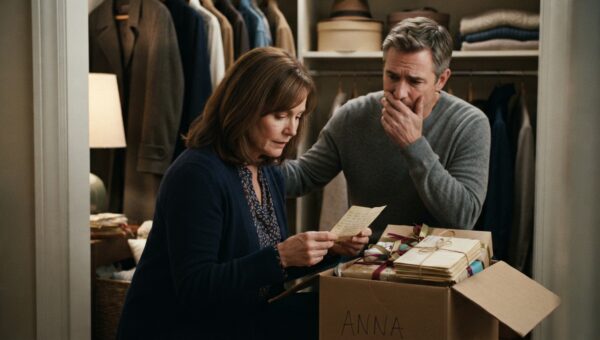
The first thing that slid out was a school photograph of a little girl with dark, thick hair and Richard’s exact jawline, the stubborn tilt of the chin unmistakable even in a wallet-sized matte print. On the back, written in neat blue ink, was her name and age: Emma, eight years old, October twelfth.
Beneath the photograph lay a chronological stack of eleven annual birthday cards, each one addressed in the same looping, careful handwriting to a post office box in a town where Richard supposedly only went to buy spark plugs or drop off corporate tax forms. I unfolded the card on top, the one with a glittery pink number nine on the cover, and read the words written inside by a child’s hand. Thank you for making my birthday special even though you have to leave early. The ink was slightly smudged near the bottom where her thumb had rested while the card dried. My chest felt tight, the air in the small post office suddenly thin and sour, the hum of the vending machine in the corner beating against my eardrums like a small bird trapped behind glass.
The return address stamped on the corner of the butcher paper package wasn’t a post office box at all, but a residential street just three blocks away from the brick Methodist church where we used to buy our Easter hays. Birch Lane. A quiet street of small brick ranch houses with azalea bushes and gravel driveways where children left their bicycles lying in the grass. I didn’t plan on driving down there, but my car seemed to find its own way through the red light at the county line, turning left past the grain elevator until the houses started getting smaller and the yards more overgrown. Number four twelve had a faded green porch swing and a rusted red wagon sitting near the azaleas.
As I pulled my sedan to the curb fifty feet down the road, the front door of the house opened and a woman with sandy blonde hair tied back in a messy clip stepped out onto the concrete stoop. She was shaking out a blue rag, her shoulders slightly rounded under a faded denim shirt, looking exactly like the kind of neighbor who would wave across a fence while you pruned your hydras. The same woman I had seen standing near the snack counter at the regional bowling alley three years ago when Richard introduced her as Nora from the district office, someone he only ran into during spring tournaments. Richard does not bowl well enough to go every week, and I have said so for years, but back then I had let him laugh it away over Sunday roast beef, telling myself I was just being a foolish, suspicious wife with too much time on my hands.
I sat behind my steering wheel for twenty minutes, watching the front door of that little brick house until my knuckles turned white against the vinyl steering rim. A small girl with dark hair came running around the corner of the house carrying a yellow plastic jump rope, her laughter carrying faintly across the asphalt even over the sound of my idling engine. She looked right toward my car for a split second before she tripped over the garden hose, her movements clumsy and familiar in a way that made my stomach turn over. I put the car in reverse without turning on my headlights, backed out into the gravel, and drove thirty miles back home without remembering a single mile of the highway between Monroe and our kitchen door.
The rest of that Thursday and all through Friday passed in a strange, muted blur where I went through the motions of cooking, dusting, and answering the telephone with my normal church-supper voice. Richard came home Friday evening with two bags of groceries from the piggly wiggly and a carton of buttermilk for my cornbread, whistling softly as he set them on the butcher block. He asked if I needed anything from town for the weekend, his eyes clear and steady behind his wire-rimmed glasses, his smile just as easy as it had been every day since we signed our mortgage down at the parish courthouse. I looked at the small lines around his eyes, the little gray tufts at his temples that I used to stroke while we sat on the porch after supper, and realized he hadn’t spent a single Tuesday evening in this county thinking about anything other than how well he was managing two separate lives.
Saturday morning I stayed upstairs while he worked on the lawnmower out in the shed, the steady put-put of the small engine rattling the windowpanes. I went through his cedar chest in the back of the guest room closet, finding a second checkbook hidden beneath his spare winter hunting gear, the checks drawn on a bank in Monroe with deposits matching his quarterly bonus checks down to the exact dollar amount. The ledger inside was filled with neat little columns of figures, healthcare payments for Emma, school supply receipts from the mercantile down on Main Street, and grocery bills dating back nine years before our own wedding day had even been marked on the parish calendar. He hadn’t just strayed; he had built an entire second foundation on the quiet earnings of our shared labor, splitting his existence down the middle like a cord of dry oak wood.
Sunday was Communion Sunday at our church, and we sat three pews back from the altar the way we always did, his hand resting warm and dry against my knee during the final hymn while the organist played the old Doxology. When the minister spoke about honesty and the heavy cost of hidden things, Richard didn’t flinch or look down at the floor, just sang the bass notes with that rich, steady voice that everyone in the parish admired. I looked at the white lilies on the communion table and felt a cold, hard resolve settle into the marrow of my bones, replacing the trembling sickness from the post office floor with something much quieter and much more final.
Monday dragged by like a week of bad weather, the gray clouds hanging low over the pasture behind our barn, the wind rattling the tin roof of the woodshed until my teeth ached from clenching my jaw. Tuesday afternoon arrived with the same familiar shift in the air, the sun dipping behind the pecan trees and turning the kitchen window the color of old brass. At 5:15, Richard came through the back door in his work shirt, tossing his car keys onto the counter with the usual cheerful clatter and reaching into the hall closet for his black vinyl bowling bag. He leaned over to kiss my cheek, his breath smelling of the peppermint drops he always kept in his glove compartment for the drive home from the lanes.
“Going to be a late one tonight, honey,” he said, patting my shoulder as he turned toward the screen door with his gym bag swinging against his knee. “The guys want to play three full series before the district tournament next month.”
I didn’t move from where I was standing by the stove with a wooden spoon in my hand. “Richard,” I said, and my voice sounded strange to my own ears, level and dry like an old board left out in the sun. “You left your coat in the hall. You’re going to need the key.”
He paused with his hand on the wooden frame of the screen door, his brow furrowing just a fraction of an inch as he turned back to look at me, a tiny, practiced smile already forming at the corners of his mouth. “My keys right here in my pocket, Clara. You know me, I never leave the house without them.”
I reached behind the flour canister on the shelf and pulled out the manila envelope, sliding the eleven birthday cards, the school photographs of Emma with his exact jawline, and the small brass P.O. Box key across the clean grain of the oak table until they stopped right in the middle where the afternoon light hit them. I didn’t raise my voice, and I didn’t cry a single tear, because the crying had all finished itself upstairs while I was packing his winter coat into a plastic garbage bag.
Richard stared down at the little brass tag stamped Monroe for three full seconds, the color draining out of his face until his skin looked the exact shade of the linoleum under the refrigerator. He opened his mouth to say something, some practiced excuse about a client, a misunderstanding, a friend who needed help with a mail delivery, but the words caught somewhere in his throat and turned into a dry, ragged cough. He looked at the photograph of Emma smiling with his chin, and then he looked back up at me with his eyes wide and pleading, waiting for the familiar storm of shouting or the tears he knew how to manage with a gentle touch and a promise to do better.
“Nora and the girl on Birch Lane,” I said, my voice barely louder than the hum of the refrigerator. “You don’t bowl well enough to go every week, Richard, and I have said so for years.”
He tried to step toward the table, his hand reaching out like he wanted to touch my arm the way he had done every Sunday morning of our lives, but I took one slow step back toward the stove and kept my hands flat against the wood. “Clara, let me explain how it started,” he began, his voice cracking on the second word, the smooth charm completely gone, leaving only a frightened, gray-faced man standing in the doorway of a kitchen we had built together. “It wasn’t supposed to be like this. It was before we even, “
“Get out,” I said.
He stood there for a long moment, his gym bag slipping from his fingers and hitting the floorboards with a dull, heavy thud that rattled the teacups in the cabinet. He looked around our kitchen, at the copper pots hanging by the window, the braided rug my mother had hooked by hand forty years ago, and the calendar with our anniversary circled in red ink three months away. He knew by the look in my eyes that there was no compromise to be made, no way to divide the years or explain away a decade of birthdays celebrated twenty miles up the road while I sat waiting with supper keeping warm in the oven.
He turned without another word, walking out through the screen door into the gray twilight without his bowling bag, his car keys jingling softly in his hand as he walked down the gravel driveway toward his sedan. I watched from the window as he backed out past the pecan trees, his taillights disappearing down the dark parish road until there was nothing left to see except the empty yard and the wind rustling the dead leaves against the fence. I walked over to the table, picked up the small brass key by its metal ring, and dropped it straight down into the municipal trash bin by the sink, listening to the soft, final clink it made against the bottom before I sat down at the kitchen table in the quiet house.