The red plastic basket on the bottom shelf of the pantry had held every grocery slip from the last four years, folded into neat little squares because Bryan said digital copies were too easy to fake. If a carton of store-brand milk went up twenty cents, I had to save the proof or he would take it out of the next check.
Two hundred dollars. That was the monthly figure a judge in Bakersfield signed off on back when the ink on our divorce papers was still wet and my youngest was barely walking. Six kids running around a house that always smelled of damp towels and boiling potatoes, and every thirty days I had to present a man living in a gated stone estate with receipts for notebook paper and generic ibuprofen. I kept them in old shoe boxes under the bed, tied with twine like little bundles of dead history, just so he could spend ten minutes picking through them with a brass letter opener to see if I had rounded up a total by two cents.
It was a Tuesday afternoon when the gravel in the driveway crunched under tires that didn’t sound like delivery trucks or the neighbors. I was at the kitchen sink trying to scrub dried oatmeal out of a heavy iron pot when the front door knocker went twice, soft and hesitant like someone didn’t really want to be heard.
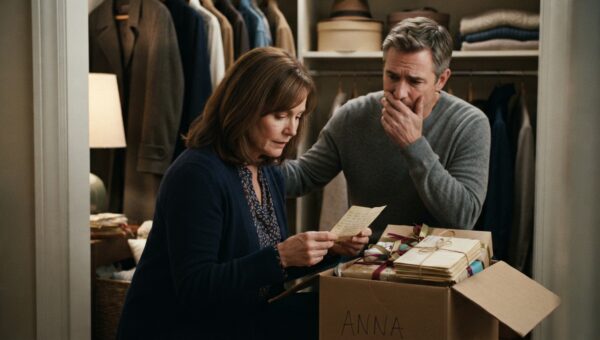
I wiped my hands on my apron and pulled the door open, expecting a process server or maybe the school nurse calling about one of the twins. Instead, it was Evelyn. She looked smaller than she used to, standing there on the concrete porch in her beige cardigan with her car still idling in the drive, the exhaust puffing white into the dry autumn air. She didn’t look at my face at first. She looked past me into the hallway where the rows of scuffed shoes sat by the coat rack, and her lower lip gave a little twitch that told me everything I needed to know before she even spoke a word.
“Bryan can’t know I gave you this,” she whispered, her voice shaking so hard it barely carried over the hum of the refrigerator. She reached into her leather tote bag and pulled out a fat manila envelope tied shut with a red rubber band, pressing it into my hands with fingers that felt like ice. “Just look at the tax schedules, Clara.
Look at what he’s been filing while he tells the court he’s barely clearing enough to pay for his gas.” Before I could ask a single question, before I could even find my voice to tell her she shouldn’t be risking whatever peace she had left in that big house on the hill, she turned around and hurried back down the steps, her heels clicking against the stone until the Lincoln door shut with a muffled thud.
I didn’t open the envelope at the kitchen table where the kids would see it when they got off the bus at three-thirty. I waited until dark, after the homework was scattered across the living room rug and the last glass of milk was rinsed and put away in the rack. The house was finally quiet except for the furnace clicking on in the hall. I sat down at the small maple desk in the corner of my bedroom, snipped the red rubber band with the kitchen shears, and slid out forty pages of unredacted corporate records and personal bank statements.
The first thing that caught my eye was the letterhead from his accounting firm. It showed a gross operating income for his construction LLC that made my breath catch in my throat, a figure five times larger than the number he swore under oath to the family court judge three years ago. I kept turning the pages, my thumb smudging the fresh toner, reading through lines of equipment leases and material costs that were actually custom interior upgrades for the silver sports car he drove past our house on Sundays just to make sure the kids saw him leave.
The panic didn’t hit me all at once. It came in cold, sharp little waves that made my fingers go numb as I worked my way through the stack. There were checks made out to fictitious suppliers for drywall and lumber that never arrived at any job site, routed instead through a shell company registered in Carson City. He had been bleeding his own business dry on paper just to keep his taxable income low enough to starve us out legally. But it was the very last document in the folder, tucked behind a folded wire transfer receipt from a credit union two counties over, that made my blood run cold. It wasn’t a business ledger or a tax form. It was a private trust account statement, opened under an old family name I hadn’t heard since Evelyn’s brother passed away, showing a liquid balance of over four hundred thousand dollars. The routing numbers matched the accounts he claimed he closed during the mediation. His own mother had gone into his study while he was out of town, unlocked the bottom drawer of his cherry-wood desk with a spare key she had kept since he bought the place, and pulled the exact proof that he was hoarding our future in a drawer twenty miles away while I washed clothes by hand in a cracked basin.
The next morning I didn’t wait for him to call about the grocery receipts. I took the manila envelope straight to a small law office on the edge of town, a place with worn linoleum floors and a receptionist who smelled like peppermint tea and old paper. The attorney, a man named Arthur who looked like he had been fighting with the county court since the seventies, put his glasses down on the desk after reading the third page and let out a long, slow whistle through his teeth. “Well,” he said, tapping a yellow legal pad with his pen. “This changes the math quite a bit, doesn’t it?” Within forty-eight hours, we had an emergency motion filed for a full forensic audit and an immediate freeze on the corporate accounts listed in Evelyn’s ledger. Arthur didn’t smile when he told me what it would cost to fight Bryan’s high-priced lawyers, but he looked me square in the eye and said some doors only open when someone on the inside decides to pull the latch from the other side.
Bryan showed up on my front porch three days later at five in the evening, right when the sun was casting long, orange shadows across the lawn. He didn’t knock. He just shoved the screen door open with the palm of his hand and stood there in his leather jacket, his face dark and twisted up with that old look of cold impatience I used to dread more than anything else in the world. “Where are the receipts for Tuesday?” he demanded, his voice bouncing off the siding before I even had time to step out from the kitchen. “I got a notice from the bank about a motion being served, Clara, and if you think you can pull some stunt with the court over a few missing dollars, ” He stopped dead because I didn’t flinch. I didn’t step back toward the hallway or reach for the red plastic basket under the sink. I just walked out onto the porch holding a single white copy of the court-stamped motion with his mother’s financial exhibits attached right to the front.
“You can stop asking about the pens, Bryan,” I said, and my voice sounded lower and steadier than I felt. I held the papers out toward him, letting the top page catch the evening breeze. “Your mother brought me the rest of the receipts. Every single one of them.” He reached out to snatch the paper away, but his hand froze halfway when he saw the header from the secondary credit union account printed clear as day across the top of page forty-one. The color drained out of his face so fast it looked like someone had turned off a lamp behind his eyes. He opened his mouth to say something, some old threat about lawyers and contempt of court, but no sound came out except for a dry, choked rasp. He knew then. He knew the safe was empty, that the drawer had been opened, and that the quiet woman who baked his birthday cakes every year had finally decided her own grandchildren were worth more than his lies.
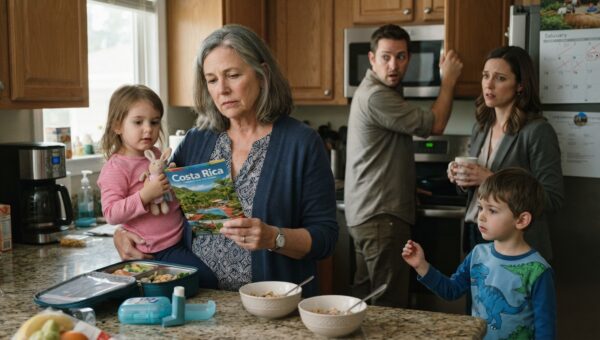
It took six months of paperwork and three separate hearings before the judge finally signed the new support order, backdating the adjustments to cover the years we spent counting pennies while he bought another toy for the garage. Bryan never spoke to his mother again after that afternoon, choosing instead to pack up his sports cars and move two towns over where nobody knew his name, leaving behind an empty stone house that eventually went to foreclosure. Evelyn didn’t ask for a thank-you note, and I never went looking for her at the big house on the hill, but sometimes when I walk past the kitchen window I think about how fragile a life built on paper really is. Today, I stood at the kitchen counter with a brand-new cart of groceries from the store down the road, the bags piled high with fresh fruit and meat that didn’t come with any conditions attached. I pulled out the long white receipt for the whole lot, stared at it for half a second without checking a single line, and dropped it straight into the recycling bin without a second glance.