The coffee maker on our kitchen counter had that thin, sputtering whistle it made right near the end of the pot, a sharp little sound that usually got me moving. It was 6:15 in the morning on a Tuesday, and the kitchen was still cold from the damp fog rolling off the river outside town. Mark was sitting at the laminate table with his work mug between his hands, staring at a crack in the Formica like it held the secrets of the universe.
He looked tired. Not just tired from the early shift at the lumber yard, but the kind of tired that comes from carrying weight that isn’t yours.
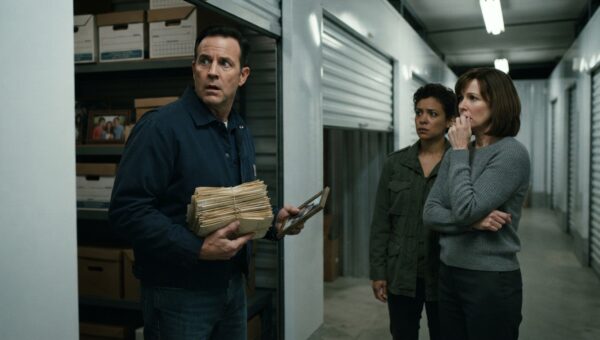
We had spent the previous night listening to Thomas tap-dance around the truth in our mudroom. Thomas is Mark’s younger brother, thirty-two years old and perpetually living on the edge of some imaginary crisis that always required someone else’s resources. Around three o’clock yesterday afternoon, he had shown up at our back door with his coat half-zipped, asking to borrow our Ford pickup for what he called a quick run to help an old buddy clear out a storage unit across the county line. Mark didn’t want to hand over the keys because Thomas had a habit of bringing vehicles back smelling like stale gas and fast food wrappers, but Mark has this deep, stubborn streak of family loyalty that always overrides his better judgment.
So Mark handed them over. And then we waited. By ten o’clock, Mark tried calling him twice, but the phone just rang straight to voicemail. By midnight, when the gravel in our driveway crunched under tires that sounded a little too fast, I was already standing by the window with my arms crossed over my flannel robe. Thomas climbed out of the truck, muttered something about traffic on the bypass, and dropped the keys into Mark’s palm before practically jogging toward his beat-up sedan at the curb. Mark didn’t say much then, just walked out to check the vehicle and found a fresh dent along the rear quarter-panel and an empty fuel gauge pointing hard to empty.
“We can talk about it tomorrow,” Mark had mumbled, climbing back into the house with his shoulders hitched up to his ears. “He had a long day. Let’s just let it go for now.”
I agreed because I was tired, but the next morning my thumb caught on something small and hard while I was cleaning out the passenger-side floor mat before my own commute. I reached down, pulled the rubber mat back, and lifted a tiny, scuffed pink hearing aid out of the gray dust. We don’t have young children. Our youngest is twenty-four and living in Chicago. I sat right there on the edge of the passenger seat with the little piece of plastic sitting in my palm, feeling the first cold twist of unease in my chest.
I went straight back inside the house, skipped my coffee, and dialed Thomas’s number while Mark was still staring at his breakfast plate. It rang four times before he picked up, his voice raspy and defensive before I even got a word out.
“What?” Thomas snapped through the speaker.
“Thomas,” I said, keeping my voice level because my mother always taught me that anger just gives people room to wriggle. “Did you lose something in the truck yesterday? Specifically on the passenger side?”
There was a long, jagged beat of silence on the line. I could hear the faint sound of a television playing in the background of wherever he was sitting.
“No,” Thomas said, and his voice went just a fraction too high. “What are you talking about? I didn’t drop anything.”
“I’m holding a child’s pink hearing aid right now,” I told him, stepping over to the kitchen island where Mark was finally looking up. “Whose is it?”
“I don’t know,” Thomas stammered, the casual confidence completely draining out of his tone. “Must have been from whoever owned the storage unit before. Look, I’m busy. I’ll talk to you later.”
The line went dead with a sharp click. I lowered the phone and looked across the kitchen at Mark, whose face had gone very still. Mark knew as well as I did that Thomas hadn’t been helping anyone clear out a storage unit. People don’t store children’s medical devices in rental lockers unless they are clearing out an entire life in a terrible hurry.
I didn’t go to work that morning. Instead, I sat at the kitchen table with my laptop open, scrolling through the local community boards and buy-sell groups where people post about lost pets, missing tools, and neighborhood drama. It took twenty minutes of searching through garage sale ads and lost dog notices before I found the post. It was timestamped late last night, put up by a woman named Clara living over on Maple Street, just past the old grain elevator.
The post had a picture of a battered blue duffel bag and a small pink plastic case. The text was simple and desperate: Emergency move forced us out yesterday afternoon near Tenth Street. My daughter Lily’s medical bag and backup hearing equipment were accidentally left behind or taken during the chaos. If anyone has seen this bag or knows where it ended up, please call me. We cannot replace these right now.
My finger hovered over the screen as I read the date and the exact window of time. It matched the hours Thomas had our truck. He hadn’t been helping an old buddy. He had been running someone out of a house during an eviction or a sudden displacement, and he had hauled their whole life in the back of our Ford while lying to our faces about it.
I looked at Mark, tapped the screen, and told him to grab his jacket. We weren’t going to wait around for Thomas to invent another lie.
I picked up my cell phone, dialed the number listed on Clara’s post, and pressed speaker so Mark could hear every word. It rang twice before a woman answered with a voice that sounded like she hadn’t slept in a week, thin and brittle at the edges.
“Hello?” she said.
“Clara?” I asked, keeping my tone as gentle as I could manage. “My name is, well, my name is Martha. I’m calling about the post you put up regarding your daughter’s medical bag.”
There was a sharp intake of breath on the other end, the sound of someone gripping the phone tightly. “Did someone find it? Do you have it?”
“We have something very important,” I said carefully, glancing at Mark. “We have the pink hearing aid. It was found in the truck that was used to help you yesterday. The driver was my brother-in-law, Thomas.”
The silence that followed was heavy and absolute, stretching out until I thought the call had dropped. When Clara finally spoke, her voice wasn’t relieved or angry. It was just hollow.
“Wait,” Clara whispered, and the word cut through the kitchen like a piece of broken glass. “Are you related to Thomas? Because he told me his family was dead.”
Mark stopped dead in his tracks halfway to the door. I could see the color drain completely out of his face, leaving him looking older than his forty-five years. I just stood there because my brain kind of stopped working for a second, the words echoing in the quiet room.
“No,” I managed to say after a heartbeat, my throat tightening up. “No, Clara. He has a family. He has a brother, and he has a home right here in town. He lied to you.”
“He said he was all alone,” Clara said, and I heard the first thin crack of a sob breaking through her control. “He said he had nobody left in the world, and that’s why he wanted to help us get out before the landlord threw everything on the sidewalk. He spent all afternoon loading our boxes.”
“We’re coming over,” I told her, my voice dropping into that steady, unyielding register I usually reserved for bad news at the hospital board meetings. “Give us twenty minutes. We have your equipment, and we’re going to talk.”
We didn’t call Thomas first. We drove straight to the small, faded apartment complex on the north side of town where Clara was staying with her little girl. The gravel lot was half-paved and littered with wet maple leaves, and when we stepped out of the truck, the cold air smelled faintly of coal smoke and old asphalt. Clara opened the door before we even knocked. She looked younger than I had expected, maybe thirty, with dark circles under her eyes and a little girl of about eight sitting quietly on a floral sofa behind her, holding a mismatched pair of socks.
We handed over the pink hearing aid and the small plastic case we had found under the seat, and we sat at her small kitchen table while she poured instant coffee she didn’t really have to offer. We didn’t hold anything back. We told her everything about Thomas, about how he collected tall tales the way other men collected stamps, about how he used people’s vulnerabilities to play the dashing hero before vanishing back into his own messy life. Clara listened with her hands folded tightly in her lap, her knuckles white, nodding slowly as the pieces of his elaborate fabrication fell into place.
“He was just so… convincing,” Clara said quietly, looking down at the little pink case in her hands. “When you have nothing left and someone offers to carry your boxes, you don’t think to ask for their pedigree.”
“You didn’t do anything wrong,” Mark said, his voice rough and unsteady. It was the first time he had spoken since we left the house, and I could hear the deep, humiliated shame vibrating beneath his words. “That’s just what he does. But he’s done playing games with people who actually need help.”
From there, we drove straight across town to Thomas’s apartment over near the hardware district. We didn’t knock politely; Mark hit the wooden frame with the flat of his hand until the deadbolt rattled in its housing. When Thomas pulled the door open wearing a faded gray sweatshirt and pajama pants, his eyes darted from Mark’s face to mine like a trapped animal looking for an exit.
“What are you two doing here?” Thomas muttered, trying to lean against the doorframe to block our view inside. “I told you I was busy.”
Mark didn’t say a word. He just reached into his coat pocket, pulled out the printed community post along with the pink hearing aid, and dropped them both right onto the small table by Thomas’s front door. The little plastic case hit the wood with a dull, heavy thud.
Thomas looked down at the table, and the last bit of color left his cheeks. He opened his mouth, closed it, and tried a weak, crooked smile that didn’t reach his eyes. “Look, I can explain that. It was just a misunderstanding. The lady needed a hand, and I, “
“You told her your family was dead, Thomas,” Mark said, and his voice was so quiet it was terrifying. It wasn’t the voice of an angry brother; it was the voice of a man who had finally reached the bottom of a very deep well. “You told a desperate mother you had nobody in the world just so you could play the big damn hero for an afternoon.”
“Mark, come on, don’t be dramatic,” Thomas stammered, his hands fluttering nervously around his pockets. “I helped them move! I got their stuff out before the marshals came! What does it matter what I said?”
“It matters because you don’t exist in a vacuum,” I told him, stepping up right beside Mark. “You left a little girl without her medical equipment for eighteen hours because you were too busy spinning fairy tales to make yourself feel important.”
“I’m done,” Mark said, holding up a hand to cut off whatever excuse Thomas was forming next. “We are done, Thomas. Don’t call my phone, don’t show up at the yard, and if you ever go near Clara or that little girl again, I won’t just tell the police about the truck damage. I’ll make sure everyone in this county knows exactly who you are.”
Thomas didn’t try to argue anymore. He just backed up two steps into his messy living room and let the door swing halfway shut as we turned our backs on him for the last time.
The ride home was mostly silent, save for the hum of the truck tires against the damp highway. When we pulled back into our own driveway, the afternoon sun was finally breaking through the gray river fog, casting long, pale shadows across the side of the house. Mark turned off the ignition, pulled the heavy brass key out of the ignition switch, and sat for a moment with his hands resting on the steering wheel.
He didn’t look at me, but he reached out, opened the small ceramic dish we kept on the console for loose change and stray receipts, and dropped the truck key right into the center of it. The metal made a sharp, clean clink against the glazed pottery.
We walked up the back steps together in the cool afternoon air, and as the heavy front door swung shut behind us, I heard the quiet, solid click of the deadbolt sliding firmly into place against a brother who could no longer be trusted.