The blue plastic binder sat on the kitchen table for two days before I even had the nerve to open it. I kept wiping down the counters instead, running a damp cloth over the laminate until the surface squeaked. It was a quiet Tuesday morning in Bakersfield, the kind of dry, hot day where the air feels thin enough to crack if you breathe too hard.
Wendell had already left for his morning walk around the neighborhood, swinging his arms with that brisk, retired-engineer rhythm he loved to show off. He always said keeping fit was our ticket to a long, peaceful golden age. I used to believe him, right up until the moment my phone stopped ringing.
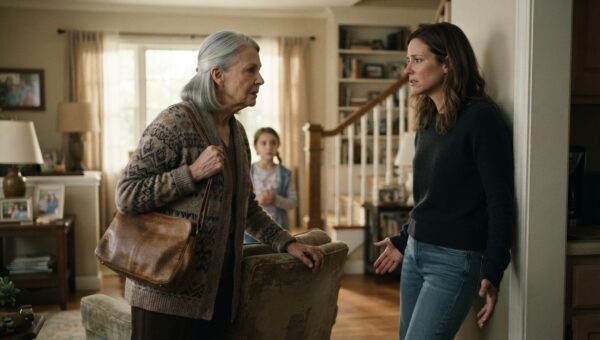
Our sons, Caleb and Wesley, hadn’t called me since Sunday afternoon. When I tried them, my calls went straight to voicemail with that flat, heavy click that tells you your number has been pushed aside. I remember sitting at the kitchen table with my coffee getting cold, wondering if I had somehow missed a birthday or said something wrong at our last Sunday dinner. Wendell came back through the back door, smelling like dry grass and morning dust, and stood by the sink to pour himself a glass of water. He didn’t look at me when he said it.
He just wiped his mouth with a paper towel and told me he had finally confessed to the boys about my online gambling problem.
I set my mug down so hard the coffee sloshed over the rim. I didn’t gamble. I barely knew how to turn the laptop on past checking my email and looking up recipes for pot roast. When I asked him what on earth he was talking about, his face went completely blank, that flat stubborn look he always got when he was cornered on a job site. He said he had panicked because the money was gone and he needed time. Forty-two thousand dollars from our joint savings account had simply vanished into thin air. He looked right into my eyes and told me the boys needed to hear it from him because I was in deep denial.
Three weeks earlier, we had been sitting on the back patio watching the sprinkler turn in the dry grass, talking about finally driving up to Oregon to see the redwoods.
Wendell had smiled and held my hand, telling me our nest egg was safe and sound in the credit union. Now, forty-two thousand dollars was missing, and my own sons thought I was secretly throwing our retirement away on digital slot machines in the middle of the night. I watched Wendell walk out to the garage to check on his lawnmower, his shoulders slightly rounded, acting like the injured party in his own disaster. I didn’t scream or throw anything. I just sat there while my hands started to shake, realizing the man I had lived with for thirty-four years was a stranger who knew how to pick his lies carefully.
I didn’t wait for him to come back inside before I pulled every bank statement out of the filing cabinet in the spare bedroom. I spent three hours sitting on the carpet with a yellow legal pad and a ballpoint pen, tracing numbers backward through three years of monthly statements.
The withdrawals were real, every single one of them. But they weren’t going to any online gaming websites or offshore accounts in the Caribbean. They were recurring electronic drafts pulled on the twelfth of every month, going straight to a commercial storage corporation located just outside St. Louis, Missouri. It made no sense at all. We hadn’t lived in Missouri since the boys were in grade school.
I didn’t call Caleb or Wesley back right away. I knew if I talked to them while I was shaking like this, they would just hear their father’s voice echoing in my tone. Instead, I packed a small overnight bag, threw a bottle of water and a box of crackers into the passenger seat of my Honda Civic, and started driving east on the I-40 before the sun was fully up over the dry hills. The road stretched out forever under a pale, washed-out sky, and every mile felt like a heavy stone dropping into my stomach. I kept thinking about how easy it was for Wendell to throw me under the bus just to buy himself a little more time. By the time I crossed the state line into Missouri, my shoulders were locked tight with a dull, grinding ache that wouldn’t let up.
The St. Louis storage facility was tucked behind a strip mall with a faded sign that flickered in the gray afternoon drizzle. The office smelled faintly of stale carpet and old floor wax. The young clerk behind the counter looked up from his phone with a bored expression, chewing slowly on a piece of gum. I slid my driver’s license and the printed bank statements across the laminate counter, keeping my voice as steady as I possibly could. I told him I needed to check on a billing discrepancy for Unit 118. The clerk tapped at his keyboard for a few seconds, his eyebrows drawing together as he looked back and forth from the screen to my face. He spun the monitor slightly toward me and said that Unit 118 belonged to my husband, but I was listed right there as the emergency contact.
I asked him if I could see it, and he hesitated, looking at the rules posted on the wall behind him. I didn’t wait for him to say no. I laid my hand flat on the counter and told him my husband had been paying for that unit with money stolen from our retirement, and if he didn’t let me walk down that corridor right now, I would call the local sheriff from his front desk. The clerk swallowed hard, reached into a metal drawer, and handed me a heavy brass key on a yellow plastic tag. He told me it was down the second aisle on the left, right past the rolling steel doors.
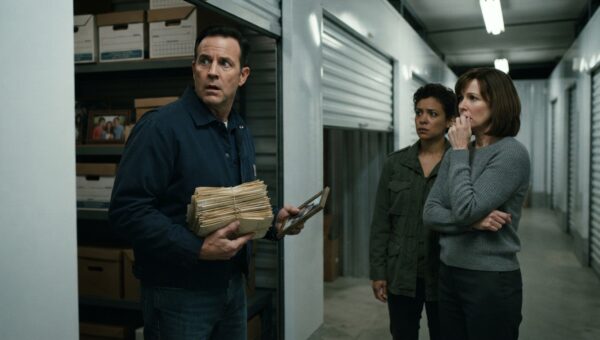
The hallway was dim and smelled of dust and sealed cardboard. My boots clicked loudly against the concrete floor as I walked past rows of padlocked lockers, each one hiding someone else’s discarded life. When I reached Unit 118, my fingers were shaking so badly it took me three tries to get the key into the brass lock. It turned with a dry, heavy snap. I gripped the bottom of the corrugated metal door and hauled it upward, the metal rattling in its track as it slid open to reveal a rectangle of pale interior light. I stepped across the threshold and let out a breath that felt like cold glass in my lungs.
Inside that unit was a bedroom. A little girl’s bedroom, complete with a white wooden twin bed covered in pink-and-yellow daisy sheets. There was a small dresser with a row of folded cotton dresses, a tiny pair of patent-leather Mary Janes sitting neatly on a braided rug, and a low bookshelf filled with battered picture books about rabbits and trains. A string of plastic star lights was plugged into a wall adapter, casting a soft, yellow glow across a framed photograph sitting on top of the dresser. I stepped closer, my knees feeling entirely hollow beneath me. It was a picture of a little girl with round cheeks and dark curls, smiling up at Wendell while he held her on his shoulders in a park I had never seen before.
I sat down hard on the edge of the small white bed because my legs simply refused to hold me up any longer. There were receipts scattered on a small plastic desk in the corner, showing that Wendell had been paying two hundred and fifty dollars every month for this climate-controlled space, plus the cost of toys, winter coats, and childcare supplies delivered straight to a local pickup locker. It all clicked together with a sickening, heavy finality. The missing forty-two thousand dollars wasn’t lost to gambling. It was keeping a second life afloat, a secret space for a child who belonged to someone Wendell was protecting, or perhaps someone he had abandoned once before. And to keep me from ever looking too closely, he had turned my own sons against me with a cruel, calculated lie about a fake addiction.
I didn’t cry while I was in that storage unit. I gathered up the printed rental agreement, took three clear photographs of the room and the photograph on the dresser with my phone, and slid the heavy metal door back down until it locked with a dull thud. The drive back to Bakersfield took two days, but the miles passed in a blur of cold calculation. I didn’t stop at motels. I just kept driving through the dark with the dashboard lights glowing green against my hands, feeling something hard and sharp settle into place behind my ribs. Wendell thought he could bury me under his own shame and walk away clean with our sons’ respect intact. He had miscalculated how hard a woman fights when she has nothing left to lose.
When I pulled into our driveway on Thursday evening, Wendell’s truck was parked by the garage. Caleb and Wesley were both standing on the front porch, their faces tight and guarded as they watched me step out of the Civic. They had come over because Wendell had called them to stage another intervention about my supposed mental decline. I walked right past them without saying a word, pushed the front door open, and dropped my canvas bag on the entryway floor. Wendell was standing in the kitchen holding a mug of coffee, looking like a man who had rehearsed his lines a dozen times. He opened his mouth to start in about my erratic behavior, but I cut him off before he could get the first syllable out.
I didn’t yell, and my voice didn’t shake. I walked straight up to the mahogany dining table, laid my phone down flat in the center, and opened the photo gallery to the picture of the little girl’s bedroom in St. Louis. I told Caleb and Wesley to come inside and look at what their father had spent our retirement on instead of accusing their mother of gambling. Wendell went completely gray, his coffee mug tipping an inch before he caught himself against the edge of the counter. Caleb stepped forward, his eyes scanning the screen before he looked up at his father with a look of pure, unadulterated disgust that made his voice crack when he asked what the hell this was.
Wendell tried to stammer out something about an old obligation, about a niece who had fallen on hard times, but the words died in his throat when Wesley picked up the storage contract I had placed right beside the phone. The boys didn’t need me to explain anything else. They saw the dates, the bank routing numbers matching our joint account, and the emergency contact line bearing my name without my knowledge or consent. Wesley turned away toward the window, scrubbing his hand over his face, while Caleb looked at his father like he was seeing a stranger for the very first time in his life. The silence in that kitchen was absolute, heavier than anything I had ever felt in thirty-four years of marriage.
Wendell didn’t have any more excuses left to give. He stood there by the stove with his head bowed, looking smaller and older than he had ten minutes ago, realizing the trap he built had finally snapped shut on him. Caleb looked at me with tears standing in his eyes, his voice barely a whisper as he asked me how they could ever make this right. I looked at both of my sons, feeling a profound, steady wave of peace wash away all the hurt and confusion of the last week. I told them they could start by helping their father pack his things into the back of his truck before the sun went down.
By nine o’clock, the driveway was empty except for Wendell’s truck idling by the curb as he drove away to stay at a roadside motel off the highway. Caleb and Wesley stayed until midnight, sitting on the living room sofa with me, apologizing until their voices were rough, promising they would help me sort out the legal mess with the bank and the lawyers in the morning. When they finally kissed my cheek and walked out to their cars, the house felt quiet again, but it was a good kind of quiet, clean and entirely my own. I locked the front door behind them, walked out onto the front porch, and sat down on the wooden swing in the cool evening air. My phone lit up in my hand with a steady stream of incoming messages from both of my boys, but I didn’t open them right away. I just sat there watching the porch light catch the dark leaves of the oak tree, knowing the rest of my life was finally beginning right here.