I should have known the moment Chloe called about the menu that forty wasn’t just a number to them. It was a production. I had baked the exact same three-layer chocolate cake with toasted pecans for Mark every single year since he was five years old, even through his awkward teenage phase when he wouldn’t look me in the eye.
When he turned forty, I spent four hours whisking batter in my quiet kitchen, thinking about the little boy who used to lick the wooden spoon until it shined. Then the phone rang and Chloe told me not to bring any homemade stuff because she had hired an organic bakery from across town. I felt small right there in my own hallway, holding a wooden spoon and staring at the linoleum floor. I talked myself out of being hurt because I figured forty was a milestone and maybe she just wanted everything to match her Pinterest boards.
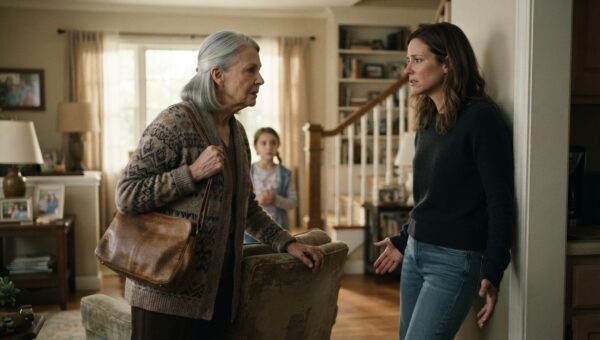
The house they bought in the new development outside town smelled like fresh paint and expensive wood polish. Mark met me at the front door with a quick hug that didn’t reach his shoulders, his eyes darting past me toward the living room where three couples I didn’t know were drinking white wine from heavy crystal glasses.
I stood by the kitchen island holding my empty hands, feeling like an uninvited guest who wandered into the wrong party by mistake. Mark kept disappearing into the hallway with Chloe, their heads bent close together, whispering in that quick, nervous way people do when they are trying to keep a secret from the room. Every time I tried to ask him about his new landscaping job, he changed the subject and offered to refill a glass I wasn’t drinking from. The whole evening felt staged, like a play where everyone memorized their lines except me.
After two hours of standing near a potted ficus while strangers talked about property taxes and European vacations, my knees started aching the way they always do when I stay on my feet too long. I told Mark I was heading out early to beat the dark, and he looked almost relieved, walking me only as far as the hallway archway instead of the door.
On my way out, I stopped by the kitchen island to drop a crumpled tissue into the wastebasket, and that was when I saw it resting right on top of the dark coffee grounds. It wasn’t a grocery receipt or a party napkin. It was an old index card with grease-stained edges and my late mother’s handwriting looping across the lines. I knew that handwriting better than my own face. It was the card she wrote forty years ago with the number for the downtown bank safe-deposit box, the one I had kept tucked inside the bottom of my red tin recipe box next to her pressed daffodil.
I stood there in their quiet kitchen with my coat half-zipped, feeling the air go completely still around me. I pulled the card out of the trash, wiping a smudge of wet coffee off the corner with my thumb, and my mind started racing backward through the last six months.
Mark had stopped by my house three weeks ago to help me fix the latch on the back screen door, spending twenty minutes alone in the kitchen while I went down to the basement to find a screwdriver. I had never given him a key to my house since he moved out at twenty-two, because I always believed an adult son needed his own front door to open. But someone had gone through my recipe box while I was out volunteering at the church pantry on Tuesday mornings. I walked into the living room, holding the card in my palm, and found Chloe laughing a little too loudly near the fireplace.
“Where did you find this?” I asked her, holding out the card before I could filter the shake right out of my voice.
Chloe stopped laughing, her smile freezing into something thin and sharp as she glanced down at the paper. “Your son brought over some things from your house to clear out the spare room,” she said, her voice dropping an octave as she tried to brush past me toward the hall.
“I didn’t give him a key,” I said, and the silence in that room suddenly got very heavy, thick enough to choke on.
Nobody said a word for a second, and honestly that felt worse than shouting. Mark came around the corner just then, wiping his palms on his trousers, and when he saw the card in my hand, the color drained right out of his cheeks. He didn’t look angry or defensive. He just looked caught, like a teenager who had his hand all the way down into the cookie jar. He muttered something about needing to talk outside on the porch, but I didn’t follow him out into the cold evening air. I just looked at my son, forty years old and wearing a tailored suit he probably couldn’t afford, and realized I didn’t know him at all anymore. I turned around, pushed open the heavy front door myself, and drove the twenty minutes home in total silence with the heater blasting against my ankles.
The house felt empty when I walked in, smelling faintly of the chocolate cake still sitting untouched on my kitchen counter under its glass dome. I went straight to the pantry, pulled down the red tin recipe box, and flipped it open with fingers that wouldn’t stop shaking. The safe-deposit card was gone, along with the spare house key I used to keep hanging behind the pantry door on a little brass hook shaped like an acorn. They hadn’t just visited. They had turned my kitchen upside down looking for a payday, hunting through my mother’s old things because their high-end lifestyle had finally caught up with their bank accounts. I sat down at the kitchen table in the dark and cried until my throat burned, not just from the anger, but from the stupid, stubborn realization that my only son looked at me and saw nothing more than a vault.
I didn’t sleep that night, staring at the ceiling fan as it spun slow circles through the dark hours until the digital clock on the microwave clicked to 5:45. The bank downtown didn’t open until nine, but I was sitting in my old sedan across the street by eight-thirty, watching the delivery trucks pull up to the curb. When the glass doors finally unlocked, I walked inside with my driver’s license and my mother’s old paperwork tucked safely into my leather purse. The manager remembered me from my father’s estate settled back in ninety-four, and when I asked to check the status of box 412, her expression turned polite and careful. She looked down at her computer screen, clicked her mouse three times, and told me something that made my chest tighten right up into my throat. Someone had called the previous afternoon asking about access protocols and transfer procedures under Mark’s name, claiming an immediate family emergency.
“He does not have authorization,” I told her, my voice sounding stranger and quieter than I expected in the marble lobby.
“We have locked the box pending your signature,” the manager said softly, sliding a yellow visitor slip across the counter for me to sign.
I signed my name with a heavy black ballpoint pen, pressing down hard enough to tear the corner of the paper, and asked her to change the security password to my maiden name immediately. Walking out of that bank into the morning sunlight, I felt a strange kind of cold calm settle into my bones, replacing the sick feeling from the night before. I drove to the hardware store on Fourth Street and spent forty-two dollars on a new brass deadbolt and a heavy lockbox for the mantelpiece. Then I called Mark from the truck and told him to come over to my house alone by noon if he wanted any answers about what happened at the bank. He showed up at 12:01, his hair uncombed and his jacket wrinkled like he had slept in it on the leather sofa.
He tried to start with the usual excuses, talking fast about market downturns and contractor delays and the immense pressure Chloe was under to keep up appearances in their neighborhood. I didn’t interrupt him or offer him coffee, letting him talk until his voice ran out of steam in the quiet kitchen. When he finally stopped, I slid the bank log and my mother’s vintage card across the laminate table right between his hands. He looked down at the grease-stained paper, his jaw working silently as the last of his defenses crumbled away into nothing. “We were desperate, Mom,” he whispered, staring at the grain of the wood like he couldn’t bear to look me in the eye. “If the bank forecloses on the addition, Chloe says our friends will never let us hear the end of it.”
“You took my key, Mark,” I said, and the plainness of the words felt heavier than any lecture I could have given him. “You went through my things while I was at the church.”
He didn’t try to lie anymore, just nodded once and rubbed his palms together like he was trying to warm them up after walking out of a snowstorm. I told him he wasn’t welcome back in this house without an appointment, and even then, only on the front porch where I could keep an eye on him. I watched him pack his old childhood jacket from the chair and walk out to his imported car without looking back once. The afternoon sun was hitting the front door just right as I clicked the newly installed brass deadbolt into place, the sound sharp and clean in the quiet hallway. I walked into the living room, picked up my spare key from the table, and dropped it into the locked wooden lockbox on the mantelpiece, leaving the past firmly guarded behind closed doors.