PART 1
The hospital discharge paperwork was still sitting on my kitchen counter when the first weird thing happened with the rent deposit.
For three weeks, I had been stuck in a recliner with a rigid lumbar brace wrapped around my lower back, recovering from emergency spinal fusion surgery. My surgeon told me I needed complete physical rest for at least a month.
No lifting anything heavier than a mug of coffee. No driving. Certainly no climbing the steep wooden stairs down to the city planning archives where I usually spent my workdays.
My younger sister Chloe had offered to step in and help manage the administrative details for the old brick commercial building on Oak Street that our grandfather left us. Grandfather Vance had built that hardware store with his own hands back in 1964, and when he passed away, he split the title evenly between Chloe and me. Fifty-fifty. Co-owners. Equal partners in a piece of local history that generated a steady, modest monthly rental income from a specialty bookstore on the ground floor.
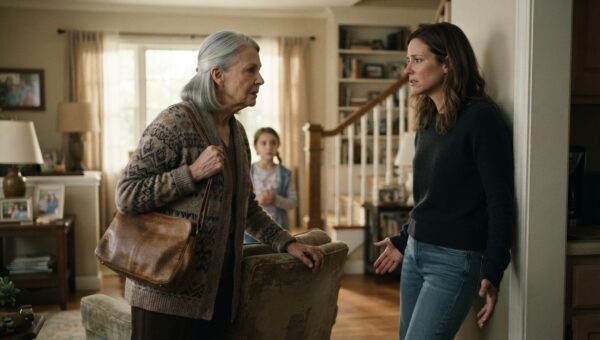
“You just focus on healing your spine, Marcus,” Chloe had told me that afternoon, standing in my living room with her designer handbag slung over her arm. Her voice had that warm, soothing cadence she used whenever she wanted people to feel safe around her. “I can handle the tenant’s rent check routing and the basic property tax paperwork while you are down. You do not need the stress right now.”
I trusted her. That was my blind spot. I assumed that because we shared the same grandfather, we shared the same reverence for his legacy.
The trouble started when Mr. Henderson, the elderly owner of the Oak Street bookstore, called my cell phone directly. His voice sounded hesitant, almost apologetic.
“Marcus, I hope I am not bothering you while you are laid up,” he said, clearing his throat. “I just wanted to make sure about the wiring change. My accountant tried to upload this month’s rent to the usual partnership account, but the bank flagged the routing number as inactive. Then I got an email from Chloe saying we needed to redirect all future lease payments to a new corporate account under Vantage Holdings LLC. I just wanted to verify with you before I cut the check for three thousand four hundred seventy-five dollars.”
I sat up straight in my recliner, a sharp twinge shooting down my left leg from the sudden movement. Vantage Holdings LLC. I had never heard of Vantage Holdings LLC.
“Hold on, Mr. Henderson,” I told him, trying to keep my voice steady. “Do not send any funds to a new account until I look into this. I did not authorize any corporate restructuring of the property title.”
“Okay, son,” Mr. Henderson said quietly. “I will hold the check until you sort it out with your sister.”
I hung up the phone and stared at the blank television screen. My heart was pounding against my ribs. Chloe had told me she was just handling routine administrative maintenance. She never mentioned creating a corporate entity or changing the banking structure for our grandfather’s building.
I tried calling Chloe immediately. Her phone went straight to voicemail. I texted her twice, asking what Vantage Holdings LLC was and why the tenant had received new wire instructions. An hour passed with no reply. Then two hours.
By evening, the mild unease in my stomach had turned into a cold, heavy dread. I opened my laptop on the coffee table and logged into the county property records portal using my municipal planning credentials. It took only a few minutes to search the parcel number for the Oak Street building.
I pulled up the most recent warranty deed filed with the county clerk. My eyes scanned down the legal descriptions and the signatures at the bottom.
The property was no longer registered in Chloe’s and my name.
Two weeks prior, right in the middle of my hospital recovery, a quitclaim deed had been filed transferring 100 percent of the commercial property title from our joint names over to Vantage Holdings LLC. And signed at the bottom, right beside Chloe’s signature, was the signature of her husband, Darren Hayes. Darren, whose failed cryptocurrency startup had been bleeding money for the past year. Darren, who had spent every family dinner complaining about his liquidity problems and hinting that we should sell the grandfather’s building for quick cash.
The total assessed equity value of the property was listed right there on the public record at three hundred forty-seven thousand five hundred dollars.
PART 2
The next morning, I ignored my doctor’s strict orders and got dressed. I put on my back brace over my undershirt, pulled a loose flannel shirt on top, and drove down to the county clerk’s office myself. The drive was agonizing, every bump in the road sending a jolt through my fused vertebrae, but the physical pain was nothing compared to the fury burning inside my chest.
At the clerk’s office, I pulled the complete historical file for the Oak Street property. I needed to see how Chloe had managed to execute a full title transfer without my signature, my knowledge, or my consent.
The documents laid it out with brutal clarity. Attached to the new deed was an affidavit of survivorship and a purported family waiver claiming that I had relinquished my operational decision making authority due to my temporary medical incapacitation. Chloe had attached a doctor’s note regarding my spinal surgery and a fabricated text transcript where I allegedly gave verbal consent for her to reorganize the property management to protect against potential liability during my recovery.
It was a complete fabrication. I had never agreed to any such thing. She had taken a routine medical vulnerability and turned it into an opportunistic window for theft.
I sat at one of the public laminate tables in the basement records room, my hands shaking slightly as I turned the pages. Darren’s shell company, Vantage Holdings LLC, was registered out of a UPS store mailbox in a neighboring suburb. Public business filings showed Darren as the sole managing member. The plan was obvious. Once the title was safely inside his corporate shell, they could take out a commercial equity loan against the building, use our grandfather’s hard earned asset to bail out Darren’s failing tech debts, and leave me with nothing.
My phone buzzed in my pocket. It was Chloe.
I answered on the second ring, keeping my voice dangerously quiet. “Where are you?”
“Marcus,” she said, her tone instantly adopting a defensive, aggrieved whine. “I tried to call you back last night. Why are you digging around at the county recorder’s office? Mr. Henderson called me saying you gave him a hard time about the rent routing.”
“You transferred the building to Darren’s shell company, Chloe,” I said, every word clipping off my tongue like cold steel. “You forged my administrative authority while I was lying in a hospital bed.”
“We did not forge anything!” she snapped back, her warm sisterly mask instantly dropping to reveal a sharp, panicked edge. “Darren and I are just trying to restructure things to protect the asset! You are a municipal employee, you do not know how commercial debt structuring works. We are protecting our family inheritance from potential liability.”
“That building was clear of debt,” I said. “And it belongs to both of us. You stole my half.”
“It is not stealing if I am saving us from your bad financial management!” she shouted over the phone before abruptly hanging up.
I sat there in the records room for a long time. Every instinct told me to drive straight to her suburban house and confront her and Darren face to face. I wanted to yell, to break something, to force them to undo the paperwork right then and there. But I knew emotion would get me nowhere in a legal dispute. If Darren had already encumbered the title or started loan negotiations with a commercial lender, shouting in their kitchen would only give them time to cover their tracks.
I needed to bypass emotional confrontation entirely. I needed formal legal power, and I needed it immediately.
I closed my laptop, tucked the copies of the fraudulent filings under my arm, and walked out of the county building. Instead of going home, I drove straight to the offices of Miller and Vance, a respected real estate litigation firm downtown where our grandfather’s old business attorney, Arthur Miller, had practiced for forty years before handing the firm down to his daughter.
Sarah Miller remembered me instantly. We sat in her quiet conference room while I laid out the deeds, the text logs, and the bank routing change notices. She listened quietly, her expression darkening with every detail I shared.
“If what you are telling me is accurate, Marcus, this is not just a civil dispute,” Sarah said, adjusting her glasses as she examined the quitclaim deed. “This is felony-level title fraud. But to unravel it cleanly without letting Darren slip a commercial mortgage onto the property first, we need to move fast. We need to file a formal quiet title action, slap an immediate lis pendens on the property record to freeze all transfer activity, and demand a complete judicial accounting of every dollar diverted.”
She paused, looking at me thoughtfully. “Tell me, did your grandfather leave any other estate documents when he set up the initial co-ownership ten years ago? Any governing trust amendment or family codicil that might have restricted title transfers?”
I shook my head slowly. “Just the standard deed splitting the title 50-50 between Chloe and me.”
“Are you sure?” Sarah asked. “Old Arthur used to be paranoid about family members trying to sell commercial properties out from under each other. He almost always drafted secondary protective codicils.”
Her question triggered a distant memory. I thought back to the old locked leather briefcase that grandfather had kept in the back closet of the hardware store office, the one Chloe and I had packed up and split between us after his funeral. Chloe had taken the photographs and personal ledgers. I had taken the heavy metal lockbox containing old tax receipts.
“There was an old briefcase,” I muttered, standing up abruptly despite the ache in my back. “Grandfather kept it in his office. I still have it in my garage storage.”
PART 3
I drove straight home, bypassed my living room, and headed out to the cluttered garage. I found the battered brown leather briefcase sitting on a dusty metal shelf beneath a stack of old magazines. The brass latches were tarnished. I brought it inside, grabbed a small flathead screwdriver, and popped the stubborn locks open.
Inside, beneath a layer of yellowed newspaper clippings about the grand opening of the hardware store in 1964, sat a thick manila envelope labeled in our grandfather’s bold, shaky handwriting: *For Marcus and Chloe. Open only in the event of legal dispute.*
My hands trembled slightly as I pulled the envelope open. Inside was a formal legal document dated just six months before our grandfather passed away. It was an unrecorded final codicil to his estate plan, drafted by Arthur Miller himself and signed in front of two witnesses from the local hardware association.
The text was clear and unambiguous. Grandfather had anticipated that one of us might try to take unilateral control of the commercial property. The codicil explicitly stated that no sale, transfer, lease modification, or corporate re-titling of the Oak Street building could occur without the explicit, notarized dual-signature consent of both siblings. Furthermore, it included a protective clerical grace period clause, noting that the document was being held safely with the family attorney rather than filed immediately to save probate fees, but its terms were legally binding upon both heirs the moment any unilateral transfer was attempted.
Attached to the codicil was a signed memo from Arthur Miller himself, confirming that the document had been logged into the firm’s archive registry back in 2018.
I sat at my kitchen table and stared at the papers. Chloe had completely bypassed the grandfather’s explicit legal safeguard, banking on the fact that I would stay bedridden long enough for Darren to push his fraudulent shell company restructuring through the state registry.
I scanned a digital copy of the codicil and emailed it directly to Sarah Miller with one short message: *Found the missing piece. Let us move.*
Within forty-eight hours, Sarah’s office filed the emergency quiet title action in the county superior court, attaching grandfather’s unrecorded codicil, the proof of Chloe’s fraudulent medical affidavit, and the unauthorized wire redirection notices.
The legal hammer fell on Darren and Chloe with terrifying speed. Because the transfer deed violated the grandfather’s explicit dual-signature trust codicil and involved a fraudulent medical waiver, a judge granted an immediate ex parte injunction freezing Vantage Holdings LLC’s operational rights over the Oak Street property.
The fallout was immediate and catastrophic for Darren’s fragile financial house of cards. The commercial lender Darren had been secretly negotiating with to secure a two-hundred-thousand-dollar equity loan against our building instantly pulled out upon discovering the pending title fraud litigation and the cloud on the title. Within a week, the creditors pressing Darren for his cryptocurrency debts caught wind of the corporate freezing order. His shell company collapsed under the weight of its own deception, and Darren was forced to publicly withdraw from his business partnerships to avoid a formal criminal fraud investigation.
Chloe showed up at my front door three days after the injunction was served.
She looked smaller, her designer clothes wrinkled, her composure completely shattered. She didn’t use the warm, soothing voice this time. She stood on my porch in the cool Pacific Northwest drizzle, her eyes red-rimmed and desperate.
“Marcus, please,” she whispered, her voice cracking as she clutched her handbag strap. “Darren is facing corporate ruin. If you keep the lawsuit active, his partners are going to sue him personally. Can’t we just handle this inside the family? Can’t we just cancel the paperwork quietly?”
I stood in the doorway, leaning slightly against the frame to ease the pressure on my lower back. I looked at my younger sister, remembering how easily she had smiled while signing away my inheritance from a hospital bed.
“There is no family to handle this inside of, Chloe,” I said quietly. “You traded our grandfather’s legacy for a desperate gamble on your husband’s debts. The court order stands. The title is being reverted back to our original co-ownership, but with a permanent judicial restriction that requires every single future decision regarding that building to go through independent legal oversight.”
“You are freezing me out,” she choked out, tears finally spilling over her cheeks.
“No,” I replied, my voice steady and unyielding. “You froze yourself out the moment you decided my vulnerability was your opportunity.”
I closed the front door before she could answer, the heavy click of the deadbolt echoing in the quiet hallway.
ENDING
Two months later, the legal dust had fully settled. The county registry restored the Oak Street property title to its rightful status, and Mr. Henderson resumed sending his monthly rent checks to our legitimate partnership account, completely unaware of the corporate storm that had briefly threatened to wash away his bookstore.
My back healed slowly, the rigid brace finally coming off after weeks of physical therapy and quiet recovery. I spent my weekends walking down to the old brick building on Oak Street, unlocking the heavy front door, and running my hand along the scarred wooden floorboards that grandfather had laid down sixty years ago.
I bought out Chloe’s remaining fractional interest in the property using a fair, legally structured buyout negotiated strictly through our lawyers, ensuring she received her baseline inheritance share while permanently severing all business and personal ties between us. She moved out of the county shortly after Darren’s business dissolved, retreating to a smaller apartment on the other side of the state.
I kept the old leather briefcase sitting on the top shelf of my office closet, right beside grandfather’s heavy brass cash register. Every month, when the rent check clears, I transfer a portion directly into my daughter’s college fund, securing the future that Chloe had tried to trade away.
Sometimes, late in the evening when the street outside grows quiet, I walk over to the window of the hardware store and look out at the damp Pacific Northwest pavement. The betrayal still leaves a cold ache in my chest, but the building remains standing, solid and unyielding against the rain, just the way grandfather built it.