PART 2:
The phone slipped slightly in my sweaty palm, the plastic casing feeling suddenly slick. “Mom,” I said, forcing my voice to steady despite the sheer terror coiling in my stomach. “What do you mean, a motel six miles away? Who was the second key card for?”
“I don’t know her name, Sarah,” my mother wept softly over the line, the dam finally breaking. “David thought he hid his wallet on the dresser, but when he went down to get ice last summer, I saw the cards fall out when his jacket shifted.
Two plastic keys in a little paper sleeve from the Pine Crest Motor Lodge. And when I confronted him about it later—when I told him I couldn’t keep lying to your father about the credit card bills or his spending—he looked right at me and smiled. He told me that if I said a single word to you, or to your father, he’d make sure Dad was declared incompetent and forced into a state-run memory care facility by the end of the week. He has power of attorney, Sarah. He made us sign those papers three years ago ‘just in case.'”
The room spun. David wasn’t just a thief stealing retirement money from his elderly parents; he was an extortionist holding my father’s remaining dignity and independence hostage to cover his tracks and fund a double life.
“Don’t worry about a thing, Mom,” I said fiercely, swallowing the lump of rage rising in my throat. “Pack a small bag.
Lock the front door. I’m coming to get you right now. We are putting an end to this today.”
I drove over to my parents’ house in record time, my knuckles white against the steering wheel. When I arrived, my mother was waiting on the front porch, clutching a worn leather handbag to her chest like a shield. Her eyes were red-rimmed, and her shoulders were bowed under the weight of a secret she had carried in terror for years. I helped her into the passenger seat, tucking a light quilt over her knees, and drove her straight to my own home, where she would be safe.
Once she had settled into my living room with a cup of chamomile tea, I began to piece the evidence together. The fifty-seven thousand dollars in fraudulent credit card charges was bad enough, but the power of attorney document was the real weapon David had been wielding.
If he held legal control over their medical and financial decisions, he could legally institutionalize them at any moment to silence them permanently.
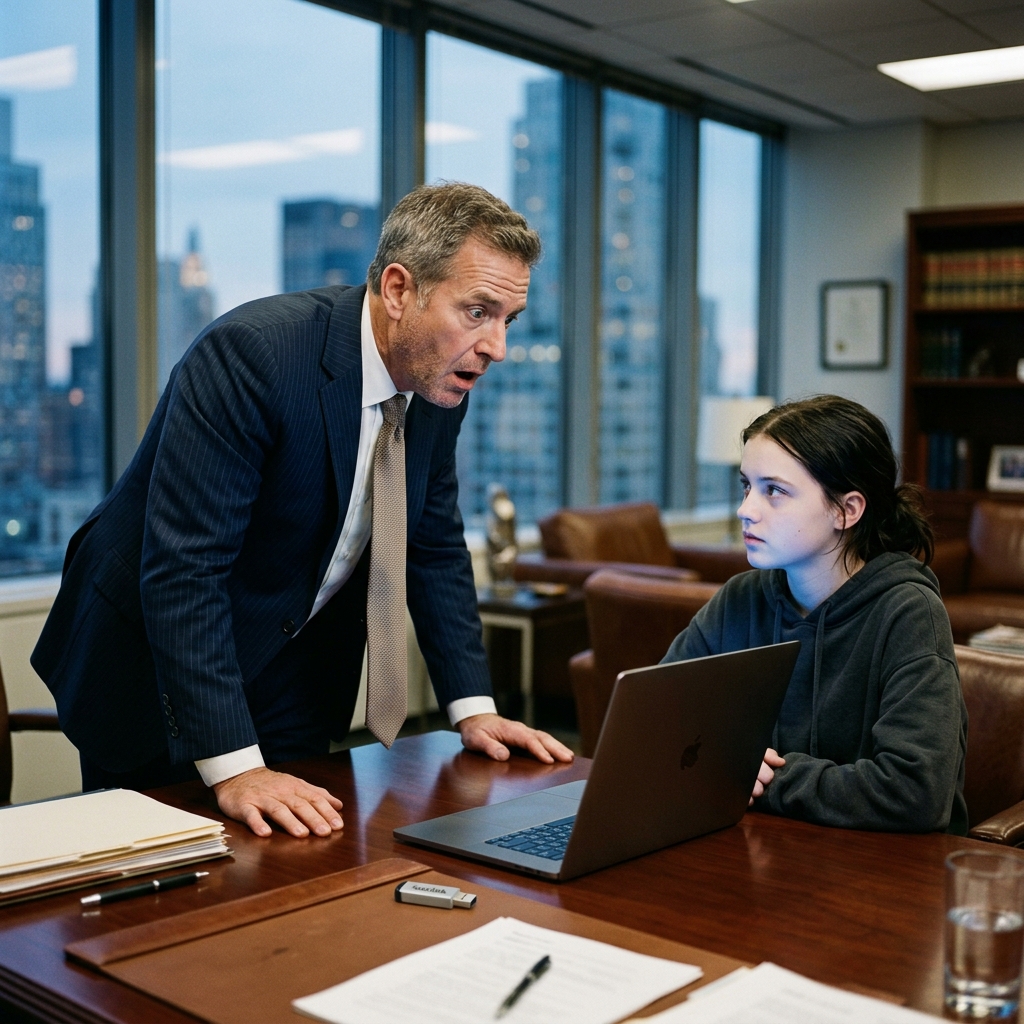
I called Marcus, an elder law attorney whose office was just down the street from the high school. By the following morning, Mom and I were sitting across from his mahogany desk, laying out the timeline, the twelve years of credit card statements, and the chilling threat David had made to institutionalize our father.
Marcus listened intently, taking notes on a yellow legal pad, his expression growing grimmer with every passing minute. When I finished, he laid his pen down and looked us both in the eye.
“What your brother did crosses the line from family betrayal straight into felony financial exploitation and coercion,” Marcus said, his voice calm and resolute. “If we have those credit card statements proving a pattern of unauthorized charges, and if your mother is willing to sign an affidavit detailing his extortion threats, we can petition the court for an immediate emergency revocation of his power of attorney. But we have to move before he realizes we’ve caught on.”
I felt a surge of cold, focused determination. “Let’s do it.”
PART 3:
The legal machinery moved faster than David expected, but not quite fast enough to keep him from discovering our counter-attack. Two days after filing the emergency petition to revoke his power of attorney, my phone rang while I was grading essays at my kitchen table. It was David.
I hit speakerphone so Marcus, who was visiting to review our next steps, could listen in.
“What the hell do you think you’re pulling, Sarah?” David’s voice roared through the speaker, devoid of any brotherly warmth, dripping instead with vicious panic. “Marcus called my office this morning about revoking my legal authority. Have you lost your damn mind? You’re destroying this family over a few minor accounting disagreements!”
“Accounting disagreements?” I replied, my voice shaking slightly but holding firm. “You stole nearly sixty thousand dollars of Dad’s savings over twelve years for vacations you never took, David. And you threatened to throw Mom into a state facility just to keep her quiet about your motel room.”
There was a sharp intake of breath on the other end, followed by a harsh, nervous laugh. “You can’t prove a damn thing. The court will throw out your little petition, and when I get through with you, you won’t even be allowed to visit them. I’m coming over there right now to sort this out face-to-face.”
“Don’t bother coming here, David,” Marcus interjected smoothly, leaning toward the phone. “The local sheriff’s department has already been provided with copies of the fraudulent credit card statements, the bank routing records, and your mother’s sworn affidavit regarding the extortion. If you step foot near Sarah’s house or your parents, you will be arrested for elder financial abuse and coercion.”
The line went dead with a sharp click.
For the next forty-eight hours, the tension in my house was palpable. Every creak of the floorboards, every passing car on the street made my mother flinch. But we had law enforcement on our side now, and the courts moved with unaccustomed speed when faced with documented financial fraud against vulnerable seniors.
On Friday afternoon, the official court order arrived via email. The judge had not only granted an immediate revocation of David’s power of attorney, restoring full legal and financial control back to our parents, but the district attorney’s office had officially filed criminal charges against him for grand larceny and elder exploitation.
When the local sheriff’s deputies went to serve the indictment at David’s office, he didn’t put up a fight. The illusion of his untouchable corporate success dissolved the moment the handcuffs clicked around his wrists.
That evening, the sun dipped below the horizon, painting the sky in deep shades of amber and violet. My father, who had been blissfully unaware of the financial storm brewing around him, sat peacefully in his favorite armchair in my living room, watching an old baseball game on television with a bowl of popcorn in his lap. My mother sat beside him on the sofa, her hand resting softly over his. She looked smaller, lighter, as if a fifty-pound stone had finally been lifted from her chest.
She turned her head, catching my eye across the room, and gave me a long, quiet, meaningful nod. The secret was out, the threat was gone, and for the first time in over a decade, our family was standing on solid ground.
ENDING:
The legal fallout took nearly a year to wind its way through the courts, culminating in a plea agreement that required David to make full restitution of the stolen funds while serving a substantial term of probation with mandatory oversight. We had to sell some family assets to stabilize our parents’ accounts in the short term, but the farm and their home remained completely secure, protected by a new, transparent trust that no one could manipulate.
We moved my parents into a comfortable, sunlit cottage just down the street from my house, ensuring they were close enough for daily visits, home-cooked meals, and genuine care. My father still enjoys his afternoon walks and his baseball games, completely sheltered from the ugly betrayal that had threatened to sweep away everything he worked a lifetime to build. My mother’s quiet vigilance has been replaced by a deep, abiding peace; she no longer jumps when the telephone rings or checks the mail with a look of quiet dread.
David tried calling once, six months after the indictment, asking for family forgiveness and financial help with his legal fees. I listened to his voice on the voicemail for a few seconds before pressing delete. Some bridges aren’t meant to be rebuilt, and some apologies carry no weight when the damage is rooted in deliberate greed.
As I sit on the porch with my mother on quiet autumn evenings, watching the leaves drift down across the lawn, I realize that true family isn’t defined by who pays for a grand vacation or who wears the best suit in the room. It’s defined by who stays in the dark room when the lights go out, holding the door shut against the storm, and refusing to let anyone steal the dignity of the people who raised us.