PART 2
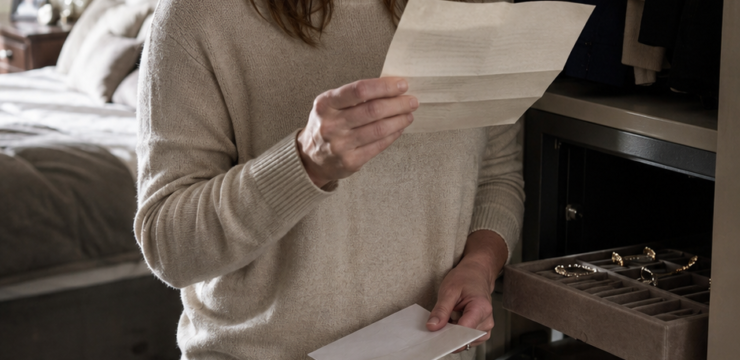
My hands were trembling so badly I could barely hold my phone. I sat down at my kitchen table, the silence of my house suddenly feeling overwhelmingly loud. I tapped on the message to expand the text, my heart hammering against my ribs.
“In October of 1993,” the message continued, “you were sitting in a diner on Route 9. You wore a green wool coat, and you looked like you had been crying. You paid the balance for my coffee and toast, and you walked out before I could say thank you. The waitress kept her promise—she didn’t point you out until you were already pulling out of the parking lot.”
I stared at the screen, stunned. How could he possibly remember what coat I was wearing? And why, after more than three decades, was this man searching for me?
I typed back, my fingers stiff and clumsy on the glass screen. “I remember that day,” I wrote. “I remember you. But why do you mean I’ve been looking for you?”
The three gray dots appeared on the screen, indicating he was typing. They bounced for what felt like an eternity. When his reply finally came through, the air seemed to vanish from my kitchen.
“Because,” David wrote, “when you stood up to pay my bill, something fell out of the pocket of your green coat. It slid under the edge of my booth. By the time I saw it, picked it up, and ran out into the parking lot, your taillights were already disappearing down the highway. I have kept it safe for thirty years.”
A cold shock washed over me, followed immediately by a burning wave of realization.
That afternoon in 1993, I hadn’t just lost my mother. Later that evening, when I finally arrived home, I discovered I had also lost my grandmother’s gold locket. It wasn’t financially valuable, but it held the only existing photograph of my grandfather, who had passed away before I was born. My mother had given it to me on her deathbed just three days prior.
I had been devastated. I had retraced my steps, torn my car apart, called the diner, and placed classified ads in the local newspaper for months. I had visited every pawn shop in a thirty-mile radius. I spent years checking antique stores, hoping someone had found it and sold it. I had been looking for it, just as he said.
“David,” I typed, tears finally spilling over my eyelashes and blurring the screen. “Do you have my locket?”
His response came instantly. “I do. And I need to tell you why I never gave it to the police, and why I didn’t pawn it. I need you to know what that three dollars actually bought.”
PART 3
We agreed to talk on the phone. When I heard his voice, it wasn’t the voice of the frightened, destitute teenager from the diner, but a calm, resonant voice of a man who had lived a full life.
“Evelyn,” he said, using my name with a quiet reverence. “I need to apologize first. I know you spent years grieving that locket. The waitress told me you called the diner the next day looking for it, but I had already left town.”
“Why didn’t you turn it in?” I asked, my voice shaking. “Why did you keep it?”
I heard a deep sigh on the other end of the line. “I was eighteen,” David explained. “I had been kicked out of my house. I was sleeping in a broken-down car behind a hardware store. That afternoon in the diner, I had reached the end of my rope. I was counting those coins to see if I had enough to buy a meal before I went to the train tracks. I was entirely completely out of hope.”
I closed my eyes, pressing the phone harder against my ear.
“When you paid for my meal,” he continued, his voice thickening with emotion, “it was the first time in months that anyone had looked at me and decided I was worth something. When I found your locket on the floor, I opened it. I saw the old black-and-white photo. I knew it was precious to you. I knew I could walk into a pawn shop and get enough money to buy food for a month.”
“But you didn’t,” I whispered.
“I couldn’t,” David said. “You saved my dignity that day. You treated me like a human being. Pawning your family’s memory would have destroyed the one good thing that happened to me. So, I made a promise to myself. I told myself I had to survive, get my life together, and hold onto that locket until I was a man you could be proud of. I used it as a compass. Every time I wanted to give up, I looked at that locket and remembered the woman in the green coat who believed I deserved a hot meal.”
He had kept it through nights in homeless shelters, through years of night school, and through the opening of his own small business. He had periodically searched for my name based on the old newspaper ads he had kept clippings of, but because I had married and changed my last name a few years later, the trail had always gone cold.
It was only when I recently posted a memory about my late mother in a local county history Facebook group, mentioning the lost locket, that the pieces finally clicked together for him.
“I have your family’s history, Evelyn,” he said softly. “And I would very much like to bring it home.”
ENDING
We met three days later at a quiet café overlooking the river, not far from where the old Route 9 diner used to stand.
When David walked in, I recognized him immediately, not by his face, but by the quiet, respectful way he carried himself. He wasn’t alone. He brought his wife and his teenage daughter. He introduced them to me with a pride that made my heart swell.
We sat together in a sunlit corner booth. Without a word, David reached into his suit jacket and placed a small, worn velvet box on the table between us. He nudged it toward me.
My hands shook as I opened the lid. There, resting on the dark fabric, was my grandmother’s gold locket. It was perfectly polished, looking exactly as it had the day I lost it. I popped the delicate clasp, and the familiar, beloved face of my grandfather looked back at me.
Thirty years of grief, acceptance, and lingering regret dissolved in an instant. I wept, right there in the middle of the café, and David reached across the table to hold my hand. His wife was crying, too, wiping her eyes with a napkin.
David hadn’t just protected my family’s history; he had used the grace of that single afternoon to build a beautiful future for himself. He was now a social worker, dedicating his life to helping at-risk youth find housing and employment.
I had walked into that diner in 1993 thinking I had lost everything of value. I thought my three dollars was just a drop in the ocean of the world’s misery. I didn’t know that my small, silent gesture would become an anchor for a drowning boy, or that the boy would spend the next three decades carefully guarding my broken heart.
Today, the locket is back around my neck, where it belongs. But more importantly, my family has grown. David and his wife come over for Sunday dinners now. Sometimes, life takes things away from us only to return them exactly when we need to understand that no act of love—no matter how small—is ever truly lost.