PART 2
That Sunday afternoon, the house was silent except for the gentle ticking of the mantle clock. Calvin sat in his favorite armchair near the window, quietly reading his Bible while I went straight to the heavy steel filing cabinet in our home office.
I unlocked the bottom drawer. Tucked away behind our tax records was a thick, yellowed manila folder tied with faded cotton string.
I lifted it out and laid it on the desk. Inside was every single page of history Pastor Ethan had chosen to ignore.
There were the original 1984 bank loan documents bearing Calvin’s signature and mine in faded blue ink. There were the monthly bank statements showing personal transfers from our private checking account directly to the mortgage servicer during the lean years of 1987 and 1988. There was the formal written agreement signed by the founding elders—men who had long since passed away—stipulating that the debt to our family remained active until cleared in full.
Due to compounded interest and un-reimbursed principal payments, the outstanding balance legally owed to our estate sat at just over $145,000.
“Are you sure you want to pull that file out, Margaret?” Calvin asked gently from the doorway, leaning against the frame with a tired smile. “It’s been almost forty years. We didn’t do it for recognition back then. We did it for the Lord.”
“We did it for the community, Calvin,” I answered, my voice steady as I tied the string back around the folder. “And I never asked for a plaque or a statue. But I will not allow a boy who hasn’t laid a single brick in his life to stand in front of our friends and treat us like obsolete furniture. He wants to lead a building expansion? Then he needs to understand what this building is actually worth.”
Throughout the following week, rumors circulated around the congregation. Pastor Ethan’s new building committee had already hired an expensive architectural firm from the city to draft plans for demolishing the old 1980s fellowship hall to make way for a modern administrative complex and coffee lounge.
On Thursday evening, I attended the public committee briefing in the sanctuary. Pastor Ethan stood near the pulpit, pointing a laser pointer at a large digital screen showcasing sleek floor plans and multi-million-dollar budget estimates.
“We’re breaking ground in forty-five days,” Pastor Ethan announced proudly to the thirty members in attendance. “We’ll be taking out a new construction loan through Commercial Trust, using our existing physical grounds and structures as clear, unencumbered collateral.”
I raised my hand from the third row. “Pastor Ethan, have the title records and property encumbrances been fully audited by a bank underwriter yet?”
Pastor Ethan let out a soft, indulgent laugh, adjusting his headset. “Sister Margaret, our legal team is handling the routine paperwork. Everything is clear. You really don’t need to stress yourself with administrative details anymore.”
Several of his new committee members smiled politely. I didn’t smile back. I simply nodded, picked up my handbag, and walked out into the cool night air.
He thought the past was buried because it was old. He was about to learn that some foundations are legally binding.
PART 3
The following Sunday morning, the sanctuary was packed for the special pledge service. The sun poured through the stained glass, reflecting off the polished wooden altar and the grand pulpit where Pastor Ethan was preparing to deliver his keynote fundraising sermon.
Before the opening hymn began, while the congregation was still settling into their pews and Pastor Ethan was adjusting his notes at the front, I stood up from the third row.
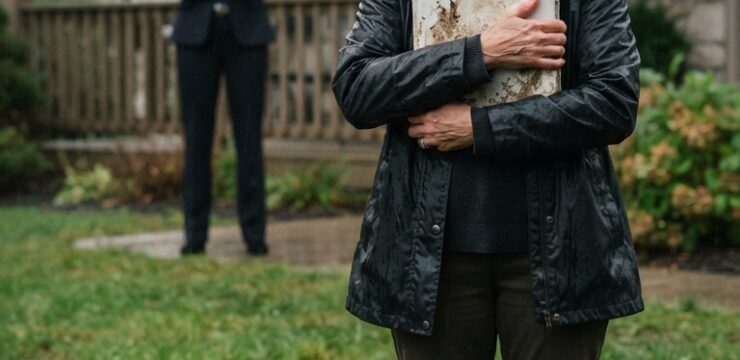
I didn’t make a scene. I didn’t raise my voice. I simply walked down the center aisle wearing my Sunday best, holding the yellowed manila folder against my chest.
Pastor Ethan looked up from his iPad, a flash of annoyance crossing his eyes before he quickly masked it with a professional smile. “Margaret? We’re about to begin the service—”
I walked straight up the altar steps, set the heavy manila folder flat on the wooden pulpit right on top of his sermon notes, and looked him directly in the eyes.
“You should read this before you speak about the new loan, Ethan,” I said, my voice quiet, clear, and perfectly audible to the choir and the front rows. “It concerns the collateral.”
I turned around and walked calmly back down the steps, returning to my seat beside Calvin.
The sanctuary grew deathly quiet. Pastor Ethan stared down at the thick folder. He hesitated, looking out at the hundreds of faces waiting for the service to start. With a slight frown, he untied the cotton string and opened the first page.
I watched his face carefully.
As his eyes scanned the 1984 bank promissory note, the color slowly drained from his cheeks. He flipped to the second page—the personal guarantee backed by our home. Then the third page—the notarized acknowledgment of debt signed by the church’s founding board.
He flipped faster, his hands starting to visibly shake as he realized what he was looking at: an active, un-extinguished primary lien against the very land and fellowship hall he was planning to demolish in forty-five days. Without our explicit legal release or full repayment of the $145,000 debt, no bank in the state would approve his new commercial loan, and any attempt to demolish the structure would constitute a direct violation of property law.
Pastor Ethan swallowed hard. He looked up from the pulpit, his mouth opening to speak, but the words caught in his throat. The slick, confident composure he had worn for months completely collapsed.
He looked at me, sitting posture-straight in the third row, and realized that the “kindly stepped aside” elder he had dismissed was holding the legal keys to his entire project.
“Church…” Pastor Ethan began, his voice raspy and devoid of its usual booming confidence into the microphone. “We… we are going to pause our planned presentation for today.”
A murmur rippled through the pews. Pastor Ethan slowly closed the folder, his knuckles white against the yellow paper, and gestured for the head deacon and the treasurer to join him in the pastor’s study immediately following the service.
ENDING
The meeting in the pastor’s study after the service was quiet, solemn, and deeply humbling for Pastor Ethan.
The church treasurer, an old friend named Thomas who had served on the board since the 1990s, examined the documents carefully alongside the church’s retained attorney. Within twenty minutes, the attorney confirmed what I already knew: the debt was valid, the lien was active, and my family’s sacrifice had never been properly cleared from the property title.
Pastor Ethan sat behind his heavy desk, his head in his hands, looking smaller and far younger than thirty-four.
“Sister Margaret,” Ethan said softly, looking up with genuine tears in his eyes. “I… I had no idea. Nobody told me. I thought… I thought you were just reluctant to let go of control.”
“I never cared about control, Ethan,” I said gently, sitting across from him with Calvin by my side. “I cared about respect. You were so eager to build something shiny and new that you treated the people who sacrificed to build the floor you stand on like they were obstacles in your way.”
To his credit, Pastor Ethan didn’t fight or make excuses. He apologized to Calvin and me right there in that office, acknowledging his arrogance and his failure to honor the church’s history.
The following Sunday, Pastor Ethan stood at the pulpit once again. But this time, he didn’t use a slide deck or a laser pointer.
In front of the entire congregation, he told the true story of 1984. He read aloud from the yellowed pages of the folder, explaining how Calvin and I had put our own home on the line so that our community’s children would have a place to gather. He publicly asked for forgiveness for his haste and disrespect, and announced that before any new building project would take place, the church board had voted unanimously to formally honor and repay the long-standing obligation to our family.
Calvin and I refused to accept the full lump-sum payout for personal gain. Instead, we agreed to forgive the interest entirely, establishing a permanent maintenance trust fund in the church’s name to ensure the original fellowship hall would be preserved, restored, and kept safe for generations to come.
I was reinstated as senior advisor to the building committee—not as a figurehead, but as a valued voice of wisdom working alongside the younger generation.
Now, on quiet Tuesday afternoons, I walk through the restored fellowship hall, feeling the smooth wood of the tables and watching the light bounce off the clean floors. Pastor Ethan often joins me for coffee in the afternoon, asking for advice on committee decisions and listening intently to the history of the church.
He learned a lesson that every young leader eventually needs to understand: you cannot build a lasting future if you tear down the sacred foundations laid by those who came before you.