PART 2
That same evening, after Wanda drove off in her luxury SUV toward her gated neighborhood, the quiet of my small home felt heavier than usual.
I sat alone at my kitchen table, looking at the cardboard box Wanda had dumped there. The memory of my sister’s cruel laughter echoed in my ears, cutting far deeper than I wanted to admit. It wasn’t about the money or the brick house. It was the crushing realization that my sister believed I was worth nothing more than a pile of discarded household clutter.
I decided to clean the jars. Mama had kept them sitting on the high shelf above her kitchen pantry for as long as I could remember. They were covered in thirty years of thick kitchen grease, dust, and yellowed grime.
I plugged the sink, turned on the tap, and filled the basin with warm water and dawn dish soap.
One by one, I gently placed the glass jars into the soapy water. There were four roosters, three hens, and five fat, rounded pig jars with wire-clamp lids. As a little girl, I remembered watching Mama carefully wipe those jars every spring, though I had never seen her put jams, pickles, or preserves inside them.
I picked up the largest glass pig jar. It was made of thick, heavy clear glass, molded into the shape of a smiling, plump hog with small glass ears.
As I submerged it in the soapy water, scrubbing the dust off the snout with a sponge, I noticed something strange. The pig jar felt oddly off-balance. When I set it down on the rubber drying mat beside the sink, it wobbled heavily and refused to sit flat on its glass feet.
It was far too heavy for a piece of hollow glassware.
I froze, my soapy hands hovering over the drying rack. I lifted the heavy pig jar back up and tipped it sideways under the bright kitchen light.
Inside the thick, dark-tinted glass, obscured by layers of dust and grease, something dense slid against the bottom with a dull, heavy *thud*.
My heart dropped into my stomach. My breath caught in my throat.
I reached for a dry towel, wiped my wet hands, and carefully worked the rusty metal wire latch on the pig’s head. The rubber gasket was old, cracked, and dried stiff with age. With a sharp pop, the glass lid opened.
I looked inside. Resting on top was a neatly folded piece of yellowed cotton dish cloth.
I reached my fingers inside the narrow neck of the jar, pulled out the damp cloth, and reached deeper into the dark glass bottom. My fingers brushed against a heavy, rectangular object wrapped tightly in thick wax paper and bound with strong blue twine.
My hands were shaking so violently I almost dropped the jar onto the linoleum floor.
PART 3
I sat down in my kitchen chair under the warm overhead light, my fingers fumbling as I cut the blue twine with a pair of scissors and peeled back the stiff, yellowed wax paper.
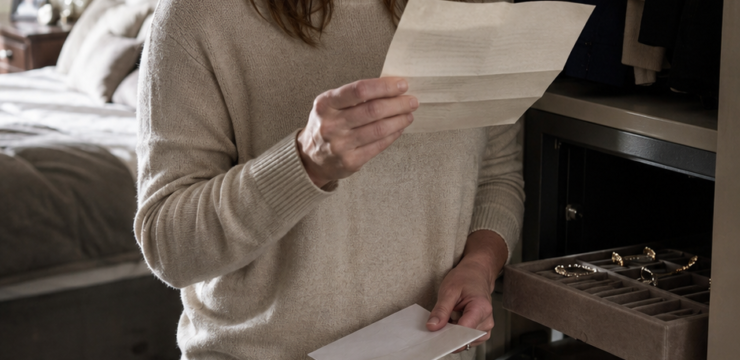
Inside lay two things: a thick stack of band-wrapped $100 bills, and a sealed manila envelope addressed to me in Mama’s shaky, precise handwriting.
I opened the envelope first, my eyes blurring with hot tears before I even read the first line.
*”My sweet Martha,”* Mama had written, her ink dark and deliberate. *”If you are reading this, it means I am gone, and Wanda and Raymond have taken what they believe is theirs. I knew how they would treat you at the lawyer’s office, Martha. I knew they would take the house and the savings accounts and leave you with what they thought was junk. I had to let them take it.”*
I wiped a tear from my cheek and kept reading.
*”Thirty years ago, long before your father died, his brother sold us his share of the forty acres on the ridge. What Wanda and Raymond never bothered to learn is that three years ago, a major regional timber and mineral company tested the soil on that ridge. They found a massive natural limestone deposit and a thick stand of mature black walnut trees. I signed a private, confidential lease option with them. The forty acres on the ridge is worth over $800,000.”*
My jaw dropped. The breath left my lungs in a sharp gasp.
*”I kept the lease money hidden from Wanda and Raymond,”* the letter continued. *”Every time they visited me, all they talked about was who would get the house and how much cash was in my bank accounts. They never asked about my heart, and they never cared about you. The money inside these twelve jars—forty thousand dollars in cash from my personal safety box—is for you to pay off your mortgage and take care of yourself. The lease checks for the ridge will be paid directly to you every quarter.”*
Mama’s letter concluded with a final, beautiful promise: *”The house went to Wanda because it carries a heavy bank line of credit I took out to pay for my early medical treatments—a debt Wanda will now have to pay off herself out of her own pocket. You gave me your time, your youth, and your loving hands, Martha. You gave me my dignity. Now, take what is yours.”*
Over the next two hours, I opened the remaining eleven jars.
Inside every single one—tucked under folded dish towels behind wire-clamp lids—were bound stacks of crisp bills, land survey maps, mineral rights contracts, and personal letters from Mama detailing decades of family history.
Three weeks later, Wanda called my phone. Her voice was no longer arrogant or mocking. She was hysterical, her tone shrill and frantic.
“Martha! There’s been a terrible mistake!” Wanda shrieked through the receiver. “The bank just sent me an immediate demand notice for a $110,000 home equity loan Mama took out four years ago! It’s tied directly to the house deed! And Raymond’s CDs were heavily taxed and eaten up by facility liens! We got almost nothing!”
I stood in my quiet kitchen, looking out the window at the autumn leaves falling gently onto my yard.
“I’m sorry to hear that, Wanda,” I said softly and calmly.
“You need to help me pay this equity line, Martha!” Wanda demanded, her temper flaring. “It’s not fair! You got the ridge land! Can’t you sell some of that scrap timber to help your sister?”
“No, Wanda,” I replied, my voice iron-firm and completely steady. “The ridge isn’t scrap timber. And I think I’ll keep my leftovers.”
Before she could scream another word, I quietly hung up the phone.
ENDING
I never gave Wanda or Raymond a single cent from the limestone lease, nor did I ever reveal what was hidden inside the twelve glass jars.
Wanda was forced to sell Mama’s brick house at a sharp discount to pay off the bank’s equity demand, while Raymond’s remaining CD money was almost entirely swallowed by state medical care claims. They spent months complaining to relatives about how poorly Mama had managed her affairs, remaining entirely blind to the truth: Mama had simply given them exactly what they valued—material property stripped of love—while leaving real wealth to the daughter who had given her heart.
As for me, I used the cash from the jars to pay off my small home, update my kitchen, and set up a generous scholarship fund in Mama’s name at the local library where I used to work.
The forty acres on the ridge remains quiet, beautiful, and protected. Every quarter, the mineral lease checks arrive in my mailbox, providing me with more financial security than I ever dreamed possible.
I kept all twelve glass canning jars. I cleaned them until the glass sparkled like crystal under the sun, and I lined them up proudly on a custom oak shelf above my kitchen sink. The pig jar sits right in the center, its smiling glass face catching the bright morning light.
Every morning, as I sip my warm coffee and look at those twelve jars, I feel a deep, comforting sense of peace and connection to my mother.
I learned that true value is never seen by people who judge the world through arrogance, greed, or pride. The richest things in this life—love, devotion, loyalty, and dignity—are often hidden in the simplest places, waiting quietly for the hands that are willing to wash away the dust and bring the truth into the light.