PART 2
For the next forty-eight hours, I lived with a stranger. Or rather, I felt like the stranger, tiptoeing around my own home, watching Thomas out of the corner of my eye. Every time he handed me a cup of morning coffee, my stomach twisted. Every time he went out to the barn and returned with a heavy tool or a coil of rope, my breath hitched.
I was terrified, but beneath the terror was a crushing, agonizing betrayal. Thomas was a quiet man, a stoic farmer who showed his love by changing the oil in my car and making sure the porch steps were sturdy. We hadn’t had a perfect marriage—nobody does—but we had built a life together. The thought that he was planning my end for a financial payout was so abhorrent it made me physically sick. Yet, the evidence was sitting right there in his desk drawer.
On Wednesday night, we sat down for dinner. Meatloaf and green beans, just like a hundred other Wednesdays.
“Truck needs a new alternator,” Thomas said, not looking up from his plate. His voice sounded perfectly normal. “Might run into town again tomorrow.”
“Okay,” I managed to say. My throat felt as though it were lined with sandpaper.
He paused, finally looking at me. His brow furrowed, deepening the lines around his eyes. He looked tired. More than tired—he looked worn down to the bone. “You feeling alright, Ruthie? You haven’t touched your food.”
“I’m fine,” I lied, forcing a bite into my mouth. I wanted to scream. I wanted to flip the table and demand to know why he had a brochure for a casket hidden in his office. But fear kept my jaw clamped shut. What if confronting him accelerated whatever horrible plan he had in motion?
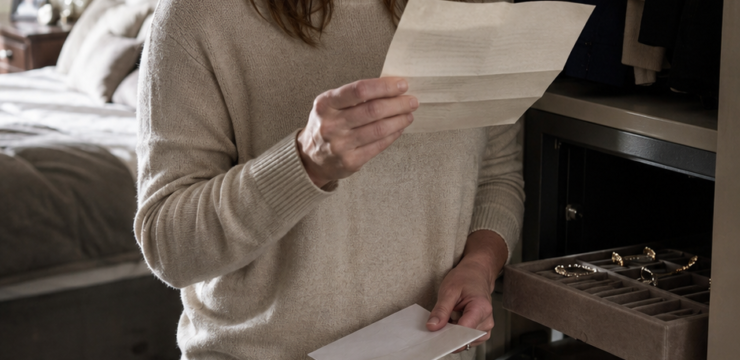
The next day, while he was out fixing the fencing by the lower pasture, I went back to the desk. I needed to see it again to make sure I hadn’t imagined it. I opened the drawer. The folder was exactly where I had left it. I pulled out the life insurance letter again, my eyes scanning the fine print.
The policy increase had been finalized on January 18th. I thought back to January. It had been a brutal winter. Thomas had caught a terrible flu right after New Year’s and had gone to the clinic in town twice, which was unheard of for him. He had been quiet ever since, spending longer hours sitting on the porch staring out at the land. I had chalked it up to the winter blues.
Now, staring at the financial documents, a different, more practical kind of dread washed over me. I wasn’t just scared; I was profoundly angry. I was not going to be a victim in my own home. If forty-two years meant nothing to him, then I owed him nothing. I folded the life insurance letter and slipped it into my pocket. I was going to confront him. No lawyers, no police, not yet. Just me, demanding the truth from the man who promised to protect me.
PART 3
That night, the air was warm and thick with the smell of sweetgrass. Thomas was sitting on the back porch in his rocking chair, a glass of iced tea sweating on the side table next to him. He was staring out at the barn, bathed in the fading orange light of the sunset. This was our evening ritual. Usually, I would bring my book out and sit beside him in silence.
Tonight, I stepped out onto the porch with empty hands and a heart hammering a frantic rhythm against my ribs.
I didn’t sit down. I stood next to the wooden railing, blocking his view of the pasture. I looked down at him, my shadow falling over his face.
I asked him straight, no warm-up. It was the way we’ve always done things—no beating around the bush.
“I went looking for stamps in your desk,” I said, my voice shaking but loud enough to cut through the hum of the cicadas. “I found the folder, Thomas. I found the Easter picture. I found the cemetery brochures. And I found the draft of my obituary.”
Thomas stopped rocking. The chair creaked into total stillness.
“I also found the letter from the insurance company,” I continued, tears finally spilling hot and angry down my cheeks. “The one from January. The one saying the payout was doubled. Tell me right now what is going on, Thomas. Are you trying to get rid of me?”
Thomas didn’t jump up. He didn’t yell. He didn’t deny it. He just sat there, and for a long time, he looked past me, his eyes fixed on the red paint of the old barn. The silence stretched so tight I thought it would snap and take my sanity with it.
Finally, he let out a long, ragged breath that sounded like a tire losing air. He reached out and took my hand.
Thomas is not a man who initiates physical contact casually. He took my trembling hand in his calloused one, his grip weak but desperately tight. When he finally looked up at me, his eyes were shining with tears. I had only seen him cry twice in his life—when his father died, and when our daughter was born.
“Ruthie,” he whispered, his voice cracking. “It’s not your funeral I’ve been planning.”
I froze. “What?”
“It’s mine,” he said, the words falling out of him like heavy stones. “I went to the clinic in January, for that cough. They did some scans. Sent me up to the hospital in the city. It’s my lungs, Ruthie. The doctor gave me six to eight months. Maybe less.”
The anger instantly evaporated, replaced by a cold, rushing void. “No,” I breathed, falling to my knees beside his chair.
“I didn’t know how to tell you,” he choked out, squeezing my hand against his chest. “I couldn’t stand the thought of you carrying the burden. The farm, the bills… funerals cost so much, Ruthie. I bumped up the life insurance so you wouldn’t lose the house when I’m gone. I bought the plots at Oakwood. Both of them, side by side, paid in full.”
“But the obituary,” I sobbed, resting my head against his knee. “Why did you write mine?”
He stroked my hair, his hand trembling. “I was trying to get all the paperwork together in one binder so you wouldn’t have to lift a finger. I sat down to draft my own obituary for the paper… but I couldn’t do it. It made it too real. It meant I was really leaving you. So, I practiced by writing yours instead. Just to see the format. Because writing about your long, full life… it was easier than facing the end of mine.”
ENDING
The secret that I thought would end our marriage was actually the most profound act of love Thomas had ever shown me. He had spent the last five months carrying a death sentence entirely alone, all because he was trying to shield me from the pain and the paperwork of losing him.
The next day, we cried together, we yelled together, and then, we called our children. We stopped hiding.
Thomas didn’t make it to eight months. He passed away quietly in our bedroom in late October, just as the leaves on the oak trees were turning a brittle, beautiful gold. I was holding his hand, just like he had held mine on the porch that terrible night.
The weeks that followed were a blur of grief, but just as he had promised, I didn’t have to worry about a single practical detail. The plot was paid for. The insurance money cleared the remaining mortgage on the farm. Everything was organized in that manila folder in his desk, right down to the songs he wanted played at the service.
It has been two years now. I still live on the farm. I still sit on the porch in the evenings, watching the sun set over the barn, drinking iced tea. Sometimes, I go into the living room and open that heavy oak roll-top desk. I look at the cropped Easter photo of myself, and I read the draft of the obituary he typed. I used to be ashamed of the dark thoughts I had that week, but I’ve learned to forgive myself. It is a reminder of how quickly fear can cloud our vision, and how fiercely a quiet man can love. He didn’t want to leave me, but since he had to, he made sure he paved every inch of the road ahead so I wouldn’t have to walk it alone.