PART 2
The drive back to my own small house felt longer than usual. The accordion case sat in the passenger seat, silent and imposing. I remembered Dad strapping it on every Christmas Eve, his rough, calloused hands navigating the mother-of-pearl buttons with surprising grace. He would wheeze through “Silent Night,” missing half the notes, but his eyes would crinkle with pure joy. It was the only time he ever truly looked carefree.
When I got home, the house was too quiet. I set the heavy instrument right in the middle of my kitchen table. I unlatched the case and lifted the accordion out. The leather straps were worn soft from years of use, and the red celluloid casing was dull with age and dust. I ran my fingers over the keys, a wave of profound grief finally washing over me. I missed him so terribly.
I decided to give the bellows a gentle pull, just to hear one last chord, a private goodbye to the man who had played it. But when I tipped it to the side to grip the strap, it didn’t sound right. Instead of the deep, breathy hum of air rushing through the reeds, there was a dull, heavy thud. Something rattled wrong inside the casing.
I frowned, tipping it the other way. The bellows were incredibly stiff, completely seized up. They wouldn’t expand more than an inch. I pressed my ear to the cold grille and shook it gently. There was a distinct scraping sound, like thick cardboard sliding against wood. It felt packed tight, heavy in a way an accordion shouldn’t be.
My heart began to beat a little faster. Dad was a meticulous man; he took care of his belongings. He would never have let his prized instrument fall into such disrepair unless there was a reason.
I went to the silverware drawer and pulled out a sturdy butter knife. Sitting back down at the table, I carefully wedged the dull blade under the metal clasp that held the back panel to the bellows. I held my breath, not wanting to damage it, and pried gently. The old screws groaned, and with a sharp pop, the clasp gave way.
I carefully lifted the wooden backing off the instrument. My breath caught in my throat. The entire cavity of the bellows wasn’t empty. It was hollowed out, the inner reeds carefully removed. In their place, wrapped in a protective layer of heavy plastic, was a thick stack of folded, yellowed papers and a heavy brass key with a small white paper tag tied to it with twine.
PART 3
My hands were actually shaking as I reached into the dusty cavity of the accordion. I pulled out the plastic-wrapped bundle and set it on the table under the warm glow of the overhead light. The brass key clinked against the wood. I carefully unfolded the thick, legal-sized papers, afraid they might tear.
The top page was an official county deed. I scanned the dense legal jargon, my eyes darting across the page until I found the property description. The address wasn’t the farm. It was the lakefront lot on Miller’s Pond.
I gasped, sinking into one of the kitchen chairs. The lakefront lot. For the last ten years, Lester and Robert had been engaged in a bitter, ongoing war over that exact piece of land. They both wanted it. Lester wanted to build a massive summer home on it, and Robert wanted to sell it to a commercial developer for a small fortune. They had badgered Dad relentlessly about it, bringing it up at every Thanksgiving and Fourth of July, demanding he sign it over to one of them. Dad had always just stayed quiet, sipping his tea, never giving them an answer. We all assumed it was still part of the estate that they had just split down the middle.
But as my eyes dropped to the bottom of the document, the truth stared back at me in black and white. The deed had been transferred and notarized five years ago. The owner listed wasn’t my father, and it certainly wasn’t my brothers. The owner listed was me.
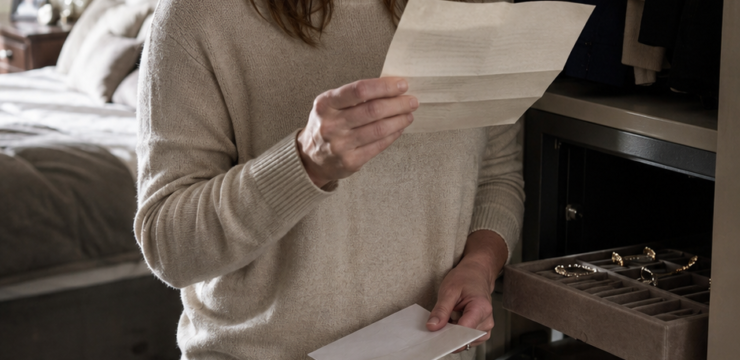
Beneath the deed was a handwritten letter on Dad’s familiar lined notepad paper.
“My dearest Ellie,” it read. “I know your brothers will take the farm. They care about the dirt and the dollars, and they’ll fight over it until the end of their days. But you cared about me. I bought the lake lot decades ago because your mother loved the water. I transferred it to your name years ago, and I paid the taxes on it quietly so the boys wouldn’t know and wouldn’t harass you. The key is to the safe deposit box at the First National Bank downtown. Inside, you’ll find the rest of your mother’s life insurance money that I never spent. It’s yours. All of it. Play a polka for me. Love, Dad.”
The phone on my kitchen counter suddenly buzzed. It was Lester. I let it go to voicemail. I could already hear his voice in my head, likely calling to gloat about the farm equipment. A deep, steady sense of calm washed over me. They could have the tractors. They could have the endless arguments over acreage. Dad had given me the one thing they both coveted, but more importantly, he had given me proof that he saw me. He had seen my quiet devotion, and he had protected me the only way he knew how.
ENDING
Three weeks later, I stood on the edge of the lakefront lot. The morning mist was just beginning to burn off the water, and the air smelled of pine needles and fresh rain. It was the most peaceful place I had ever been.
The fallout from the will had been exactly what Dad predicted. Once the county records were fully processed by the estate lawyer, Lester and Robert found out the truth. The phone calls that followed were furious, demanding, and full of empty threats about legal action. I didn’t engage. I simply told them that Dad had made his choices, and the paperwork was ironclad. Then, I changed my phone number. The silence that followed was the greatest luxury I had ever known.
I visited the bank and used the brass key. Inside the metal box was a cashier’s check that was more than enough to build a beautiful, modest cabin right on the shoreline—exactly where Mom would have wanted it.
I haven’t learned to play the accordion yet, but I had it professionally restored. It sits on a special shelf in the living room of my new lake house. Sometimes, when the sun goes down and the water turns to glass, I run my hands over the cool, pearl keys. I don’t feel overlooked anymore. I feel cherished. Dad couldn’t say the words out loud, but he didn’t have to. He left his heart in the bellows, and that was enough to last me a lifetime.