PART 2
I didn’t say a word. I didn’t fight the will, nor did I raise my voice. I simply signed the papers, drove my pickup truck over to Dad’s house that evening while Julian was already inside taking measurements for a kitchen remodel, and hauled the massive, oak workbench out to my flatbed.
That bench was a beast. Dad had built it himself back in the nineteen-seventies out of heavy four-by-fours and thick oak planks. Its top was deeply scarred by decades of chisel marks, wood stain, and burn spots from soldering irons. Right near the front edge, a dark round ring sat permanently etched into the wood—the mark where Dad set his metal coffee mug every single morning before he started a project.
I unloaded the heavy bench into my own garage, pushing it up against the far wall under the shop light. For almost a whole year, it sat completely untouched. I couldn’t bring myself to sharpen a chisel on it or lay down a piece of timber. Every time I walked past it, that circular coffee ring called up memories of Dad standing there in his flannel shirt, humming old country tunes while teaching me how to measure twice and cut once. It was the last physical piece of him, and I wasn’t ready to disturb it.
Meanwhile, Julian moved fast. He renovated Dad’s house, put it on the market, and sold it for a massive profit, using the funds to buy a luxury boat and a summer cottage. Claire invested her cash inheritance into speculative tech stocks and took her family on an extravagant two-month European vacation. Neither of them called me. Neither of them asked how I was holding up. As far as they were concerned, the estate was settled, the grunt was out of the picture, and they had won.
By the following spring, business was picking up, and my garage was getting cluttered. One Saturday afternoon, almost eleven months after the funeral, I finally decided it was time to clear out the workbench drawers.
I pulled out jars of mismatched drywall screws, rusted carriage bolts, old rasps, and dried-up tubes of wood glue. The top three drawers emptied out easily enough. But when I reached down to open the bottom right drawer—the deep, heavy one where Dad used to keep his old iron hand planes—it stuck hard about three inches open.
I tugged on the brass handle, but it felt jammed solid against the back casing.
Thinking an old screwdriver had slipped behind the divider, I grabbed a flashlight, got down on my knees, and shined the beam into the dark gap. Deep in the back of the drawer frame, behind a row of dusty glass jars filled with rusted brass washers, something dark and rectangular was wedged tightly against the rear oak panel.
PART 3
I rolled up my sleeves, unbolted the drawer slides, and pulled the bottom drawer entirely out of the frame.
Reaching deep into the dusty, dark cavity behind the workbench structure, my fingers brushed against smooth, oil-wrapped canvas. I pulled out a heavy, waterproof metal box, carefully secured with a thick brass padlock. Wrapped around the handle with a piece of twine was a small Manila tag with my name written in Dad’s familiar, slanted handwriting: *For Thomas. The real treasure goes to the builder. *
My heart thundered against my ribs like a sledgehammer. My hands shook so badly I could barely hold the flashlight. I took a pair of heavy bolt cutters from my tool wall, snapped the old brass padlock, and pried open the lid of the metal box.
Inside, resting on top, was a thick ledger book bound in brown leather, accompanied by a sealed white envelope addressed to me. Beneath the ledger sat neatly stacked, pristine bundles of crisp, uncirculated hundred-dollar bills, along with several certified land deeds and gold bullion bars.
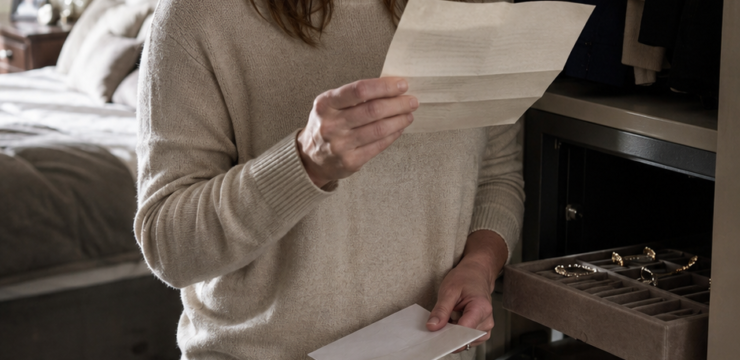
I collapsed onto my shop stool, my breath catching in my throat as I tore open the envelope. Dad’s letter read:
*”Dear Thomas, *
*If you are reading this, it means you took the time to honor the old bench and clear it out yourself. I knew your brother and sister would see this workbench as nothing more than a pile of scrap lumber because they only measure worth by what glitters on the surface. They never understood that true value is built with patience and hard work. *
*Forty years ago, long before your mother passed, your grandfather and I acquired a parcel of timberland up north, along with a quiet portfolio of municipal bonds that I never touched. I watched how Julian and Claire treated you while I was sick. I watched who sacrificed their sleep, their business, and their strength to wipe my forehead and sit by my bed. A real father rewards loyalty and genuine love, not greedy entitlement. *
*The house and the cash accounts I gave them in the open will were all they were ever going to get—and as you’ll see in the ledger, those accounts carried heavy tax liens and private equity debt that Julian and Claire will have to settle out of their own pockets once the audits finish this year. What is in this box is entirely yours, legally transferred to a private trust in your name three years ago. Use it to build the life you deserve.”*
The total value inside the box and trust was worth nearly two point five million dollars.
ENDING
I sat in the quiet of my garage for a long time, holding Dad’s letter against my chest as tears finally spilled over my cheeks. It was never about the money; it was about knowing that my father had seen me, valued me, and protected me when everyone else treated me like dirt.
Two months later, the legal chickens came home to roost for my siblings. The financial debts and tax liabilities attached to Dad’s primary estate triggered a massive audit. Julian was forced to sell his luxury boat and take out a secondary mortgage to cover the back taxes on the house he had sold, while Claire suffered devastating losses when her tech investments plummeted alongside the sudden legal liens against her inheritance.
When Julian frantically called me one evening—his voice tight with desperation—asking if Dad had left any other hidden bank accounts or documents, I kept my voice calm and grounded.
“Dad gave you the house, Julian,” I said softly into the receiver. “And he gave me his old workbench. Just like you said, I’m sawing my way forward.”
I didn’t give them a single penny of the trust, nor did I gloat. Instead, I used a portion of the inheritance to hire two full-time employees for my repair business, expanding it into a thriving custom-woodworking company that builds handmade furniture for families across the state.
Today, right in the center of my brand-new workshop, stands Dad’s old oak workbench. I never sanded down the scars, and I never painted over the dark coffee ring on the top plank. Every morning, before I start my work, I set my own coffee mug right inside that ring, grip the worn oak edge, and thank the man who taught me that the strongest foundations are always built by hand.