PART 1
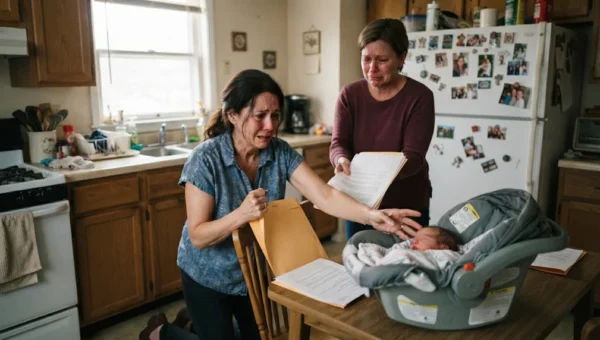
My wife stopped inviting my mother to dinner because she said Mom criticized everything. For seven months, Sarah told me that every time Mom sat at our kitchen table, she made sly remarks about the house, the children, and the way Sarah kept our pantry.
For a few seconds, I honestly tried to convince myself there had to be a reasonable explanation.
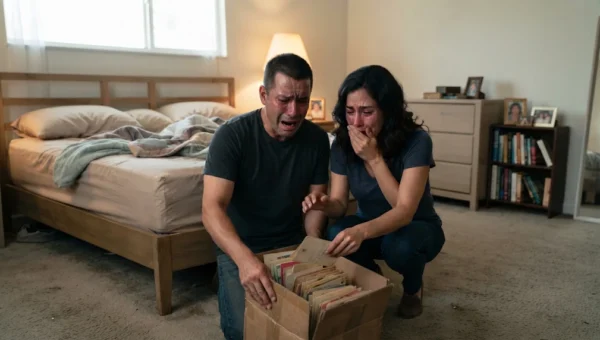
Mom had been widowed for five years, living alone in the brick bungalow across town where my sister and I grew up. Mom could be particular about things, sure, but she had never been malicious. Yet Sarah seemed so wounded after every Sunday visit, often sitting on our bed with her face buried in her hands, that I didn’t want to bring our family to a war. I believed my wife and kept making excuses for Mom. I didn’t want to be the suspicious one, and honestly that kept me quiet longer than it should have.
Sarah started telling me, “She doesn’t want to see us anymore. Every time I call her, she’s short with me, Mark. She told me she’d rather eat frozen dinners in front of her television than come over here and get aggravated.”
I probably would’ve dropped it if not for one thing: a voicemail I found months later.
In late April, Mom suffered a bad fall in her hallway. Her hip was fractured, and she lay on the hardwood for fourteen hours before a neighbor saw the morning newspapers piling up and called the paramedics.
I rushed to the county hospital directly from the job site with sawdust still on my work boots. Sarah met me in the surgical waiting room with two cardboard cups of weak machine coffee. Mom was in emergency surgery for over three hours having pins set into her femur. While we sat in those hard plastic chairs, the floor nurse came out and handed me Mom’s personal belongings in a clear plastic zip bag: her gold watch, her house keys, and her old burgundy flip phone.
“Her phone kept buzzing on the gurney, Mr. Harris,” the nurse told me. “The battery is down to two percent, but we couldn’t turn it off without a passcode.”
I plugged the phone into a wall charger by the drinking fountain. Mom’s screen was cracked across the top corner. There were four missed calls from our home landline, dated from two weeks before the fall, and three voicemails.
I sat down on the vinyl bench in the hallway, pressed three to connect to her carrier mailbox, and held the receiver to my ear while Sarah was down the hall in the restroom.
I didn’t accuse anyone. I was just trying to see if there were messages from her neighbors or her church group that needed answering.
The first two messages were automated appointment reminders from her cardiologist. Then the third recording played.
It was from March 14th, a Tuesday afternoon. Mom’s quavering voice was on the line, speaking into the receiver like she always did: “Sarah, honey, it’s Evelyn. I baked that lemon pound cake Mark likes so much. I have two Tupperware containers ready on the counter. Could you ask him to swing by after his shift and—”
Mom hadn’t hung up the call properly. The line had stayed open, recording the dead air of Mom’s kitchen.
And then, clear and sharp through the static, came my wife’s voice from our end of the line, speaking with an icy venom I had never heard in fourteen years of marriage:
“Stop calling this house. You’re an old nuisance, Evelyn. Mark is sick of you, the kids are sick of you, and if you show up here again, I’m changing the locks.”
PART 2
The recording cut off with the harsh mechanical beep of the telephone carrier.
I sat on that vinyl bench in the hospital corridor and listened to the dial tone buzz against my ear. My hands were shaking so hard I nearly dropped the plastic flip phone onto the tile floor.
Sarah walked back from the restroom, smoothing the front of her denim jacket. She offered me a little smile, the tired, supportive smile she had perfected over the last seven months whenever Mom’s name came up.
“Any word from the surgeon yet?” she asked, sitting down beside me.
I looked at her face. For seven months, I had stayed home on Sundays while my mother ate alone across town. For seven months, I had bought into the story that my seventy-two-year-old mother was too proud, too stubborn, and too bitter to sit at our table. Every time I had suggested dropping by Mom’s house with the kids, Sarah had found a scheduling conflict: soccer practice, a sudden migraine, groceries that had to be picked up across town.
“Not yet,” I said. My voice sounded flat, strange even to my own ears. “Surgery will take another hour.”
“Well, you need to rest your eyes, Mark,” Sarah said softly, patting my arm. “You work so hard. It’s a shame Evelyn let herself get so frail. If she hadn’t pushed us away, this fall never would have happened.”
I pulled my arm back and stood up. I didn’t say a word. I slipped Mom’s phone into my jacket pocket, walked down the corridor to the elevator, and rode it down to the parking garage.
I sat in my truck and listened to the message three more times, saving the recording each time so the carrier wouldn’t wipe it from the inbox.
Then I dialed our home telephone provider. We kept an old-fashioned landline bundled with our internet service because my carpentry business still had that number listed in the local directory. I logged into our online portal from my smartphone and pulled up the detailed outgoing call logs for the past six months.
The logs didn’t lie.
Mom hadn’t stopped calling us. She had called our house thirty-four times between October and March. Every single incoming call had lasted under forty seconds. And right after twenty-nine of those incoming calls, Sarah had placed an outgoing call directly back to Mom’s landline that lasted under fifteen seconds.
Sarah had been answering Mom’s calls, cutting her off, and then calling back to make sure Mom stayed silent.
I left the hospital parking lot and drove twelve minutes north to Mom’s house on Maple Street.
The house was cold and dark. The smell of stale coffee and peppermint tea hung in the air. I unlocked the side door and walked into the small yellow kitchen where my mother had cooked meals for forty years.
On the kitchen counter, next to the telephone notepad, sat an empty blue Tupperware container. Written in my mother’s neat, shaky cursive on the notepad were three dates from March, each with a single line crossed through:
*March 2: Called Mark. Sarah said busy.*
*March 9: Left message about the roast.*
*March 14: Cake ready. Told not to call.*
Underneath the last entry, Mom had pressed her ballpoint pen so hard into the paper that it had torn through the page:
*Mark doesn’t want me around anymore. Do not embarrass him.*
PART 3
I drove back to the hospital with Mom’s notepad folded in my pocket.
The surgeon came out into the waiting room at five in the afternoon. The hip repair had gone smoothly, but Mom was weak and would need to stay in the recovery unit until morning before being transferred to a short-term rehab wing.
Sarah stood up, slinging her leather purse over her shoulder. “Thank goodness,” she said, letting out a heavy breath. “Mark, let’s go home and get dinner for the kids. My sister can watch them for another hour, but we should relieve her.”
“You go home,” I said.
Sarah stopped, her keys jingling in her hand. “What? You’ve been on your feet since six this morning. You need to sleep.”
“Sit down, Sarah.”
“Mark, what is wrong with you?”
I pulled Mom’s phone out of my pocket, placed it on the small laminate table between our chairs, and pressed speaker.
The recording played out into the empty corner of the waiting room.
*Stop calling this house. You’re an old nuisance, Evelyn. Mark is sick of you, the kids are sick of you, and if you show up here again, I’m changing the locks.*
Sarah didn’t speak. Her eyes darted to the nurse’s station twenty feet away, then down to the small phone on the table.
“I have the phone logs from the house, Sarah,” I said, keeping my voice down so the nurses wouldn’t look our way. “Thirty-four calls. You answered her calls, told her I didn’t want to see her, and then you came to bed and told me Mom was calling you names.”
Sarah’s mouth opened, but no words came out for three seconds. Then she set her jaw, crossing her arms defensively.
“You don’t understand how it was,” she whispered, her voice tightening. “Every time she came over here, she made me feel like an outsider. She’d check the dust on the baseboards. She’d ask why I wasn’t cooking from scratch. She treated me like I was just some girl who stole her son.”
“She made a pound cake for my birthday,” I said, pulling the notepad out of my coat and dropping it beside the phone. “And you told a seventy-two-year-old widow that her own grandchildren hated her.”
“I was trying to protect our family!” Sarah snapped, her face flushing dark red. “We finally had peace! We didn’t have her dropping in unannounced, we didn’t have her judging how we spent money, we didn’t have her hovering over our lives! You never set a boundary with her in fourteen years, Mark! Somebody had to do it!”
“A boundary is telling someone the truth,” I said. “What you did was cruel. You isolated an old woman in an empty house until she fell down and lay on the floor for fourteen hours because she was too terrified to pick up the phone and ask for help.”
“She fell because she’s old, Mark! That wasn’t my fault!”
“She fell because she was carrying a bag of salt out to the water softener by herself,” I told her, the tears finally burning behind my eyelids. “A job I used to do every two weeks when I came over for dinner.”
Sarah looked down at the floor. The defiance left her, but there was no apology in her face, just the cold, stubborn realization that she had been caught.
“What do you want me to say?” she muttered. “That I’m sorry? You would have taken her side anyway. You always take her side.”
“I took your side,” I said. “For seven months, I believed you. I left my own mother alone because I trusted my wife.”
I picked up Mom’s phone and put it back in my pocket.
“Take the truck,” I said. “Go home to the kids. I’m staying here tonight.”
ENDING
I stayed in the hospital armchair until the sun came up over the parking lot.
When they wheeled Mom into her room on the fourth floor, she looked smaller than I had ever seen her. Her silver hair was tangled from the surgical pillow, and her hands were bruised blue from the IV lines.
She opened her eyes slowly, blinking against the harsh morning light. When she saw me sitting in the chair beside her bed, her chin began to quiver.
“Mark,” she whispered, her voice cracking with dry thirst. “Did you have to leave work?”
“I’m off today, Mom,” I said. I took her right hand in both of mine. “I’m right here.”
She looked at the door, her eyes nervous and apologetic. “Sarah… is Sarah mad at you for coming?”
My throat tightened so much I could hardly get the words out.
“No, Mom,” I said gently. “Sarah’s not coming. Nobody is mad at you. I heard the voicemail.”
Mom closed her eyes. Two slow tears tracked down the creases of her cheeks, disappearing into her collar. She didn’t say, *I told you so.* She didn’t yell about the things Sarah had said to her. She just gripped my fingers with the little bit of strength she had left.
“I thought you were tired of me,” she whispered. “I thought you had your own life now.”
“Never,” I told her. “Not for a single second.”
Mom spent two weeks in the rehab facility learning to walk with a frame, and then I moved her into our home.
Not into the basement, and not into a guest room across town. I converted the formal dining room on our main floor into a bedroom with a wide entryway and a ground-floor bathroom.
Sarah didn’t stay to watch the contractors install the handrails.
We had two terrible, quiet conversations in our kitchen over the weekend. There were no screaming matches, no flying plates. Just the plain, unavoidable reality that a marriage cannot survive after one person decides to starve another human being of their family. Sarah packed three suitcases, took an apartment near the high school, and we filed for legal separation six weeks later. We share custody of our two teenagers, who spend half the week with me and half with her.
My kids know the truth now. I didn’t hide the recording from them when they asked why their mother had moved out. They sit with Mom in the evenings, doing their algebra homework on her quilt while she teaches them how to play gin rummy.
Yesterday was Thursday. After I finished installing cabinets at a remodel on the south side, I stopped at the market and bought fresh lemons, sweet butter, and powdered sugar.
When I walked into the kitchen, Mom was sitting at the table in her slippers, her aluminum walker resting against the wall. The cracked burgundy phone was sitting right beside her coffee cup, face up on the wood.
She looked up at the grocery bags in my arms and smiled.
“Get the big glass bowl down from the top shelf, Mark,” she said, reaching for her apron. “Let’s see if you remember how to cream the butter.”