Nineteen hours. That is how long my body worked to bring our daughter Maya into the world, and apparently, that was just the preamble to getting an itemized invoice mailed straight to my personal name.
The envelope had been sitting on the quartz kitchen island for two days, tucked neatly behind a bowl of green pears, before I finally picked it up.
Mark had dropped it there right after grabbing his car keys for his morning commute, not even pausing to look back while I was standing in the kitchen with spit-up on my shoulder and a two-week-old baby resting against my chest.
I tore open the heavy white paper while the kettle was whistling, expecting an insurance adjustment or a routine notice about our deductible. Instead, the bold black total stared right up at me from the bottom of the page. Nine thousand, three hundred and forty-seven dollars.
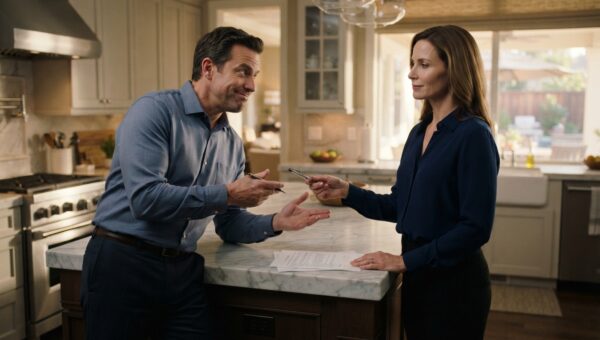
When Mark came home that evening, smelling faintly of the air-conditioned boardrooms and expensive espresso he lived in all day, I handed him the paper without a word. He didn’t even put down his briefcase. He just slid his finger under the flap, scanned the header, and slid it back across the marble counter like a waiter dropping off a bad check.
“Your bill, your problem,” Mark said, his voice entirely flat as he unbuttoned his cuffs. “They served YOU.”
I stood there by the stove, holding Maya a little tighter, wondering if my ears had stopped working properly from the sheer exhaustion of the last fourteen days.
I thought he was trying out some grim, tasteless joke he’d overheard at the office.
“Mark, it is for the delivery,” I said, my voice shaking just a fraction despite myself. “It is the hospital bill for Maya.”
He gave a short, dismissive huff and walked over to the refrigerator to pull out a bottled water. “Right. And my name isn’t on the billing address. Yours is. You chose the doctor, you stayed in the room, and you incurred the charges. I already buy the diapers and the formula. I am not paying for that too.”
I stared at the back of his head, watching him twist the cap off the water bottle with practiced ease. “I gave birth to our daughter, not got a massage,” I said, and the words came out sharper than I intended, tasting like copper and old tears.
He shrugged, leaning against the counter and taking a slow drink. “I am just being practical.
We have separate accounts for personal expenses, remember? You agreed to that when you took your unpaid maternity leave. Expenses are expenses.”
For context, Mark earns a comfortable upper-middle-class salary in corporate logistics, while my own modest income as a graphic designer vanished the moment my doctor put me on bed rest a month before my due date. Ever since I started unpaid maternity leave, he had begun treating every box of wipes or can of formula like a favor he was reluctantly granting me out of the goodness of his heart. But this? This felt less like an argument about household budgets and more like a physical blow to the stomach.
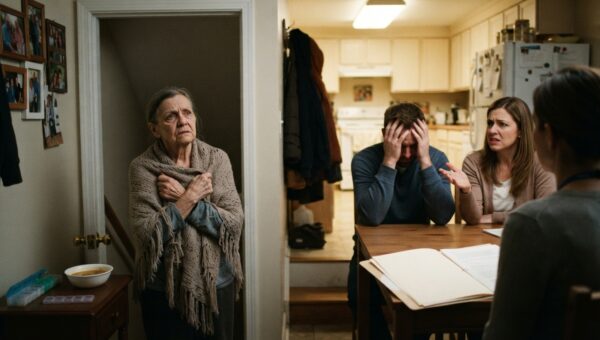
That night, while Mark slept soundly beside me with his regular, rhythmic breathing, I lay awake in the dark watching the digital numbers on the baby monitor glow a steady, mocking blue. Maya stirred once around three in the morning, and I nursed her in the armchair by the window, listening to the hum of the refrigerator downstairs.
I didn’t cry. The shock had already hardened into something much colder and much heavier.
Three days later, while Mark was at a regional conference in Seattle and Maya was finally napping in her crib, I sat down at our home office desk with his old laptop. I knew his password because we had set up the home network together three years ago, back when we still believed in things like shared futures and equal partnerships.
I didn’t have to dig very far. Mark had always been organized to a fault, a trait I used to admire.
Scrolling through the PDF statements of our old joint savings account, I watched the numbers tell a very quiet, very deliberate story. Six months ago, right around the time my doctor confirmed my pregnancy was high-risk and required me to step back from client work, Mark had quietly opened a secondary high-yield savings account in his sole name. Every month, while I was cutting back on groceries and worrying about how we would manage my unpaid leave, he had been funneling seventy percent of his surplus bonuses straight into his private reserve under the innocent-sounding label of investment planning.
He hadn’t made a mistake with the hospital bill. He hadn’t spoken out of temporary stress or fatigue. He had engineered a financial buffer for himself, anticipating that my maternity leave would slow him down, and decided to treat my temporary lack of an income as an excuse to demote me from equal partner to a financial dependent begging for scraps.
I printed out six months of statements, folding each page with precise, steady creases and sliding them into a yellow manila folder. Then I pulled up our insurance portal, confirming what I already suspected: our family deductible had been met on day two of my hospital stay, but because Mark was the primary policyholder through his corporate plan, a clerical error in the billing department had defaulted the remaining balance to the patient of record. Me. And instead of calling HR or the billing office to fix it like any normal husband would have done, he had seen an opportunity to pass the burden to someone with zero dollars in her checking account.
Two days later, I took Maya out for her routine pediatrician appointment, but on the way back, I stopped by a small brick office downtown. A family legal aid advisor named Evelyn Vance spent forty-five minutes looking over my printed bank statements and the hospital invoice, her reading glasses slipping down her nose as she pointed to a specific paragraph in state family law regarding medical debt incurred during the birth of a dependent child.
“He is legally and jointly liable for every cent of this, regardless of whose name the billing department printed on the top,” Evelyn told me, tapping the paper with a manicured nail. “Furthermore, moving marital funds into a separate account while your spouse is on medically mandated leave crosses a very clear line. You have options, and you do not have to beg him for permission to survive.”
When Mark came home from Seattle on Friday evening, he dropped his overnight bag in the entryway and loosened his tie, looking entirely pleased with himself. He brought home artisanal coffee beans and a small box of chocolates, the kind of token gesture he always used whenever he wanted to smooth over an uncomfortable conversation without actually apologizing.
“How are my two favorite girls?” he asked, tossing his keys onto the kitchen island right beside the manila folder I had left sitting there.
I was sitting at the kitchen table, nursing a cup of chamomile tea while Maya slept peacefully in her bassinet by the patio door. I didn’t get up to greet him. I didn’t smile.
Mark noticed the folder immediately. His hand hovered over his keys for half a second longer than usual before he pulled it back and cleared his throat.
“What is this?” he asked, his voice dropping into that measured, corporate tone he used when he was trying to manage a difficult client.
“Sit down, Mark,” I said. My voice didn’t shake once. It sounded like someone else entirely, someone who had spent nineteen hours in a hospital room learning exactly how much pain a human body could take before it stopped caring about being polite.
He didn’t sit. He crossed his arms over his chest, leaning his hip against the edge of the counter. “Look, if this is about the hospital bill again, I told you how I see it. We need to keep our finances separate so we don’t start leaning on each other like, “
“Like partners?” I interrupted, sliding the printed bank statements across the wood surface until they stopped right against his leather shoes. “Is that what you are afraid of? Leaning on the woman who carried your child for nine months while her career flatlined?”
Mark looked down at the exposed rows of figures, and the color drained from his cheeks so fast it looked like someone had turned off a light behind his skin. He didn’t say anything for a second, and honestly, that felt better than any speech he could have prepared.
“Where did you get these?” he finally managed, his voice dropping an octave.
“From the laptop you think is password-protected from me,” I said, leaning back in my chair. “Along with the records of every single transfer you made into your private account while I was sitting at home throwing up from morning sickness and trying to figure out how to pay for diapers out of my zero-dollar paycheck.”
He tried to square his shoulders, attempting that familiar defensive posture that had always worked on me in the past. “I was securing our future! You aren’t being rational about money right now. Postpartum hormones make people, “
“Do not talk to me about hormones,” I said, standing up so sharply that my chair scraped loudly against the hardwood floor. “And do not talk to me about rationality when you spent two weeks watching me stress over a nine-thousand-dollar debt that you knew damn well was legally ours to share under state law.”
I tossed the legal aid consultation summary right on top of his bank statements.
“You have two choices tonight, Mark,” I said, looking straight into his eyes without blinking. “You can take your checkbook, call the hospital billing department on speakerphone right now, and pay the entire $9,347 out of that private account you thought you were so clever hiding. Then, tomorrow morning, we are going to sit down with a neutral financial mediator and draft a postnuptial agreement that guarantees my maternity leave is subsidized equally from household funds, with zero separate slush funds on the side.”
He stared at me as if he were seeing a stranger standing in his kitchen. “And if I don’t?”
“Then you can keep your separate account,” I said quietly, pointing toward the front door. “Because my bags are already packed in the guest room closet, and Evelyn Vance has a separation agreement ready for my signature on Monday morning that will divide every single asset we own right down the middle, including every penny you funneled away since January.”
The silence in the kitchen stretched out until it felt thick enough to touch, broken only by the faint, rhythmic ticking of the wall clock above the sink. Mark looked from the bank statements to the legal summary, and then down at the hospital bill still sitting beside the bowl of green pears. The illusion of complete control he had built for himself over the last six months was crumbling right in front of him, piece by quiet piece, and he knew it. He couldn’t bully a woman who had already calculated every exit and held both the legal and moral high ground.
His jaw worked once, twice, before the last bit of starch went out of his posture. He reached into his jacket pocket with stiff, clumsy fingers, pulled out his smartphone, and sat down heavily at the kitchen table without another word.
***
Two weeks later, the physical storm had passed, leaving behind a strange, clear-eyed quiet in the house.
The hospital bill, now stamped in bright red ink with the words PAID IN FULL and a formal receipt stapled firmly to the back, sat right on the kitchen counter directly beside a freshly signed household financial restructuring agreement that guaranteed my caregiving labor was valued as equal to any paycheck coming through our front door.
Mark had transferred the full amount from his private account within ten minutes of our conversation that Friday night, and the separate savings account had been officially closed down and merged back into our primary family funds by Tuesday morning. The romantic illusion of our marriage was permanently altered, stripped of its old naive assumptions, but the respect between us had finally found solid ground.
Outside, the late afternoon sun was dipping low behind the oak trees at the edge of the property, casting long, golden shadows across the lawn. I sat out on the front porch swing with Maya resting securely against my chest, her little warm breath rising in a steady rhythm against my collarbone. I watched the light fade across the road, knowing exactly what I owned, what I was worth, and where I stood, never willing to be financially vulnerable again.