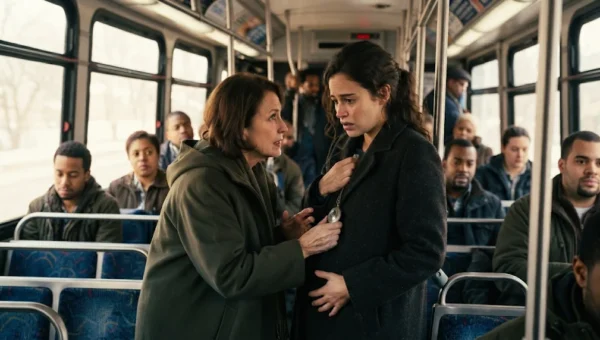
PART 1
For three weeks straight, my nine-year-old son, Leo, brought his lunchbox home with the zipper pulled tight and the food untouched.
Every afternoon when he set his navy blue canvas bag on the kitchen counter, I would open it to find the same sad scene: the turkey sandwich cut in triangles with the bread turned rubbery, the unopened bag of pretzels, and the plastic cup of diced peaches resting in warm syrup.
“The cafeteria smelled like burnt cheese,” Leo told me on a Tuesday.
He dropped his gaze to his sneakers and picked at a loose thread on his jeans. “I just wasn’t hungry, Mom.”
I blamed the school lunchroom. Leo was a quiet boy who hated loud spaces, and the elementary school had recently combined the third- and fourth-grade lunch periods into one giant, echoing room. I figured the noise was knotting his stomach.
Then came the second Friday in October.
I took the lunchbox over to the sink to dump out an uneaten ham roll-up. When I shook the bag upside down over the trash can, the stiff plastic insert at the very bottom came loose. A small square of lined notebook paper, folded down until it was no bigger than a postage stamp, slipped out and fluttered onto the linoleum.
I picked it up. In Leo’s careful, blocky third-grade printing, written in blue crayon, were five words:
leave porch light on.
My chest went tight. Leo had never cared about the outside lights before.
His stepfather, Grant, had lived with us for eighteen months. We had married after a quiet, sensible courtship, and Grant had taken over paying the $1,430 monthly mortgage on our three-bedroom house in Clarksville so I could cut back to part-time shifts at the medical billing office. On paper, it was the kind of steady, orderly life I thought I owed my son after raising him alone for six years. Grant was strict, but he was employed, he didn’t run around, and he paid the bank on the first of every month like clockwork.
I carried the scrap of paper into the living room where Leo was sitting on the carpet, building a small tower out of wooden dominoes.
“Leo,” I said, crouching beside him. “What does this mean?”
He looked at the folded paper in my hand. His fingers paused over the wooden blocks. Then he reached out, rubbed the bare wooden edge of the coffee table with his thumb, and looked toward the hallway.
“Nothing,” he whispered. “Just a game.”
“What kind of game?”
“Just in case it gets dark,” he said, not meeting my eyes. “That’s all.”
Before I could ask him another question, the heavy front door swung open. Grant walked in. He tossed his work keys onto the entryway table with a loud clatter and kicked his steel-toed work boots off against the baseboard.
The sharp, sour smell of cheap whiskey came into the room with him. He had been stopping at the tavern near the lumber yard on Friday afternoons lately, claiming he just needed an hour to wind down from the guys on his shift.
Grant stopped at the edge of the carpet, swaying slightly on his heels. He didn’t say hello to me. He pointed a thick, calloused index finger straight at Leo.
“He knows where he belongs,” Grant said, his voice thick and low.
Leo gathered his dominoes in both hands, pulled his knees to his chest, and scrambled up off the floor without making a sound.
He ran down the hallway toward his bedroom and pulled the door shut until the latch clicked.
“What is that supposed to mean, Grant?” I asked, standing up to face him. “What are you talking about?”
“Means the boy needs to learn respect,” Grant muttered. He brushed past my shoulder, heading straight for the refrigerator to pull out a cold can of soda. “You baby him too much, Sarah. You’re turning him soft.”
He went into the master bedroom twenty minutes later and fell onto the mattress with his work clothes still on. By eight o’clock, his heavy, rattling snores filled the back half of the house.
I checked on Leo. He was curled on his side beneath his quilt, pretending to be asleep, but his eyelids were fluttering and his shoulders were rigid. I kissed the crown of his head, pulled the door nearly closed, and went back into the dark kitchen.
I couldn’t shake the look on my son’s face when he touched that coffee table.
I took a butter knife from the silverware drawer and carried Leo’s lunchbox to the table beneath the single yellow bulb of the range hood. I worked the dull blade under the stitched seam where the vinyl lining met the hard plastic bottom. The factory glue gave way with a soft, tearing sound.
Tucked flat beneath the gray insulation were nine more folded squares of notebook paper.
Each one was dated in the upper right corner, going back three weeks. Every single note was in Leo’s handwriting.
Sept 18: took coat out to shed.
Sept 22: two hours behind garage. cold.
Sept 27: had to sit on porch step until streetlamps went off.
Oct 2: he hid my key again.
My fingers were trembling so hard I dropped the butter knife onto the table. I unfolded the tenth and final note, dated that very afternoon.
Oct 9: Mom, if he locks me outside again, look under the…