
PART 1
Dad bought a $300,000 annuity back in 2008, right after he sold his share of the auto repair shop.
He named me as the primary beneficiary the day the contract was drawn up. For fourteen years, every single Christmas when my children were unwrapping their gifts on his living room rug, Dad would pat my knee and say the exact same words: “When I’m gone, Mark, that’s for the grandkids. That money makes sure they finish college without borrowing a nickel.”
Dad died this past January at seventy-eight.
Two weeks after the funeral, after the casseroles were gone and the sympathy cards were filed into a shoe box, I called the insurance company to submit his death certificate and begin the claims process. The policy had grown over eighteen years, and I expected a routine packet of claim forms in the mail.
The intake representative put me on hold for four minutes. When she came back on the line, her voice had shifted into that guarded, stiff tone customer service people use when they see an alert on their screen.
“Mr. Albright,” she said, “you are not listed as the active beneficiary on this contract.”
I sat down at my kitchen table. “There must be an error. My father established that annuity in 2008 with Northwestern Mutual. I have his original policy folder in my safe.”
“The beneficiary was updated in October of 2022,” she told me, reading straight from her computer log. “The current sole primary beneficiary of record is Debra Mitchell.”
Debra Mitchell was my father’s second wife. Dad had married Debra in 2016, eight years after my mother passed away. Debra was fifty-eight, eleven years younger than Dad, and she had spent their entire marriage complaining about the heating bills in Dad’s ranch house while driving a new leased sedan every two years.
October of 2022 hit me like cold ditch water.
Dad had been formally diagnosed with moderate-stage Alzheimer’s disease at the university medical center in August of 2022, exactly two months before that beneficiary change was filed.
“Who submitted that paperwork?” I asked. “My father was already struggling to remember his house number in the fall of 2022.”
“The change was submitted through his financial advisor of record, Mr. Bradley Vance,” the clerk replied. “The signature was processed with an authorized advisory medallion guarantee.”
I didn’t wait until morning. I drove straight down to Bradley Vance’s office on Market Street.
Bradley had managed Dad’s personal investments for twenty years, played golf with Dad at the municipal course, and always called me by my first name whenever we met on the street.
Bradley sat behind his mahogany desk, folded his manicured hands over a leather blotter, and looked me dead in the eye without blinking.
“Your father knew exactly what he was doing, Mark,” Bradley said, his voice smooth and untroubled. “Your father was fully competent when he signed that amendment in my conference room. He told me Debra had been taking wonderful care of him, and he wanted to make sure his surviving spouse was protected.”
I leaned over his desk. “Competent? Bradley, by October of 2022, Dad thought it was 1997. He couldn’t tie his work boots. He was asking for his first wife, my mother, every single day at sunrise. My mother died in 2008.”
Bradley didn’t flinch. He told me that testamentary capacity only required a lucid interval, and that as far as his brokerage firm was concerned, the transfer was legally bulletproof.
I hired an estate attorney that afternoon and filed a petition in probate court to freeze the annuity distribution, citing lack of capacity and undue influence. With market growth over the years, the contract had swollen to nearly $400,000.
My attorney subpoenaed Bradley Vance’s internal client notes from October 2022.
When the file arrived under court seal, Bradley’s own handwritten contemporaneous meeting log was sitting right there in black ink. Under the date of October 14, 2022, Bradley had scribbled: “Client confused but cooperative. Signed where indicated.”
We filed those notes with the probate judge on a Tuesday morning. Judge Evelyn Foster took one look at the doctor’s neurological evaluation from August, compared it to Bradley’s note, and ordered the original wet-ink documents brought to her courtroom for an evidentiary hearing.
On Thursday morning, the bailiff handed the original blue-ink signature page to our table.
There was Dad’s signature, shaky and broken, running crooked across the line. Beside it was Bradley Vance’s notary stamp.
Beneath the notary stamp was a secondary line for an independent attesting witness, someone who had stood in that private office when Dad agreed to strip his grandchildren of their college funds.
I looked at the signature of the witness, and the air left my lungs.
The witness who signed that page was my twenty-six-year-old daughter, Chloe.
PART 2
The name on the witness line was written in Chloe’s distinct, upright hand: Chloe Albright.
I sat at the mahogany counsel table in the county courthouse, staring at my own child’s signature until my eyes burned.
Chloe was my oldest daughter. In October of 2022, she was twenty-two, freshly graduated from state college with a marketing degree, living in a rented townhouse three miles from my house. When Dad was slipping into the fog of his illness, Chloe had volunteered to drive him to his weekly memory therapy sessions, telling me she wanted to spend every minute she could with her grandfather before his mind went completely dark.
I had thought she was an angel. I had thanked her, paid for her gas, and told my friends that my daughter had a heart of pure gold.
I left the courthouse without speaking to Debra or Bradley Vance.
I called Chloe at noon, keeping my voice as flat and even as I could, and asked her if she could meet me for coffee at the diner near the county library.
She walked in twenty minutes later wearing her office blazer, carrying a canvas tote bag. She smiled, kissed my cheek, and sat down in the vinyl booth across from me, asking how the probate hearing had gone that morning.
“Did the judge release the money, Dad?” she asked, stirring a packet of raw sugar into her coffee.
I didn’t answer with words.
I pulled the certified photocopy of the witness page from my breast pocket, unfolded the paper, and laid it flat on the Formica table between our cups.
Chloe looked down at the paper.
Her spoon stopped moving in her cup. Her mouth parted slightly, and the easy color drained from her cheeks in less than three seconds, leaving her skin pale and waxy under the diner lights.
“Chloe,” I said, my voice low and quiet. “Why did you witness Dad’s signature in Bradley Vance’s office on October 14, 2022?”
Chloe pulled her hands back from the table, burying them in her lap. Her chin began to tremble, her eyes darting toward the front entrance of the diner like she was looking for an exit route.
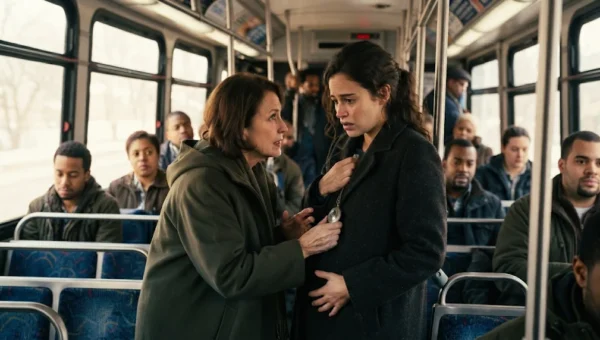
“Dad,” she whispered, her voice cracking. “Debra told me it was just tax paperwork.”
“Debra told you?”
“She called me that morning while you were working a double shift at the water plant,” Chloe choked out, tears welling up in her eyes. “She said Grandpa needed to sign a homestead exemption update for the county auditor so his property taxes wouldn’t increase. She told me the state required an immediate family member to witness it because of his diagnosis.”
“You went to college for four years, Chloe,” I told her, pointing at the bold header across the top of the form. “The page says Northwestern Mutual Annuity Beneficiary Designation in half-inch black letters. It names Debra Mitchell as the sole primary beneficiary for four hundred thousand dollars.”
Chloe covered her face with both hands, her shoulders hitching as she began to sob.
“I didn’t read it, Dad!” she wept into her fingers. “I swear to God I didn’t read it! Debra told me not to look at the numbers because Grandpa was embarrassed about his net worth. She stood right beside my chair and held her thumb over the middle section while I signed. Grandpa was sitting by the window in Bradley’s office holding a plastic bottle of water, asking when his mother was coming to pick him up from school.”
The image hit me like an iron bar across the chest.
My father, a man who had worked forty years with his hands, sitting in a leather chair waiting for a mother who had been in the cemetery since 1982, while his second wife and his own granddaughter signed away his life’s savings.
“Did Debra give you anything, Chloe?” I asked.
The question hung in the booth, heavy and sharp.
Chloe dropped her hands from her face. Her lips were trembling so hard she could barely form the syllables, but she didn’t look away from my eyes.
“Tell me the truth, Chloe,” I said. “Right now.”
“She paid off my car loan,” Chloe whispered.
PART 3
The diner was quiet except for the hum of the pie case behind the counter.
“How much was the car loan, Chloe?” I asked.
“Fourteen thousand two hundred dollars,” she choked out, the tears running down her cheeks. “On my Civic. Two weeks after we left Bradley’s office, Debra handed me a cashier’s check from her personal checking account. She told me it was an early graduation gift from Grandpa because he was so proud of me finishing my degree. She made me promise not to tell you because she said you would get jealous that Grandpa had helped me instead of your brother’s kids.”
She reached across the table, trying to grab my wrists, but I kept my hands flat against my sides.
“Dad, I didn’t know it was the college fund!” she pleaded, her voice rising in a desperate, ragged pitch. “Grandpa had told me for years that he had an account for us, but he never told me the name of the company! Debra told me the homestead paper had nothing to do with money! She told me she was saving the house!”
I looked at my daughter.
I saw the guilt in her eyes, raw and sick, but beneath that guilt, I saw the plain, ugly truth of human selfishness. A twenty-two-year-old girl who had wanted her debts wiped clean, who had chosen not to read the bold black letters on a page because reading them would have forced her to say no to fourteen thousand dollars.
“Get your purse, Chloe,” I said, standing up from the booth.
“Where are we going?”
“We are going back to the courthouse,” I told her. “Judge Foster gave Bradley Vance until three o’clock to produce the original client intake file. You are going to sit in that witness box, and you are going to tell the judge exactly what Debra held her thumb over.”
We walked back into the county courthouse at one-forty-five.
Debra Mitchell was sitting on the wooden bench in the third-floor hallway, wearing a tailored black wool coat, talking quietly to Bradley Vance and her private estate lawyer.
When Debra looked up and saw Chloe walking behind me with red, swollen eyes and her mascara streaked down her cheeks, Debra’s confident posture snapped. She stood up so fast her leather handbag fell onto the marble floor with a dull thud.
“Chloe?” Debra snapped, taking a hurried step toward us. “What is this? What are you doing here with your father?”
“She’s here to give sworn testimony, Debra,” I said.
Bradley Vance adjusted his gold-rimmed glasses, his voice taking on that smooth, threatening corporate tone. “Mark, your daughter is an attesting witness to a legal instrument. If you coerce her into changing her testimony regarding your father’s execution, you are bordering on witness tampering.”
“Save the speech for the bench, Bradley,” I said.
The heavy oak doors of Courtroom 3 swung open, and the bailiff called our case.
We filed into the room. Judge Foster took her seat beneath the state seal, adjusted her reading glasses, and looked down at the original documents Bradley Vance’s firm had delivered under subpoena.
My attorney didn’t waste time with opening arguments. He called Chloe Albright directly to the stand.
Debra’s lawyer leapt to his feet, objecting that the witness was an interested party, but Judge Foster waved him down with a sharp flick of her wrist. “The young woman signed the document. I will hear from the person who put ink to the paper.”
Chloe walked up to the small wooden box, raised her right hand, and swore to tell the truth.
For twenty minutes, my daughter spoke in a clear, broken voice that echoed off the high plaster ceiling.
She testified that on October 14, 2022, her grandfather did not know what day it was. She testified that he asked Bradley Vance three times when the school bus was arriving.
She testified that Debra Mitchell held her hand over the body of the form, instructing her to sign the witness box without reading the text.
And then my daughter pulled a folded paper from her purse, handed it to the bailiff, and placed the ultimate piece of evidence into the public record: a photocopy of the $14,200 cashier’s check Debra had given her two weeks later, bearing Debra’s personal signature and the memo line: *For cooperation on estate matters.*
The courtroom went completely dead.
Judge Foster leaned forward over her bench, looking at the check, then looked down at Debra Mitchell.
Debra sat frozen at the defense table, her hands clutched around her gloves, the skin around her mouth gray and slack.
Bradley Vance leaned back in his leather chair, staring at the ceiling tiles, knowing that his brokerage license was sitting on the edge of a cliff.
ENDING
Judge Foster did not wait for closing briefs.
She delivered her ruling directly from the bench at two-thirty that afternoon.
Under Ohio probate law, the court found that the beneficiary designation executed on October 14, 2022, was procured through gross undue influence and executed by a decedent lacking basic testamentary capacity. Judge Foster declared the document null and void as a matter of law.
The original 2008 contract was reinstated in full, restoring me as the sole primary beneficiary of the $394,620 annuity balance, to be held in trust for Dad’s grandchildren as originally intended.
The judge did not stop there.
She forwarded the entire case file, including Bradley Vance’s internal notes and the $14,200 cashier’s check, to the county prosecutor’s office and the state securities commissioner for formal investigation into financial exploitation of an incapacitated elder.
Debra Mitchell was forced to pay fifteen thousand dollars in attorney fees from her personal assets to cover my legal costs. She moved out of Dad’s ranch house three weeks later, packing her clothes into a moving van in the middle of the night, and relocated to a condo across the state line in Indiana.
Bradley Vance was placed on immediate administrative leave by his brokerage firm six weeks later, his securities registration formally suspended pending the state regulatory hearing.
The money was saved, but the damage in my own house was not something a court order could fix.
Chloe sat in my kitchen two nights after the hearing. She had a certified cashier’s check for fourteen thousand two hundred dollars sitting on the table, drawn from a personal loan she had taken against her own name at the local credit union.
She pushed the check across the wood toward me.
“I took out a secondary bank loan, Dad,” Chloe whispered, her eyes cast down at her lap. “I’m paying it back. Every penny of what she gave me. I don’t want a dime of Grandpa’s college fund for my own kids someday. I don’t deserve it.”
I looked at the check. Then I looked at my daughter.
I didn’t yell at her, and I didn’t tell her that everything was fine. Trust between a father and a daughter is a heavy, fragile thing, and once you watch your child trade her grandfather’s memory for a car payment, the room never quite looks the same again.
“Put that money back into your own credit union account, Chloe,” I told her quietly. “Pay off the loan you just took. You don’t owe the estate fourteen thousand dollars. The judge already took care of the legal debt.”
“Dad, please,” she wept.
“You don’t buy your way back into this family with a check, Chloe,” I said. “You rebuild your name by being honest when nobody is watching. You have a long road ahead of you, but we will walk it one day at a time.”
The $394,620 was transferred into an irrevocable educational trust for Dad’s four grandchildren in March, managed by an independent trust officer at First National Bank.
Under the terms Dad had dictated eighteen years ago, the funds are locked, distributing tuition directly to accredited colleges when each child reaches eighteen years of age.
Yesterday was Saturday.
The morning was cool and bright, the late spring sun warming the stone steps of the cemetery on the hill outside of town.
I drove up the winding drive, parked my truck beneath the oak tree, and walked over to the double granite marker where Dad rests beside my mother.
Arthur Albright. 1945 to 2026.
Beneath his name, carved into the gray stone, was his favorite phrase: *A steady hand for those who follow.*
I knelt down in the damp grass, pulled a few stray weeds from the edge of the granite, and laid a small brass wrench on the corner of the marker, the tool he had given me when I was twelve years old in the back of his shop.
“The kids are going to school, Dad,” I whispered into the morning wind. “Every single one of them. Just like you wanted.”
I stood up, wiped the dry grass from my trousers, and walked down the hill to my truck, knowing that the promise he made thirty Christmases ago was finally resting on honest ground.