PART 1
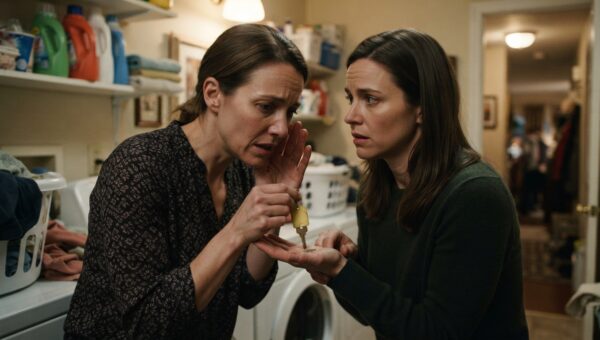
My daughter, Mallory, called on a Thursday afternoon while I was scraping grease off the cookie sheets in my sink.
“Mom,” she said, without asking how my week was going, “do you remember my tenth birthday?”
I had to laugh a little. “Of course I do. How could I forget? We ordered that huge chocolate sheet cake from Miller’s Bakery, your dad rented that spotted pony from the county fairgrounds, and then a freak downpour turned the whole backyard into mud before we even lit the candles.”
“You forgot something else,” Mallory said.
Her voice was flat. She was twenty-seven now, living an hour away in an apartment near the hospital where she worked as an ultrasound tech, but when she got quiet like that, she sounded just like she did when she was small and holding back tears.
I wiped my hands on the tea towel by the faucet. “What did I forget, sweetie? Did I leave out a present? If it was that portable CD player you asked for back then, I swear we looked at three different department stores before we gave up.”
“No,” she said. “Not a present. Do you remember the woman who stayed with me while you drove Dad to the emergency room?”
My smile went away.
That tenth birthday had turned into a nightmare around four o’clock. My late husband, Jim, had slipped on the wet flagstones by our garden shed while trying to guide the pony into the trailer.
The crack of his collarbone had sounded like a dry branch snapping. I had been frantic, holding an ice pack to his shoulder while he turned gray on the back steps.
Our neighbors, the Hendersons, were out of town at their lake cabin, and the other parents had already scrambled into their minivans with their kids to escape the storm. But when the rain was coming down in sheets, a woman who said she lived three houses down, someone I thought was a new tenant renting the old duplex by the corner mailbox, walked up onto our screened porch. She had offered to sit with Mallory, dry off the kitchen floor, and box up the leftover cake so I could rush Jim to county general.
I had been so panicked about Jim’s shoulder and the fear of internal shock that I pressed our front door key into her hand, thanked her three times, and sped off toward the highway.
By the time Jim was in a sling and we pulled back into our driveway around nine that night, the kitchen was spotless, the porch lights were off, and Mallory was asleep in her bed under three quilts. The house key was sitting in the ceramic dish on the hall table.
“I remember her,” I told Mallory into the receiver. “She was very kind. She helped us out of a terrible bind that afternoon.”
Mallory went quiet for four or five seconds. The only sound on the line was her breathing.
“Why did you never tell me she was my birth mother’s sister?” she asked.
My chest tightened so hard I couldn’t pull in a clean breath.
Mallory was adopted when she was four days old through a private, closed adoption in another county. Jim and I had never met her biological family. The adoption court records had been sealed, the agency had dissolved in the early nineties, and the social worker had explicitly told us that the birth mother had requested complete confidentiality.
“Mallory,” I said, my voice shaking, “I have never met your birth mother’s sister. I didn’t even know she had one.”
Before I could say another word, my phone vibrated against my cheek.
Mallory hung up the call.
A text message came through with an image attachment. I pulled the phone away from my ear and opened the screen.
It was a color photograph, creased along the edges, taken in our living room next to the brick fireplace. Mallory was ten years old in the picture, wearing her yellow birthday dress with mud splattered on the hem. Standing right behind her, with both hands resting gently on Mallory’s small shoulders, was a woman with dark wavy hair, high cheekbones, and the exact same almond-shaped hazel eyes as my daughter.
PART 2
I stared at the photograph until the screen dimmed in my hand.
I tapped the glass to wake it back up. In the background of the snapshot, on the wooden mantle above the fireplace, was our brass carriage clock and the little ceramic bird Jim had bought me for our fifth anniversary. It was definitely our living room. It was definitely the rainy afternoon of Mallory’s tenth birthday.
I dialed Mallory’s number back immediately. The line rang six times before it went to her voicemail.
“Mallory, please pick up,” I said into the recording, my hands trembling against the kitchen counter. “I need you to listen to me. I did not lie to you. I swear on your father’s memory, I had no idea who that woman was. I thought she was just a neighbor helping us out in the rain. Call me back as soon as you hear this.”
I didn’t wait for her to call. I grabbed my car keys, put on my raincoat, and drove the forty-five miles south to Mallory’s apartment complex.
Jim had been gone for four years. He died of a sudden stroke while working in his garden, leaving me alone in the split-level house where we had raised Mallory. During all our years together, Jim had been the rock of our household. He was quiet, steady, and worked forty hours a week as a county road supervisor. He had carried Mallory on his shoulders through state parks and taught her how to change the oil in her first car. If there had been any contact with her birth family, Jim would have told me. We didn’t keep secrets from each other.
At least, that was what I had believed for thirty-two years of marriage.
When I reached Mallory’s building, I climbed the concrete stairs to the second floor and knocked on door 204.
The door opened after a minute. Mallory stood in the entryway wearing gray sweatpants and a thick sweater. Her eyes were red and puffy. She looked at me, looked at the rain dripping off my coat onto the mat, and stepped back into the living room without saying hello.
“Where did you get that picture, Mallory?” I asked, stepping inside and shutting the door behind me.
Mallory walked over to her dining table, where an old blue shoebox sat open among several folders. She picked up the original print and turned it toward me.
“Her name is Sarah,” Mallory said. Her voice was quiet, stripped of the anger from the phone call, leaving only a raw, bruised hurt. “She contacted me three weeks ago through the hospital email directory. She recognized my name and my birth date from an article the county health system published about our ultrasound team.”
“Mallory, why didn’t you come to me right away?”
“Because she told me you and Dad already knew,” Mallory said, looking straight into my face. “She told me she spent three hours in our house that day with Dad’s permission. She said she brought that camera into our living room because Dad promised her she could have one photograph with me before she moved to California.”
The room seemed to tilt slightly under my feet.
“Your father was in the emergency room with a broken collarbone,” I said, leaning one hand against the back of her wooden dining chair. “He was in the triage bay with me until eight o’clock that night.”
“He was,” Mallory said. She reached into the shoebox and pulled out a folded piece of yellowed, lined paper. “He was at the hospital with you. But he wasn’t surprised when she showed up on the porch, Mom. Look at this.”
She handed me the note.
The paper was torn from a yellow legal pad, written in blue ballpoint ink. The handwriting was unmistakable. It was Jim’s blocky, uneven print, the way he always wrote out supply lists for the road crew:
*Sarah,*
*The rain gave us an opening. Ruth has to drive me to the hospital in town. Stay until six. Take your picture. Don’t leave any trace. Keep your word to Claire.*
*Jim.*
PART 3
The paper smelled faintly of old cardboard and cedar dust.
Claire was the name of Mallory’s biological mother, the name recorded on the confidential medical intake form from the private adoption attorney in 1999.
“She brought this note with her when we met for coffee last Tuesday,” Mallory whispered, tears spilling over her lower lashes. “She didn’t come to hurt anyone, Mom. She just wanted to know if I was healthy. She told me Claire died of breast cancer when I was eight years old. Claire’s dying wish was for Sarah to make sure I was happy, that I was loved, and that I had a real family.”
I sank down onto the dining chair, holding the yellow paper between my thumb and forefinger.
The pieces of that rainy afternoon from seventeen years ago began to arrange themselves into a completely different picture.
Jim hadn’t slipped on the wet flagstones by accident. He had been a careful man who worked on slick gravel roads and muddy embankments for thirty years. He had never been clumsy.
That morning, before the party started, Jim had checked the mailbox three times. When the rain started pouring around three-thirty, he had insisted on going out to the shed alone to check the latch on the pony trailer, even though I told him the pony was fine under the awning. Twenty minutes later, he had crawled up the back steps holding his arm, insisting that an ambulance was too expensive and that I had to drive him to county general immediately.
He had deliberately put himself in the emergency room to create a three-hour window where the house would be empty, knowing I would never leave our ten-year-old daughter alone in a thunderstorm without an adult to watch her.
“Sarah lived two hours north,” Mallory continued, sitting across from me. “She drove down that morning because she had mailed Dad a letter a month before my birthday, begging for just five minutes to see Claire’s baby before she moved across the country. Dad called her from a payphone near the highway depot. He told her he couldn’t break the adoption agreement, and he couldn’t break your heart by bringing her into our lives. But he told her if she parked down the road and waited for the rain, he would find a way to give her twenty minutes on the porch.”
“He broke his own shoulder,” I whispered. The horror and the sadness of it hit me all at once. “He broke his collarbone on purpose.”
“Sarah told me Dad fell hard on the concrete lip of the shed,” Mallory said, her voice trembling. “She saw him do it through the trees while she was parked by the culvert. She told me he sat in the mud for five minutes trying to get his breath before he crawled to the porch. He didn’t tell her he was going to hurt himself. He just told her that when she saw the car leave, she should walk up and take care of me.”
I pressed both hands against my face, trying to stop the burning in my eyes.
Jim had kept that secret for fourteen years until the day he died. He had carried the ache in his shoulder every winter, rubbing the knot of scar tissue where the bone had healed crooked, telling me it was just his punishment for rushing in the rain.
He had protected our closed adoption because he knew how terrified I had been, back when Mallory was an infant, that someone would come and take her back. In those early years, every strange car on our gravel road had made my heart jump. Jim had spent years reassuring me that Mallory was ours, that nobody could ever dispute our custody, that we were safe.
And when a grieving aunt showed up asking for one look at her dead sister’s child, Jim had found a way to show mercy to a stranger without destroying my peace of mind. He took the physical pain, he took the secret, and he buried it so deep that nobody found it until an old photograph surfaced seventeen years later.
“Mom,” Mallory said, reaching across the table and laying her fingers over mine. “When Sarah showed me that note, I thought you and Dad had made a deal behind my back. I thought you had kept my mother’s family away from me because you were ashamed.”
I looked up at her, seeing Jim’s quiet patience in her eyes, but also seeing the high cheekbones of the woman in the photograph.
“I was never ashamed of you, Mallory,” I said. “Not for one single second of your life. And your father loved you more than his own skin. He did what he thought was right to protect our little family, even if he had to carry the hurt by himself.”
ENDING
Mallory and I sat at her small kitchen table until the sun went down and the streetlamps outside flickered on through the rain.
We looked through the other papers Sarah had given her: an old high school yearbook photo of Claire wearing a debate team sweater, a copy of Claire’s favorite recipe for apple cobbler written on an index card, and a letter Sarah had written to Mallory on the plane ride to California that she had never had the courage to mail.
Sarah hadn’t asked for money. She hadn’t asked to become a second mother. She had simply wanted Mallory to know that she had been born out of love, and that the family who gave her up had spent their lives hoping she was safe.
“Do you want to meet her?” Mallory asked me softly, pointing to a phone number written on the back of the envelope.
I looked at the photograph of my ten-year-old girl in her yellow muddy dress, standing in front of my fireplace with a woman who had kept her promise for seventeen years.
“Yes,” I told her. “I think your father would want us to invite her to dinner.”
Two weeks later, Sarah drove down from the northern suburbs where she was staying with her daughter.
We met at the small diner near the state park, halfway between my house and Mallory’s apartment. Sarah was sixty now, her dark hair streaked with silver, wearing a simple wool jacket. When she walked through the door and saw Mallory sitting in the booth, she stopped, pressed her hand to her mouth, and took a deep, steadying breath before she walked over.
She looked at me with uncertain, apologetic eyes.
“Mrs. Bennett,” Sarah said, her voice barely above a whisper. “I never meant to cause trouble in your home.”
I stood up from the vinyl booth, reached out, and pulled her into a hug before she could say another word.
“Thank you for drying my kitchen floor that afternoon, Sarah,” I said into her shoulder. “And thank you for keeping Jim’s secret.”
We spent three hours in that booth over cups of black coffee and warm pie, talking about Claire’s laugh, about Jim’s stubbornness, and about how much of both of them lived on in the young woman sitting between us.
When I drove back to my house that evening, the gravel driveway was quiet in the autumn chill.
I walked up the back steps, paused by the garden shed where Jim had fallen seventeen years ago, and ran my hand along the rough cedar siding.
“You fool,” I whispered to the empty yard, smiling through the tears on my cheeks. “You stubborn, brave old fool.”
I walked inside, took the creased photograph of Mallory and Sarah from my purse, and framed it in a small silver border.
I set it on the mantle right beside Jim’s portrait, right between our old carriage clock and the ceramic bird, where it finally belonged.