PART 1
The front door clicked shut behind me after my sister Scarlett screamed, “You’ve ruined our lives!” My mother stood beside her and coldly said, “We’d be happier without you.” Their anger started because I refused to co-sign Scarlett’s third luxury-car loan, knowing I would be responsible when she inevitably defaulted again. For twenty-six years, I had paid bills, fixed their problems, and carried blame for mistakes that were never mine.
That night, I packed two suitcases and walked into the cold November air without saying another word.
What they didn’t know was that I had already secured a new life and I had quietly kept every document proving exactly how much I had sacrificed for them. They thought I was finally leaving with nothing, but the truth I carried with me was about to change everything they assumed about power and family loyalty.
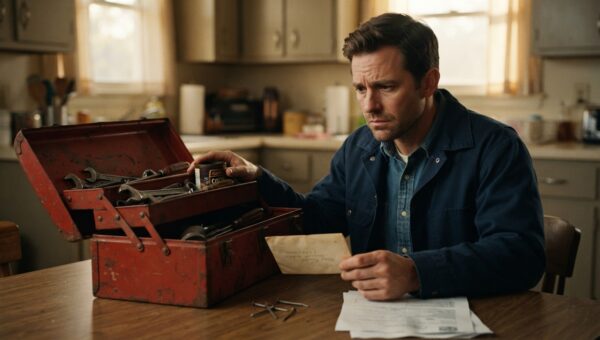
For over two decades, my life had not belonged to me. When our father passed away when I was thirty, leaving behind a mountain of medical debt and a struggling household, I stepped up. I gave up my apartment near my college, moved back home, and took a full-time job in medical administration. My younger sister Scarlett was just sixteen back then, and my mother was grieving so deeply that she stopped opening the mail entirely. Within six months, I was the one paying the mortgage, buying groceries, and keeping the lights on.
I thought it was temporary. I thought once Scarlett graduated high school and found her footing, things would ease up. Instead, Scarlett developed an expensive taste for a lifestyle she could never afford, and my mother enabled every single impulse. Whenever Scarlett maxed out a credit card or fell behind on rent, my mother would look at me with tired, pleading eyes and say, “You know how delicate your sister is. You have a steady head. You can fix this.”
Over the years, fixing it became my full-time job outside of my actual job. When Scarlett bought her first foreign sedan at twenty-two and could not make the payments, I used my savings to clear the arrears so the repo man would not show up at our driveway. When she decided to start a boutique design agency that failed within eight months, I absorbed the commercial lease penalty to protect the family name.
Every single time, my mother framed my financial rescues as mere family duty, while treating Scarlett’s failures as unfortunate accidents brought on by a harsh world.
The breaking point arrived on a Tuesday evening. Scarlett strode into the kitchen holding a tablet computer open to a gleaming black sports coupe priced at over sixty thousand dollars. She did not ask how I was doing or offer a cup of coffee. She simply placed the screen in front of my face and said, “The finance manager needs a co-signer with a tier-one credit score by Thursday morning. You have the equity in your house. It is just a formality.”
I stared at the screen, then looked up at my mother, who was nodding encouragingly. This was her third luxury car in five years. The first two had both been repossessed or traded in at a massive loss after she stopped paying.
I felt a strange, cold calm settle over my chest. The exhaustion of twenty-six years crystallized into absolute clarity. I pushed the tablet back across the counter and said no.
The reaction was immediate and explosive. Scarlett burst into theatrical tears, claiming I was sabotaging her career and intentionally keeping her small. My mother joined in, escalating from disappointment to venomous accusation. They hurled every old grievance at me, blaming me for my father’s death because I had not pushed him to see a doctor sooner, blaming me for not advancing faster at work, blaming me for ruining family gatherings with my supposed coldness.
When Scarlett screamed that I had ruined their lives and my mother delivered her final verdict that they would be happier without me, I did not argue. I simply turned around, walked upstairs to the spare bedroom, and zipped up the two heavy canvas suitcases I had hidden in the back of the closet three weeks earlier.
PART 2
The small one-bedroom apartment on the south side of town smelled faintly of fresh paint and old carpet, but to me, it smelled like oxygen. I had signed the lease three weeks prior, paying six months upfront with funds from a separate savings account that my mother and sister never knew existed. For years, I had put away fifty dollars here and a hundred dollars there, hiding statements in a safety deposit box at a downtown bank where nobody in my family had an account.
The first forty-eight hours were a blur of silence broken only by the persistent buzzing of my phone. Scarlett called fourteen times and texted twenty-two times before noon on Wednesday. Her tone shifted rapidly from furious demands for my signature to frantic warnings that the dealership was going to cancel her order. My mother left three voicemails, each colder than the last, culminating in a demand that I return the spare key to the family home by the end of the week.
I did not answer any of them. Instead, I sat at the small laminate kitchen table and opened the worn leather accordion folder I had carried out in my third suitcase. Inside was a complete accounting of every dollar, every transfer, every bounced check, and every promissory note signed under duress over the past twenty-six years.
There were copies of cashier’s checks I had written to cover Scarlett’s defaulted student loans. There were bank statements highlighting thirty-six consecutive months where I paid the home equity line of credit that my mother had secretly taken out to fund Scarlett’s European vacation two summers ago. There were signed agreements where Scarlett promised to repay loans that were never serviced.
On Thursday afternoon, a sharp knock echoed through my apartment hallway. I looked through the peephole and saw my mother standing there, her face pinched with indignation, clutching her handbag like a shield. She had clearly obtained my new address through our extended family network or by following my car. I did not open the door immediately. I waited until she raised her hand to knock a second time, then unlocked the deadbolt and pulled the door open about six inches, keeping the security chain latched.
Her expression shifted from righteous anger to utter bewilderment as she looked at my simple interior. “What is this game?” she demanded, her voice echoing in the narrow hallway. “Scarlett is sitting at the dealership in tears, and you are hiding in this depressing shoebox? Unlock your door completely right now and come home.”
PART 3
“I am not coming home, Mother,” I said, my voice steady and quiet. “And I am not signing anything.”
“You have a legal obligation to this family!” she snapped, stepping closer to the door. “Who do you think you are, walking out like a thief in the night? We built this life together. Without us, you are nothing.”
That was the exact moment I slid the leather folder through the narrow gap of the chain, letting it drop onto the welcome mat at her feet. “Open it,” I said. “Read page four, then page twelve, and then look at the total at the bottom of page twenty-two.”
My mother frowned, bending down slowly with visible irritation. She unclasped the worn leather folder and flipped it open. Her eyes scanned the top page, where my bank records clearly displayed the eighty-four thousand dollars I had pumped into her primary mortgage account over the last decade to prevent foreclosure while she funded Scarlett’s extravagant lifestyle. She turned another page, seeing the ledger of Scarlett’s car loans that I had quietly settled behind closed doors.
The color drained entirely from her face. The self-righteous anger vanished, replaced by a sudden, frantic fluttering of her eyelids as she realized the full scope of what she was looking at. These were not just family grievances; these were legally binding bank transfers, certified checks, and signed acknowledgments of debt bearing my mother’s and sister’s signatures from various times they needed emergency bailouts.
“Where did you get all of this?” she whispered, her voice losing its sharp edge.
“I kept every single receipt,” I replied evenly. “Every time you told me it was my duty, I made a copy. Every time Scarlett promised to pay me back next month, I kept the paper trail. For years, you both assumed I was a bottomless ATM machine with no memory. But as of this morning, my attorney has filed a formal lien against the family property for the eighty-four thousand dollars in unsecured loans and mortgage payments you extracted under false pretenses.”
“A lien?” she gasped, stumbling back a step. “You cannot do that to your own family. People will talk. The neighbors will see.”
“The neighbors already think I am the villain,” I said. “Let them talk. You have thirty days to refinance the house and settle the balance, or my lawyer will force a partition sale to recover what is legally mine. Scarlett’s car loan is the least of your worries now.”
ENDING
My mother stared at me for a long, silent moment, her lips trembling as the reality of her position finally set in. She did not scream, and she did not threaten me. She simply closed the folder with shaking hands, turned around without another word, and walked down the carpeted hallway toward the elevators.
I closed the door, locked the deadbolt, and slid the chain back into place.
The apartment was entirely quiet. I walked over to the small kitchen counter, picked up my favorite ceramic mug, and poured myself a cup of hot chamomile tea. There was no grand celebration, no cheering crowd, and no sudden explosion of joy. There was only the quiet, heavy weight of a life finally reclaimed. I sat down by the window, watched the late November cars passing below on the street, and took my first real sip of a morning that belonged entirely to me.