PART 1
Brenda packed up my father’s house three days after his funeral and told me she wanted everything settled quickly. I did not fight her over the leather recliner, the television, or the china cabinet. I only asked for Dad’s old red metal toolbox because we had spent every Saturday in the garage together when I was a kid, fixing broken lawnmowers and hanging shelves. Brenda laughed, a short dismissive sound, and said, Take the junk.
At home, I set the heavy box on my kitchen table. It smelled like old motor oil and WD-40, the exact scent of my childhood. I opened the latches, lifted the lid, and found the usual assortment of rusted wrenches, bent drywall screws, and a coffee can full of mismatched washers. When I pulled out the bottom metal tray to clean out the sawdust underneath, I saw a small white envelope wedged flat against the floor of the box. My father’s handwriting was written across the front in thick black ink. It read, For when she says I left you nothing.
I stared at that sentence for a long time. My fingers felt cold against the paper. When I finally slid the flap open, there was no money inside, no folded hundred-dollar bills like I half expected. Instead, I pulled out a crisp photocopy of a county property record and a handwritten address on a lined index card for a small house on Elm Street across town, a place I had never heard my father mention in my life.
The next morning, I drove out there before heading to work. Elm Street turned out to be a quiet, shaded lane with brick bungalows built in the nineteen-fifties. Number 414 had a manicured lawn and a blue front door with a brass knocker. When I walked up the concrete steps and knocked, the door opened almost immediately.
An older woman with silver hair pulled back into a neat clip stood in the doorway. She looked at me for three seconds, her eyes softening before I even opened my mouth.
She said, You must be Sarah. Arthur told me you might come someday.
PART 2
I stood frozen on the porch. My father had never mentioned this woman, yet she knew my name and looked at me as if she had been expecting me for years. She stepped back and held the door wide, inviting me into a living room that smelled faintly of lemon polish and brewed tea.
Her name was Helen. Once we sat down at her small wooden dining table, she placed a manila folder between us that matched the one I had found in Dad’s toolbox. Helen explained that she had known my father for over a decade. They met at the community center where both of them volunteered after my mother passed away. When my father married Brenda four years ago, things changed quickly. Brenda moved into my childhood home, took over the finances, and slowly isolated my father from his old friends.
Arthur knew what Brenda was capable of long before the end, Helen told me, her voice steady and quiet. Brenda wanted his entire estate signed over into a joint survivorship account. She wanted your childhood home sold and everything tied up so you would not inherit a single cent. Arthur was quiet, but he was not foolish. He bought this house outright five years ago using an inheritance from his own uncle, and he put the deed into a private living trust with my name as the nominal trustee and your name as the sole beneficiary.
She slid a certified copy of the trust document across the table. I looked at the signatures. My father’s signature was shaky from his Parkinson’s, but it was unmistakably his, dated just six months before he passed away.
Helen poured tea into a floral mug and pushed it toward me. Arthur told me that Brenda would rush to clear out the house the moment he was gone. He knew she would give you nothing, so he hid the secondary keys and the paperwork in the one place Brenda would never search or value. That old toolbox was the only thing of his that Brenda considered worthless.
PART 3
Armed with the trust documents and the property deed, I went straight to the county clerk’s office during my lunch break. The clerk confirmed that the Elm Street property was legally protected under the trust and that Brenda had no legal claim to it whatsoever. Furthermore, when I consulted an estate attorney later that afternoon, I learned that the hasty probate filing Brenda had initiated for my father’s main estate omitted several substantial assets that Dad had quietly sheltered before his health declined.
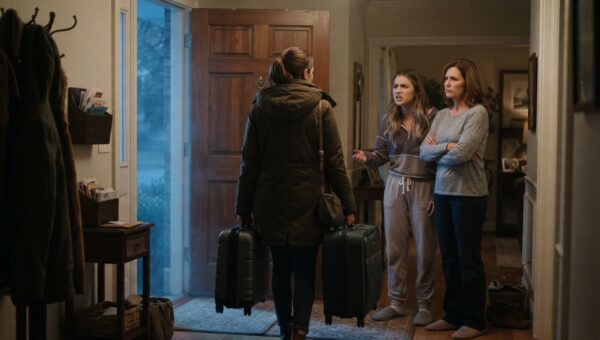
Two days later, I drove back to my childhood home. Brenda was in the driveway loading cardboard boxes into the back of her SUV. She looked up, her expression hardening instantly when she saw me get out of my car.
What are you doing here? Brenda snapped, crossing her arms. I am putting the house on the market next week. You missed your chance to grab any sentimental trinkets. Everything left inside is mine to dispose of.
I did not raise my voice. I walked up the driveway, holding a manila folder in my hand. You can sell your own belongings, Brenda, but you cannot sell this house, and you cannot touch Dad’s trust accounts.
Brenda laughed again, though this time it sounded forced, a nervous edge cutting through her arrogance. You think a few old papers from his desk can stop me? The lawyer said everything defaults to the surviving spouse.
Not when it is protected by an irrevocable trust filed three years before you married him, I replied, handing her a copy of the clerk-stamped document. Dad left this house to me. He knew you would try to strip the estate clean, so he made sure you never even knew this place existed.
Brenda snatched the papers from my hand. Her eyes scanned the legal descriptions, darting back and forth across the page as the color drained from her face. She opened her mouth to argue, but no words came out. The realization settled over her that her hurried cleanup of the house had missed the one place my father had hidden his true legacy.
ENDING
The legal battle over the rest of the estate took months of paperwork and mediation, but the trust holding the Elm Street house stood firm against Brenda’s challenges. She eventually moved out of town, realizing she could not bully her way through court documents filed by a man who had planned ahead.
I moved into the Elm Street house the following autumn. It took me three weekends to unpack my belongings, and the very last thing I carried inside was my father’s old red metal toolbox.
I set it on the kitchen counter, popped the latches, and lifted the lid. The scent of motor oil and old iron filled the room. I reached inside, pulled out a rusted wrench we had used together when I was twelve, and placed it neatly on the shelf.