My brother was still wearing his rehabilitation-center wristband when he asked me to stop calling his apartment a temporary plan.
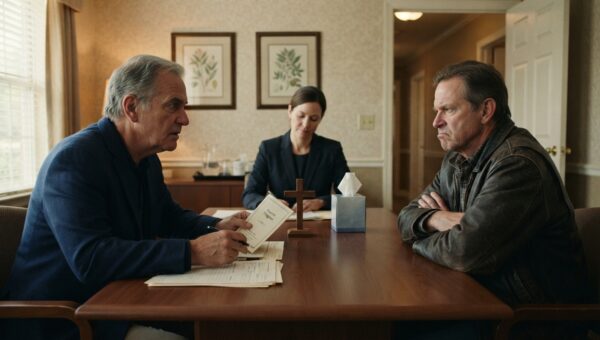
We were in a discharge meeting with a social worker, an occupational therapist, and a stack of forms between us. Ben had a spinal cord injury after falling from a ladder at work. He could move his arms and hands, but his legs would not hold him.
He had spent seven weeks learning how to transfer from a bed to a wheelchair and how to use a shower bench.
“I’m not saying you can’t go back,” I told him. “I’m saying it may not be safe yet.”
“You keep saying we’ll try my condo for a few weeks.”
“I’m trying to give you options.”
“You keep calling the place I live a trial.”
The social worker stopped sorting papers. My sister-in-law, Lisa, looked down at her purse. I had planned for Ben to stay in my finished basement while we made changes to his apartment. I had measured the bathroom, bought a ramp, and moved the guest bed. I thought I was being practical.
“I have a bedroom ready,” I said.
“I know. You’ve told me six times.”
“I want you close.”
“I want to go home.”
His voice was not loud. It was firm, the way it had been when we were teenagers and he insisted he could change his own oil even though Dad had told him to wait.
The occupational therapist, Carla, explained what a home assessment would involve. Ben’s condo had one step at the front entrance and a narrow bathroom. The bedroom and kitchen were on one floor. She could visit and measure the doorways. A contractor could install a portable ramp and grab bars. Ben would need help in the morning and evening at first, and the agency could provide a home aide while he continued outpatient therapy.
I heard the plan and pictured every thing that could go wrong. What if the aide was late? What if Ben fell during a transfer? What if the bathroom door was too narrow? What if he got sick and could not reach his phone?
“Could we try my house for a month while the modifications happen?” I asked.
Ben looked at me. “You mean your house.”
“Yes.”
“You’re not listening.”
I wanted to say I was listening. I had been listening for the danger in every sentence, not for what he wanted.
The meeting ended with a home assessment scheduled for Friday. Ben did not agree to move in with me. I told myself he would change his mind after he saw the condo. I told myself many things on the drive home.
Before his accident, Ben lived alone with a gray cat named June. He worked as a building inspector and rode his bicycle to the corner grocery store when the weather was good. He was not careless. He had always been the one who checked the smoke alarms at our mother’s house and reminded me to update the car registration.
When he fell, I was the person the hospital called because Lisa was at work and his emergency contact list had not been updated. I arrived before she did. I held his phone while the nurse explained the first surgery. I called our older brother, Mark, who lived across the country. I sat beside Ben while he woke up confused and frightened.
After that, I became the person who knew the appointment times, the insurance number, and which therapist had said what. The habit had taken hold before I noticed it. I was his sister, but I had started acting like the only safe plan was the one I made.
The first week at the rehabilitation center, Ben had asked me to sit in the room while he practiced transferring into the wheelchair. I stood close enough to catch him. The therapist reminded me that Ben needed to do the movement himself, even if it took longer. I said I understood, then reached for his belt when his foot slipped.
Ben looked at me. “Let me tell you if I need you.”
I put my hands in my pockets. He finished the transfer on his own, slowly and carefully. I wanted to praise him the way I would have praised a child, but he was my brother, not my project. So I asked if he wanted the window open.
Later that night, Lisa told me Ben had asked her not to let our family group chat turn into a daily report about his therapy. I had been sending updates because Mark and our aunt wanted to know how he was doing. I had not asked Ben whether he wanted his recovery narrated to everyone.
The next morning, I asked him what he wanted me to share. He said I could tell them he was stable and making progress, but the details were his. I apologized and changed the chat. It was a small correction, but it showed how quickly concern could become control when I was afraid.
On Friday, Carla and I went to the condo. Ben had been discharged the day before to stay temporarily at the rehab center’s accessible apartment while the assessment was completed. Lisa had driven him there. I arrived early and began moving a small bookcase away from the hallway.
“Leave it where it is,” Ben said from the doorway.
I turned. “We need more room for the wheelchair.”
“Carla is here to measure. Let’s see what she says.”
I moved the bookcase back. It was only a few inches, but I felt as if I had been corrected in front of a teacher.
Carla measured the entrance, the hall, the bathroom, and the space beside the bed. She checked the kitchen sink and the path to the balcony. She asked Ben to show her how he transferred in and out of the chair. He moved slowly, but he did it without my help.
I kept reaching toward him. Each time, he shook his head.
In the bathroom, Carla said the shower could be adapted with a transfer bench and grab bars. The doorway was narrow, but the chair could pass if Ben used a smaller front wheel. A portable ramp would work at the entrance. The condo was not ideal. It was possible.
“What about the mornings when I can’t get over here?” I asked.
“The home-care agency can schedule a morning visit,” Carla said. “We should have a backup plan if the aide calls out. Ben can also use a personal alert device.”
“What if he falls?”
Ben looked at me. “Then I call for help.”
“What if your phone is out of reach?”
“I’ll keep it on me.”
“What if—”
“Rachel.”
He said my name quietly. I stopped.
Carla finished the assessment and explained that the landlord would need to approve a few changes. Ben had already contacted the property manager. They were willing to install the grab bars and add a threshold ramp. The home-care agency had an opening in three days.
On the drive back, Ben sat in the passenger seat with his hands folded. I kept both hands on the wheel.
“You did a lot for me,” he said.
“I know.”
“I’m grateful.”
“Then why does it feel like you don’t want my help?”
“Because you keep deciding what help means.”
I tightened my grip on the steering wheel. “I don’t want you to get hurt.”
“I don’t either.”
“You don’t understand how scary it is to watch you try to do something and not know if I should step in.”
“I know it’s scary. It’s my body.”
The sentence landed hard. I pulled into the parking lot and turned off the engine.
“I’m not trying to make you feel small,” I said.
“I know. But you keep talking about my condo like it’s a place I can visit if I behave well enough.”
“I thought you’d stay with me until you were stronger.”
“I may get stronger. I may not. I still want my own home.”
I looked at the rehab center entrance. People crossed the lobby with walkers, crutches, and rolling bags. “I don’t know how to make it safe.”
“You don’t have to do it alone.”
That was the first time I understood that he was not refusing support. He was refusing to let support become a decision made over him.
“Can I ask something?” I said.
“Sure.”
“Would you tell me if you needed me?”
“I would.”
“Even if I didn’t ask first?”
He smiled without humor. “I’ll probably need you to ask. But I’ll tell you when I want something.”
We got out of the car and went inside. I carried his backpack to his room. He took it from my hand and placed it beside the chair.
The condo changes took ten days. Ben stayed in the accessible apartment and practiced getting dressed without rushing. I visited every other evening. At first, I brought groceries and reorganized the shelves. After he asked me not to, I stopped. The next time I came, I brought a container of chili and left it on the counter.
He asked me to stay for dinner.
We ate in the apartment’s small dining area. He told me the physical therapist had taught him a way to transfer into a car. I asked questions, then caught myself before I turned them into instructions.
At the end of the week, Mark called from Oregon. He said he could fly in for the first few days after Ben went home. I told him not to make the trip unless Ben wanted him there. Ben said he wanted Mark to come, but only for the weekend. Mark booked a ticket.
The morning Ben moved back to his condo, the home aide arrived at seven. She was named Patrice and had worked with people after spinal injuries for eight years. She helped him with the shower and breakfast. I waited in the living room, feeling unnecessary and nervous.
When she finished, she explained what she had done and what Ben had done himself. The shower bench was secure. The grab bars were solid. The emergency pendant was around his neck. Ben was dressed and in his wheelchair.
“I’m all set,” he said.
I looked at the ramp, the wider path, and the handrail. The apartment smelled like the lemon cleaner he used before the accident. His cat came out from under the bed, looked at me, then went to Ben.
“I’ll call tonight,” I said.
“I know.”
“Do you want me to bring dinner?”
“Not tonight. Mark is bringing food.”
I kissed his forehead before I could overthink it. He let me.
Mark stayed through the weekend, then flew home. Before he left, he sat with Ben at the kitchen table and asked what kind of help he wanted from each of us. Ben asked Mark to handle the insurance calls once a month and asked me to keep Thursday open for groceries. Neither of us was assigned the whole job.
We wrote it on the calendar together. I added the home aide’s phone number and the therapy dates. Ben added a note to call the landlord about the loose threshold. It was the first plan we had made as siblings since the accident, and Ben had helped write every line.
After Mark left, I noticed how often I still wanted to check the calendar before Ben did. I had become used to being the person with all the information. At dinner, I asked him to show me where he kept his appointments. He opened the calendar app on his phone and handed it to me. Everything was there, color-coded in the order he preferred.
“You don’t need my copy,” he said.
“I know. I wanted to see how you organized it.”
He showed me the reminders he had set for the aide, the pharmacy, and the day the landlord would check the ramp. I had imagined a schedule held together by my memory. He had made one that worked for him.
The first week was not easy. The aide called out one morning. Ben tried to make coffee alone and spilled it when the chair caught on a rug. He called me, and I went over with a towel and a replacement rug. I wanted to tell him I had warned him. I did not.
He was frustrated and embarrassed. “I thought I could do it.”
“You thought right. The rug was the problem.”
He looked at the floor. “Maybe.”
We moved the rug together. It took longer than it would have if I had done it myself. I was learning to let the task take the time it took.
A week later, I came over for dinner. Ben had made pasta using a pot with a handle he could reach from the chair. The kitchen was not arranged the way I would have arranged it, but he knew where everything was. June sat on the windowsill, watching a bird.
“Does the aide come tomorrow?” I asked.
“No. I have therapy at ten.”
“Do you need a ride?”
“Lisa is taking me.”
“All right.”
He set two plates on the table. “You can stop keeping the whole schedule in your head.”
“I’m trying.”
“I know.”
I sat down. “I was scared if I wasn’t useful, I’d be letting you down.”
“You’re my sister. You don’t have to earn a spot by being useful.”
The words made me look at the plate. For weeks, I had been acting as if love were a list of tasks. I had thought the more I did, the safer he would be. He needed me to believe he could have a life that included risk, inconvenience, and help from people who were not his family.
“I can bring groceries on Thursdays,” I said. “If you want.”
“I’d like that. And sometimes I might ask you to stay for dinner.”
“Good.”
“I may also tell you I’m fine and mean it.”
“I’ll try to believe you.”
“You don’t have to believe me every time.”
We laughed. It was the first easy laugh we had shared since the accident.
Months later, Ben still used a wheelchair. He still needed help with some tasks, and the home-care schedule changed depending on his therapy. He returned to work part-time, reviewing building plans from home. He also began volunteering at a community center to help older residents check their smoke detectors.
I became better at asking what he needed. He became better at telling me before a problem became urgent. We did not get every conversation right. I still worried when he tried something new. He still hated being watched while he transferred from the car.
One Thursday evening, I stopped by with groceries. Ben had made chicken and rice. He had put an extra plate on the table.
“I thought you were coming to drop those off,” he said.
“I was.”
“Stay. I made too much.”
I set the grocery bags down. “Did you make too much, or did you want company?”
“Both.”
I stayed. We ate at his table, and he told me about a building plan he had reviewed that morning. He had found a step in the main entrance that the architect had missed. He sounded like himself—not the version before the accident, but the brother I knew: observant, practical, and stubborn enough to return to a life that belonged to him.
After dinner, he asked if I could help him carry the recycling downstairs the next day. I said yes. He asked whether I was free at four. I checked my calendar before answering.
“Four works.”
He nodded. “Thank you.”
I used to think that loving my brother meant keeping him close enough to prevent every bad thing. Now I understood that love could also mean letting him decide where home was, helping with what he asked for, and trusting that he would tell me when the plan needed to change.
His condo was not a temporary plan. It was his home. I was glad he had made me understand the difference.