PART 1
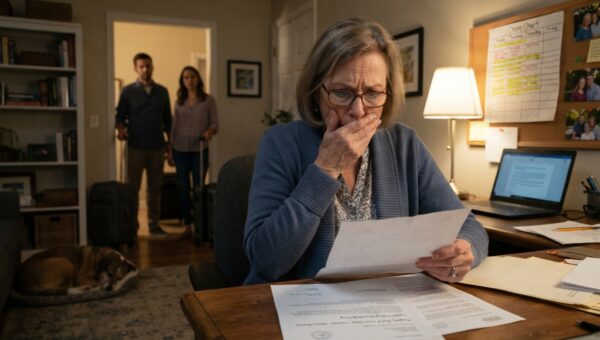
My twenty-nine-year-old daughter asked for eighteen hundred dollars because her electricity was about to be shut off. I sent it before she finished the sentence. Two weeks later she needed money for a tire. Then rent. Then a medical copay. I never asked for receipts because she is my daughter.
I live alone in a small house outside Columbus, working as a records clerk for the county health department.
My husband passed away five years ago, leaving me with a paid-off home and a modest pension that I protect like glass. When Chloe moved into her apartment downtown and started working as an assistant manager at a regional logistics firm, I thought she had finally landed on her feet. But over the last year, the emergency text messages started arriving with terrifying frequency. Each time, my chest tightened. I remembered what it felt like to be twenty-nine and drowning in bills, so I transferred the funds from my savings without a second thought. I did not want her to feel the panic I used to carry.
Last Saturday morning, my older sister Clara pulled her sedan into my driveway unannounced. She did not even take off her coat before she sat down at my kitchen table and slid her tablet across the laminate surface.
“Look at this, Sarah,” Clara said, her voice tight.
On the screen was a private social media account under a variation of Chloe’s middle name.
The profile was set to private, but one of Clara’s coworkers follows Chloe’s roommate and had seen the posts. There were photos from a weekend getaway at a luxury resort in Hocking Hills, pictures of expensive dinners at a steakhouse downtown, and a photo of Chloe holding a forest green designer leather bag with a visible gold clasp.
The timestamp on the handbag photo was last Tuesday afternoon. That was the exact hour I stood in the lobby of the credit union wiring twelve hundred dollars for her past-due water and gas bills.
I stared at the screen until the kitchen window reflection blurred into my own face. Clara did not say anything else. She just let me look at the evidence of my own foolishness.
I picked up my landline and called Chloe. She answered on the third ring, her voice breathless and thin. I told her to drive to my house right now.
Twenty minutes later, the front door clicked open and she walked into the kitchen. She took one look at Clara, then at my face, and burst into tears before she even reached the table.
I slid my phone across the wood grain, right next to Clara’s tablet.
Chloe looked at the photos of the resort and the designer bag. She wiped her nose with her sleeve and whispered, “Those aren’t what you think.”
My hands were shaking against the edge of the table. I asked her where the money went. Every single dollar I sent her over the last eight months.
She stared down at her shoes, her shoulders shaking. She swallowed hard, looked up with red-rimmed eyes, and whispered, “Mom, I’m paying someone so they won’t tell you…”
PART 2
The words sat in the small kitchen like cold water. I looked from Chloe to Clara, my mind refusing to line up the pieces.
“Paying someone?” I asked, my voice dropping to a flat whisper. “Paying who, Chloe? What could anyone possibly have to tell me?”
Chloe sank into the wooden chair across from me, burying her face in her hands. It took three minutes of ragged breathing and gentle prodding from Clara before the story started spilling out, disjointed and frantic.
It started eight months ago, right after Chloe got promoted at the logistics firm. One of her coworkers, a senior accountant named Greg, discovered a minor clerical discrepancy in an old shipping audit from when Chloe was still learning the software. It was an honest paperwork error that had already been corrected by management, but Greg kept copies of the preliminary draft. He cornered her in the breakroom one afternoon and told her that if she did not pay him five hundred dollars in cash every week, he would report her to corporate compliance as an internal fraud risk and ensure her certification was revoked.
At first, Chloe panicked and used her grocery money. When that ran out, Greg raised his demands, threatening to contact me directly or send letters to our relatives claiming Chloe was under criminal investigation. To keep him away from me, and to keep the secret buried, she started inventing emergencies. The electricity shutoff notice was real, but only because Greg had drained her actual paycheck two days prior. The tire, the rent, the medical copay—they were all stopgaps to feed a blackmailer who never stopped asking for more.
“The resort pictures,” Clara said, her tone sharp. “Explain those.”
“Greg takes photos of me when we have to travel for regional client meetings,” Chloe sobbed, pulling her phone from her coat pocket. “He makes me pose with things he buys or borrows so he can prove to me how easy it is to ruin my life publicly. He told me if I didn’t smile for his camera, he would send the fabricated audit files straight to Mom’s home address.”
She unlocked her phone and turned it toward us. The screen was full of text messages from an unknown number. There were demands for wire transfers, threats about ruining my reputation in the community, and instructions on where to drop cash envelopes in the city parking garage.
I scrolled through the messages, reading words directed at my daughter by a man who treated her like property. The burning anger in my chest pushed out every trace of fear.
“We are not giving him another dime,” I said.
“Mom, you don’t understand,” Chloe cried, gripping my arm. “He has digital copies of everything. If I stop paying, he pushes send.”
“Let him push send,” I said, standing up from the table. “Because tomorrow morning, we are going to the police department.”
PART 3
Monday morning arrived with a gray, steady rain that streaked the kitchen windows. Chloe sat at my kitchen table with a cup of black coffee she hadn’t touched, staring at the manila folder I had set beside her plate. Inside were printouts of every bank transfer receipt I possessed, matched line-by-line with the dates of Greg’s text message demands and extortion threats.
We drove downtown to the municipal police precinct together. The detective who took our report was a middle-aged woman named Sergeant Vance with sharp eyes and a quiet manner. She sat across from us in a small consultation room, listening without interrupting as Chloe laid out the entire eight-month nightmare.
Sergeant Vance examined the text logs, the wire confirmation numbers, and the preliminary audit documents Greg had weaponized.
“This isn’t a civil dispute,” Sergeant Vance said, tapping her pen against the metal desk. “This is felony extortion. And based on these electronic footprints, he has been using company equipment and unsecured personal lines to coordinate the payments.”
The detective outlined a plan. Instead of blocking Greg’s number, Chloe was instructed to send a message stating that a final installment of two thousand dollars was ready, but she insisted on meeting him in person at a neutral public location during her lunch break on Tuesday to hand over the cash envelope and get his written promise to delete the files.
On Tuesday at noon, Clara and I waited in an unmarked sedan three parking spaces away from a crowded diner downtown. Sergeant Vance and a plainclothes officer parked near the alley behind the restaurant.
Through the diner window, I watched Chloe sit down in a corner booth. Ten minutes later, Greg walked in wearing a gray wool coat, looking entirely too relaxed. He slid into the booth opposite her, placed a thick manila envelope on the laminate table, and reached his hand across for the cash envelope Chloe held in her lap.
Before his fingers could close around the envelope, the side door of the diner swung open. Sergeant Vance and her partner stepped into the booth space, their badges displayed clearly. Greg froze, his hand suspended in the air.
We did not go inside the diner. I stayed in the front passenger seat of Clara’s car, watching through the rain-spattered windshield as Greg was escorted out in handcuffs, his face pale with sudden shock as the officers read him his rights.
Chloe walked out of the diner five minutes later, flanked by Sergeant Vance. She climbed into the backseat of our car, shut the door, and let out a long, shuddering breath that sounded like years of compressed air finally escaping.
ENDING
Three weeks have passed since that afternoon in the diner. The logistics firm conducted an internal review, fully cleared Chloe of any wrongdoing after examining the police report, and terminated Greg’s employment immediately. The prosecutor’s office has already filed formal charges of extortion and wire fraud.
Chloe comes over for dinner every Tuesday and Thursday evening now. We eat simple meals at the kitchen table, and we talk about ordinary things like lawn care, recipe adjustments, and her work projects.
Last night, she pulled a small leather-bound ledger from her tote bag and set it down next to her coffee cup. It was her new monthly budget planner.
“I’m keeping track of every cent from now on, Mom,” she said softly, opening the cover to a clean blank page. “No secrets. No shortcuts.”
I reached across the table, picked up her pen, and placed it in her hand. Then I poured us both another cup of coffee from the ceramic pot, listening to the steady hum of the refrigerator and the quiet sound of rain against the glass.