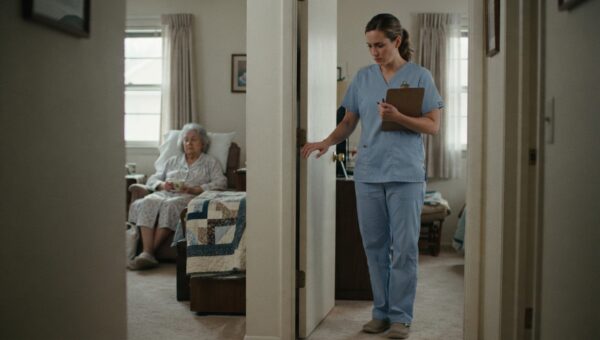
Brenda had two suitcases when she arrived on a rainy Tuesday in October, both of them scuffed blue canvas that smelled faintly of mothballs and stale peppermints. She told us she just needed a clean, quiet place to heal after her knee replacement, somewhere with a walk-in shower and nobody bothering her about her physical therapy schedule. My husband, Curtis, helped her up the front steps with a tenderness that used to make me love him, carrying her bags like they were made of blown glass.
We cleared out the spare room, pushed our guest bed against the wall to make space for her orthopedic walker, and told her to treat the place like her own. That was eight months ago, and I am still trying to figure out how a person unpacks their whole life into a temporary room and slowly pushes the people who own it out into the hallway.
The first month wasn’t so bad, just adjustments to someone else moving at half-speed through our kitchen. Brenda walked with a slow, heavy thud on her heels, using that aluminum walker to shove my dining chairs aside whenever she thought they blocked her path. She rearranged my spice rack by alphabetical order because she claimed my old system of cooking by frequency made her head spin. I let it go because her knee was swollen to the size of a grapefruit and she spent half her afternoons crying from the nerve pain in her shin.
Curtis kept telling me over our morning coffee that she was just having a hard time getting old. “She’s lonely, Clara,” he would say, resting his hand over mine on the laminate counter. “Just be patient with her for a little while longer.”
By month three, patience had started to feel like a second job with no pay and terrible hours. Brenda stopped asking before she threw away my leftovers, deciding that anything older than forty-eight hours was a biohazard for her delicate digestion. She started having her bridge group over every Thursday afternoon, taking over the living room while I worked my freelance editing jobs at the kitchen table with my headphones turned up. Whenever I walked past with a mug of tea, Brenda would lower her voice and tell her friends how kind it was of Curtis to let me stay in the house, given how little I contributed to the real mortgage.
I used to stop in the doorway and remind myself where the down payment had actually come from, that $74,500 check from my late father’s estate that sat safely in our title history as my sole pre-marital contribution.
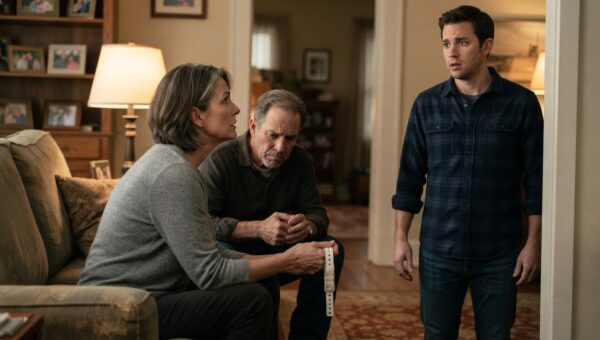
The turning point did not happen with a shout or a slammed door, but with a quiet accumulation of small exclusions. Brenda started buying groceries without consulting me, filling our deep freezer with frozen meat pies and generic butter that didn’t fit our household budget. Curtis spent more and more time sitting with her in the den after dinner, whispering over old photo albums while I sat upstairs alone with my laptop glowing in the dark. Whenever I walked in to ask about weekend plans, the room would go dead silent in that unnatural way that tells you something was just agreed upon. Curtis would look up with a guilty little blink and reach for his coffee mug like he had been caught doing homework. “We’re just planning her birthday dinner,” he’d say. But Brenda’s birthday wasn’t until November, and this was April.
The afternoon the silence finally broke, I came home forty minutes early because my client meeting in town got canceled due to a water main break. I parked my sedan in the gravel drive, grabbed my leather bag, and walked through the side door without making a sound because my flats had soft rubber soles. The house smelled like scorched coffee and furniture polish, thick and still in the spring heat. I dropped my keys on the counter and took two steps toward the hallway before I heard Brenda’s voice coming from behind the half-closed door of the den. It wasn’t her usual complaining whine, but a sharp, steady tone that sounded entirely too healthy for someone who spent her mornings claiming she couldn’t walk to the mailbox.
“Once the paperwork is done, she won’t be able to stop us,” Brenda said clearly.
I froze with my hand on the hallway wall, my fingers pressing hard against the white drywall until my knuckles went gray. My breath caught somewhere in my throat, dry and hot, and for a second my ears rang like I had been standing too close to a train.
Curtis answered from the leather armchair near the window. “I still feel bad about doing it this way.”
Brenda let out a short, dry scoff that I had heard a hundred times over the kitchen island. “You shouldn’t feel bad about securing your own future, Curtis. That girl treats this place like a hotel she stumbled into by accident. A man has a right to his own roof.”
I didn’t walk in. I didn’t yell or kick the door open or demand an explanation right then in the hallway. My feet turned around on their own, lifting me up the stairs one by one with a strange, heavy lightness, like I was walking underwater. I walked straight down the second-floor landing and into our master bedroom, heading directly for the cherry dresser in the corner. I pulled open the bottom drawer where we kept our fireproof lockbox, the one containing our passports, marriage certificate, and the original deed to the house. The heavy metal lid was unlocked. I flipped the latch with a thumb that wouldn’t stop shaking and lifted the heavy top.
The folder was gone.
The dark blue cardboard tab that had held my father’s estate attorney card and my sole-tenancy rider for five years was completely empty, leaving behind only a stray paperclip and a dust outline on the green felt lining. My phone was already in my hand before I even realized I had pulled it from my coat pocket. I tapped in the ten digits of the county clerk’s office, a number I had saved back when we refinanced our garage roof, and waited through three long rings until a woman with a raspy voice answered. I gave her my street address and my full name without waiting for her greeting.
“Ma’am, someone filed something this morning,” the clerk said, her keyboard clacking rhythmically in the background. “A quitclaim transfer, registered just before lunch. It lists the primary survivorship moving from you to your husband, with an attached notarized release. Do you need me to send you the digital copy?”
I stared out the bedroom window at the neighbor’s overgrown privet hedge, watching a single robin hop across the dark dirt. “No,” I said, my voice sounding hollow even to my own ears. “Just tell me who signed the witness line.”
“A notary public down on Fourth Street,” the clerk replied, pausing as she scrolled. “Registered under a mobile service. Certified by an Elizabeth Vance.”
Brenda’s maiden name was Vance. Her sister had been a legal secretary in Grand Rapids for thirty years before she retired with a drawer full of official stamps.
I didn’t cry. I didn’t even drop the phone. I just hung up, slid the device into my pocket, and walked back down the stairs with my chin held higher than it had been in eight months. Curtis was still sitting in the den when I pushed the door wide open, his mother leaning back in the armchair with a look of mild annoyance on her face like she had been interrupted during a broadcast. Curtis jumped up so fast his coffee mug tipped over on the side table, dark brown liquid spilling across the wooden surface in a slow, spreading puddle.
“Clara,” he stammered, his hands hovering uselessly over the wet table before dropping to his sides. “You’re… you’re home early.”
I didn’t look at him. I looked straight at Brenda, who was already adjusting the collar of her cardigan with steady, practiced fingers. “You forgot to shred the confirmation slip from the mobile notary, Brenda,” I said, my voice dropping into a register I didn’t recognize as my own. “It fell out of your blue folder when you were packing your paperwork last night.”
Brenda’s jaw tightened, her eyes narrowing into two small slits behind her wire-rimmed glasses. “You have no respect for privacy, Clara. Coming into this house and snooping around like a common thief.”
“It’s my house,” I said simply. I pulled the printed PDF copy of the filing up on my phone screen and turned it toward Curtis, holding it inches from his face until he was forced to step back. “You signed my name away while I was at my dental appointment yesterday morning. You and your mother sat at my kitchen island and forged my signature on a quitclaim deed using your aunt’s old stamp.”
Curtis looked like he had been hit in the chest with a bag of gravel. He opened his mouth, closed it, and looked over at his mother like he expected her to pull a rabbit out of a hat and save him. Brenda didn’t flinch. She just straightened her shoulders and looked at me with pure, unadulterated contempt.
“He’s my son,” she said, her voice dropping into a cold, flat register. “That property belongs to the family that built this town, not some girl who wanders in with a checkbook and expects to rule the roost. You wouldn’t know a family bond if it hit you in the face.”
The next two hours moved with the cold, mechanical precision of a machine clearing out debris after a storm. I didn’t scream, and I didn’t listen to Curtis’s rambling, pathetic apologies about how his mother had worn him down until he couldn’t think straight anymore. I drove straight downtown to the county records office with my original inheritance papers and my driver’s license clutched in my fist. By 4:15 in the afternoon, the emergency fraud hold was locked into the system, the fraudulent quitclaim deed was stamped with a bright red VOID across every page, and a notice of title dispute had been sent directly to the state investigator’s desk.
When I got back to the house, the sun was just dipping below the tree line, casting long, bruised shadows across our front porch. I didn’t go inside through the side door this time. I walked straight up to the front steps and found Brenda’s two scuffed blue suitcases sitting right there by the welcome mat, packed with her clothes, her pill organizers, and her framed photographs of Curtis as a chubby-legged toddler. Curtis was standing on the gravel driveway with his car keys in his hand, looking smaller than I had ever seen him, his shoulders hunched against the evening chill.
“She has to leave tonight, Curtis,” I said, stepping past him without breaking my stride. “And you can go with her to the motel down on Route 12 while we figure out how fast we can get the divorce papers drawn up. My lawyer is already answering my email.”
Curtis didn’t argue. He didn’t defend his mother or tell me to be patient one more time. He just walked over to the blue suitcases, hoisted them into the trunk of his sedan with a heavy, defeated sigh, and helped his mother into the passenger seat without a word. Brenda didn’t look at me as the car doors slammed shut; she stared straight ahead through the windshield, her chin tucked into her wool scarf like she was bracing herself against a bitter winter wind that only she could feel.
I watched them pull out of the drive, their taillights cutting red arcs through the gathering dusk until the sound of the engine faded entirely down the quiet suburban road. The house was suddenly, overwhelmingly silent, filled with that heavy, sacred quiet that only comes back after an intruder has finally been cleared out. I walked into the kitchen, turned on the single overhead light, and walked straight to the center island where Brenda had spent eight months telling me how to live.
The kitchen counters were completely bare of her clutter, wiped down to the clean white laminate I had chosen when we first moved in. Right in the middle of the surface, resting squarely on a folded paper towel, sat the official county revocation stamped in bright blue ink, declaring the property safe, intact, and entirely my own.