We kept our money separate after Arthur lost fourteen thousand two hundred dollars in a bad timber investment back when the mill down in Forsyth County went under. I thought it was just common sense at the time, a way to keep our household stable while he licked his wounds and figured out his next move. We split the mortgage down the middle and each paid our own grocery accounts, and for a long time, it felt like peace.
I figured we were just being careful, protecting what we had left after the bank called his note. Then our daughter Sharon called me around two o’clock on a Tuesday afternoon, sounding worried in that quiet way she has when she does not want to bother anybody. She asked why Dad had stopped paying the electric bill at the small house she rented from us on the north end of town.
“I didn’t think much of it until the final notice came today,” Sharon said, her voice small over the static on the landline. “I just thought maybe he forgot to transfer it from his personal account this month.”
I told her I would look into it and hung up the phone while wiping down the laminate counter with a damp sponge. The kitchen was quiet except for the hum of the refrigerator, but a little cold knot had already formed right beneath my ribs.
Arthur always swore he managed the rental accounts out of his own pocket as part of his share of our property agreement.
When Arthur came home from the hardware store that evening, I asked him straight out why Sharon was getting notices from the power company. He didn’t even look up from unlacing his work boots by the back door. He just said he had been covering it from his own account for months and told me not to worry about it.
“I’ve got it handled, Martha,” he said, his voice a little too flat, a little too practiced. “The girl’s got enough on her plate with her classes.”
That evening after he went out to the garage to tinker with his old mower, the mail carrier dropped off the second delivery of the day because of a misrouted carrier bag. I was sorting through the envelopes on the round oak side table when I saw it.
It was a second utility notice from the same power cooperative, but the service address printed in the window envelope did not belong to our house and it certainly did not belong to Sharon’s rental.
It was addressed to a lot on County Road twelve, a strip of scrub pine and gravel about three miles outside city limits. I knew every parcel we owned down to the last square foot, and we did not own anything out on County Road twelve. My hands felt clumsy as I tore the flap open, pulling out the blue-tinted statement showing thirty-eight dollars and fifty cents past due for a meter service I had never authorized.
The next morning I sat at the kitchen table with my laptop open and the utility bill pinned down under a coffee mug. The county property tax assessor’s website is public record, though most folks only look at it when the annual bills show up in November.
I typed in the parcel number from the top of the utility slip and waited for the page to load over our slow rural connection.
The screen refreshed with a green banner and a legal description that made the breath catch in my throat. The property was a five-acre scrub tract with a small, unpainted cinder-block structure sitting right on the edge of a dry creek bed. The deed transfer date was listed as six months prior, right around the time Arthur started complaining about how tight money was getting on his side of the ledger.
The owner of record wasn’t Arthur alone, and it wasn’t our joint name either. It was registered under a small separate trade name he must have filed down at the courthouse without telling me a single word. He had used his old inheritance money from his uncle, plus cash he had been skimming off the top of our rental income, to buy a half-finished shack in the middle of nowhere.
I didn’t close the browser tab. I just sat there looking at the digital stamp of the deed while the house stayed dead silent around me. He had bought it to prove something to himself after that timber loss ruined his pride, wanting to show he could turn a profit independently without my name attached to it. But he had overextended himself so badly that he couldn’t even keep the lights on at Sharon’s house without robbing Peter to pay Paul.
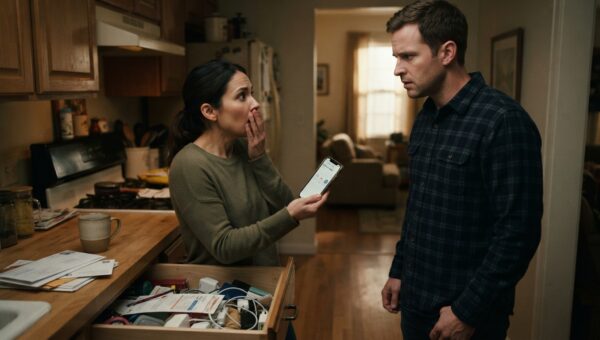
When Arthur walked back into the house for lunch at noon, smelling of cedar sawdust and old oil, I didn’t hide the screen from him. I didn’t yell or throw things because that wasn’t my way, but my voice felt thin and dry when I spoke. I laid the printed county deed right over the center of the kitchen table, right next to the electric bill for County Road twelve.
“You want to tell me what this is?” I asked.
Arthur stopped dead in the middle of the kitchen, his hand still resting on the back of the wooden chair. His face went tight, the skin around his mouth pulling into a hard white line as he looked from the paper up to my eyes. He didn’t try to lie this time because the numbers were right there in black and white, stamped by the county clerk with a seal that didn’t leave any room for maneuvering.
“I wanted something that was mine, Martha,” he said, his voice dropping low so it barely carried over the hum of the fridge. “Just a piece of ground where I didn’t have to answer to anyone about every nickel.”
“You didn’t answer to me about our daughter’s power bill either,” I told him, and my hands were shaking so hard I had to press them flat against the wood. “You took money from the family to prop up a pipe dream in the woods.”
He stood there for a long time, his shoulders sinking down under his plaid shirt as the reality of it settled over him like wet wool. The separate-finances agreement we made to protect our marriage twenty years ago had turned into a wall he used to hide a second life from me. He couldn’t meet my eyes anymore, and that was when I knew the damage wasn’t just about a piece of land or a missed utility payment.
We spent the rest of that week sitting across from each other in silence while he made the phone calls to list the property with an agent down in town. The sale went through three months later for just enough to clear the back taxes and put the remaining cash back into our joint account where it belonged. He didn’t argue when I told him the separate accounts were done for good, that if we were going to live under the same roof, every cent had to be laid out in the light where both of us could see it.
The kitchen table looks different now without those papers scattered across it. There is only a single, shared ledger book sitting there on a clean page, waiting for us to write down what comes next.