The morning coffee pot was still finishing its last angry sputter on the laminate counter when I reached into Richard’s worn leather briefcase to look for the spare envelope of property tax forms. I wasn’t hunting for secrets. I just wanted to get the mail sorted before the heat of the day settled into the valley. My fingers brushed against a heavy felt pouch tucked away in the side lining, a pocket he usually reserved for spare keys and passport stamps.
I pulled it out, expecting a stray house key or a receipt for lumber, and tipped it over my palm. A second wedding ring tumbled out onto the wooden table with a dull, heavy clink.
I picked it up and held it under the kitchen window, squinting against the bright morning glare. It was gold, heavy, and scuffed around the edges from years of wear. It looked identical to the band Richard had worn on his left hand for over thirty years. Same brushed finish, same weight, same distinct maker’s mark from the old downtown jeweler where we bought our rings back in the spring of 1992.
Except for the date carved inside the band.
Our wedding day was June 14, 1992. That was the day we stood outside the little Methodist church in Knoxville while my father sweated through his gray suit and my mother cried into a lace handkerchief. But this ring didn’t say June. It said October 3, 1997.
I stood there by the sink for a long time, listening to the refrigerator hum and the distant sound of a logging truck shifting gears out on the highway. October 3, 1997. A Friday. Richard had told me he was flying out to Denver for a regional supply conference that weekend. He brought me back a small glass snow globe with a painted mountain range inside, apologizing the whole time for missing our fifth wedding anniversary by three days. I put it on the pine bookshelf in the den, and it had sat there collecting dust ever since.
I walked into the den, my bare feet making no sound on the braided rug. The snow globe was right where it had always been, slightly tilted against a stack of old gardening magazines. I picked it up. The water inside had yellowed just a bit over the decades, turning the plastic snowflakes into tired, floating specks.
I shook it hard, watching the flakes swirl around the painted peaks, and that was when I saw it pressed against the glass near the base. A tiny edge of white paper, trapped beneath the plastic seal.
I didn’t even stop to think. I took a small flat-head screwdriver from the utility drawer in the laundry room and wedged it gently into the rubber stopper at the bottom of the globe. The old rubber gave way with a muffled pop, and a few drops of stale, chemically sweet water spilled out onto my thumb. I shook the paper loose, dried it carefully against the hem of my apron, and carried it over to the kitchen table.
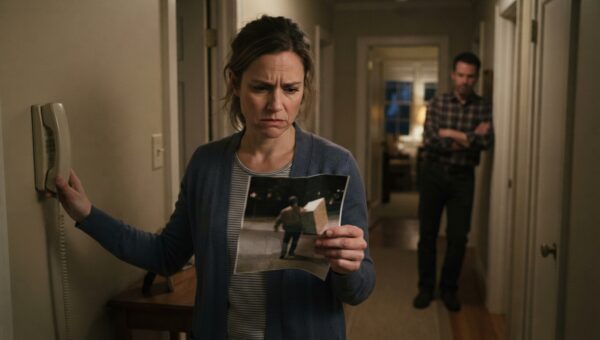
It was a photograph. The edges were slightly curled and water-damaged, but the image was unmistakable. Richard was standing on the steps of a small brick building with a white wooden steeple, his arm around a woman with dark hair pulled back in a silver clip.
They were both smiling straight at whoever was holding the camera, their left hands raised just enough to catch the late-afternoon sun. On the back of the photo, written in Richard’s neat, sloping handwriting, were the words: Clara and Richard, October 3, 1997. Little White Rose Chapel, Denver.
The kitchen felt suddenly very small. I set the photograph down next to the duplicate ring and stared at them until my eyes watered.
For the next three days, I moved through the house like a ghost. I didn’t yell at Richard when he came home from the hardware store with bags of fertilizer, and I didn’t mention the briefcase. Instead, I waited until he drove into town for his Tuesday evening Rotary meeting. As soon as the red taillights disappeared down the gravel drive, I took the brass key he always left on the key rack and walked into his home office.
The heavy oak desk had three drawers, and the bottom one was locked. It took me twenty minutes with a hairpin and a small kitchen knife to pop the old brass mechanism. Inside were tax returns from the nineties, bank statements from accounts I had never seen, and a thick manila envelope bearing the logo of a Denver legal firm.
I pulled out the contents with shaking fingers. There was a cover letter dated just three weeks ago from an estate executor named Arthur Vance, explaining that safety deposit box number 412 at the Colorado National Bank had finally been processed following the long-delayed settlement of Clara Vance’s estate. The letter mentioned that the personal items recovered from the box, including a custom-engraved gold band, were being returned to Richard as the surviving spouse of record.
Surviving spouse.
I sat back in his leather desk chair, the paper rustling softly in the quiet room. Thirty-four years of shared breakfasts, of paying off mortgages dime by dime, of nursing him through pneumonia when his business nearly went under in the winter of 2001. All of it hummed with a different meaning now. That terrible winter when he worked fourteen-hour days and came home smelling like stale coffee and panic wasn’t just about failing lumber prices. He wasn’t just saving his company. He was tied to someone else across three states, someone whose family money had apparently kept him afloat while I was darning his work socks in the evenings.
I didn’t sleep that night. I sat on the porch swing wrapped in a wool quilt, watching the mist roll off the pasture as the sun came up over the ridge.
By nine o’clock, I was on the phone with the Denver County Clerk’s office. I didn’t bother trying to explain the whole messy story to the clerk on the other end; I just asked for an expedited certified search of marriage records for October 1997. The woman on the line was brisk and professional, telling me the fee would be charged to my card and the document would arrive in my email inbox within the hour.
The PDF came through right around ten-thirty. There it was in black and white, stamped with a raised county seal. Richard Alan Vance and Clara Marie Vance, married on the third day of October, 1997, in Denver County. His signature was right at the bottom, bold and familiar, the exact same loop he used when we signed our mortgage papers.
When Richard came home for lunch that Thursday, the smell of sawdust and coffee filled the hallway just like it had every day for decades. He tossed his keys onto the entry table and called out my name.
“Martha? You in the kitchen? I brought those tomatoes you wanted from the farmer’s market.”
I didn’t answer right away. I was sitting at the dining room table with the overhead light switched off, letting the midday sun slant across the polished mahogany surface. Between my hands sat three things: my own worn wedding band that I had finally slipped off my finger, the duplicate gold ring he had hidden in his briefcase, and the crisp, printed marriage record from Denver with the raised seal.
Richard walked into the dining room, a brown paper bag in his hand, and stopped dead by the sideboard. His eyes dropped to the table, and the color seemed to drain right out from under his tan, leaving his skin a dull, chalky gray.
“Where did you find those?” he asked. His voice wasn’t angry. It was just hollow, like something collapsing inward from its own weight.
“In your briefcase,” I said. My voice sounded remarkably steady, though my hands were clamped together so hard my knuckles were white. “And then in the snow globe. And then from a lawyer in Denver who seems to think you still care about an estate that closed twenty-five years ago.”
He took a slow step forward, his hands dropping to his sides. “Martha, let me explain. That was a different life. That was 1997. The business was going under. Everything we had built, this house, the land, my father’s name, it was all about to be auctioned off by the bank.”
“So you went to Denver,” I said, looking right at him. “You went out west for a supply conference and came back with a second wife.”
“She was an investor,” he said, his voice rising just a fraction, the old defensiveness finally kicking in. “Her family had capital tied up in trust. She was willing to clear our debts, but she wouldn’t hand over a dime to a fiancé or a boyfriend. It had to be legal. It was a paper arrangement, Martha. Just signatures on a page to save the company.”
“A paper arrangement,” I repeated, feeling a cold, heavy calm settle over my chest. “Is that what you call the ring with her name on it? Is that what you call the photograph of you standing outside that chapel?”
“She died two years later,” he said, taking another step toward the table as if he could reach out and cover the papers with his hand. “Car accident outside Boulder in ’99. It was over before it even really started. I never saw her again after that winter. I swear to you, Martha, you were the only life I actually lived. That other thing was just a contract.”
“A contract you kept hidden in a snow globe on our bookshelf for thirty years,” I said. “Right where I dusted it every Tuesday morning.”
He stopped. He looked at the two rings sitting side by side under the window, reflecting the same morning light through two entirely different histories. He opened his mouth to say something else, some excuse about the lawyers or the estate box or the pressure he was under back then, but the words seemed to die in his throat.
“I’m not going to scream at you, Richard,” I said quietly, standing up from the chair. “I’m too tired for screaming, and this house is too old for it.”
“Martha, wait,” he said, his hand reaching out instinctively. “We can sort this out with the lawyers. We can, “
“There’s nothing to sort out,” I said, walking past him toward the front door with my coat over my arm. “The lawyer already finished your paperwork. Now I’m going to go find mine.”
I left him standing there in the middle of the dining room floor, staring down at the two identical gold bands reflecting the noon sun. I didn’t look back as I pulled the front door shut behind me, the heavy brass latch clicking softly into place in the quiet house.