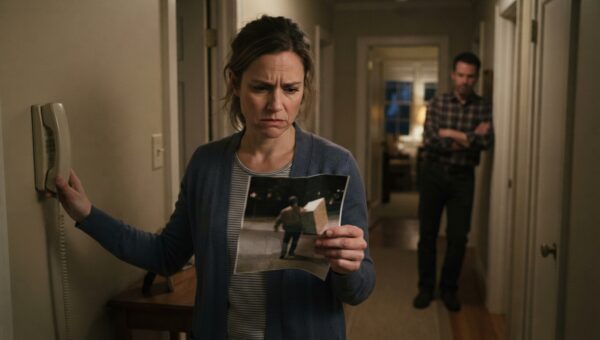
The telephone on our kitchen counter rang at 4:14 in the afternoon, right when I was portioning out snack cups of apple slices for the little ones. The screen flashed with a restricted number, and my thumb caught on the small iron clasp of my canvas apron, clicking it shut twice before I finally answered.
When my sister’s voice came through the receiver, thin and hurried after six years of complete radio silence, my stomach did not drop so much as turn to cold grease.
She did not ask how I was holding up or how the children had grown since the state handed them over to my tiny two-bedroom apartment back in 2018. She just stated that she was out of prison now and expected me to pack their bags because she was ready to take her kids back.
My mind flashed back to the day the county caseworkers brought them to my door. Leo was only nine then, standing on the welcome mat with his little sister Clara squeezed against his hip like a lifeline, while the baby, Maya, cried until she threw up on my shoulder because nobody had changed her diaper in half a day. Their mother had packed up her clothes, locked the deadbolt from the outside, and left a three-year-old boy, a toddler, and a newborn alone in a dark apartment for fourteen days while she chased a high across three counties.
I had spent the next six years building a fortress out of bedtime routines, speech therapy appointments, school district transfers, and every spare dollar I could scrape together from my job at the county records office. We had traded the cramped apartment for a small rented house with a fenced yard where the grass actually grew green. Leo was nine now, tall for his age and quiet in the way that kids get when they learn early on that shouting does not bring anyone back. Clara was four, running around the kitchen asking for more peanut butter, and Maya was nearly two, having spent her entire conscious life knowing only one mother, and it wasn’t the woman on the other end of that phone line.
I told my sister I needed time to process the news, but she cut me off, her voice rising in pitch until she dropped the sentence that froze my blood. “You can just give them back because I’m out of prison now.”
I hung up without making any promises. My hands shook so badly I dropped the plastic knife onto the linoleum, and Maya looked up from her blocks, her big dark eyes wide with sudden worry.
I scooped her up, burying my face in her soft curls, trying to steady my breathing before Leo came home from school.
The afternoon dragged on until the yellow school bus hissed to a stop at the corner of our street. Leo hopped down the bottom step, his heavy blue backpack slung over one shoulder, dragging his sneakers through the autumn leaves. I met him on the front porch before he could push the screen door open. I told him we needed to talk at the kitchen table after the girls went down for their naps.
When the house finally settled into that heavy, late-afternoon quiet, Leo sat across from me with his hands folded neatly over a math workbook. I told him about the phone call, choosing my words carefully, watching his face for any sign of the little boy who used to check the locks five times before he could close his eyes.
Leo did not cry or shout. He just stared down at the grain of the laminate table, his jaw working hard. Then he looked right at me, his eyes entirely too old for a nine-year-old boy, and gave me the answer that settled every doubt in my chest. “I don’t want to see her yet, Auntie,” he said. “I still hate her for leaving us alone in that dark room.”
I reached across the table and covered his small, tense hand with mine. “You won’t have to see her, buddy. Not unless you want to. And you don’t.”
The next morning, I drove out to the county family services building to sit across from our old caseworker, who had stayed in touch through every annual review. She laid the original custody decree out on the metal desk between us, her glasses sliding down the bridge of her nose as she scanned the legal margins. She confirmed what I already suspected, that serving a sentence for child endangerment and abandonment did not automatically restore parental rights, especially when permanent legal guardianship had been granted to a family member following a contested termination of basic rights window.
She looked up at me over her frames, her expression softening. “You’ve given these kids six years of stability, Clara. You don’t hand them over because someone made a phone call. If she wants contact, she has to file through the court, complete her rehabilitation programs, and go through supervised child psychologists. And Leo’s refusal carries weight with the judge.”
Armed with that validation, I arranged to meet my sister at a neutral diner halfway across town on Saturday morning, leaving the kids with a trusted neighbor. The diner smelled of stale grease and burned coffee, the vinyl booths cracked along the seams. She was sitting in the corner booth, wearing a borrowed jacket that was a size too big, tapping her fingernails against a stained laminate tabletop.
She didn’t waste time on pleasantries when I slid onto the opposite bench. She demanded to know why I hadn’t brought the kids with me, her voice cutting sharp through the hum of the overhead vents. “They’re my children, Clara. You’re just keeping them from me to play mother.”
I kept my voice flat, pitching it low enough that the waitress wiping down the counter two tables away wouldn’t turn around. “You left them alone for two weeks, and Leo still has nightmares about the dark. You don’t just walk back into their lives with a suitcase and expect them to remember you.”
Her face flushed dark, her fingers clawing at the edge of the table. “I served my time. The state said I paid my debt. Give them back.”
I shook my head, my resolve hardening like cold iron against the heat of her anger. “No. The court gave me legal guardianship, and Leo told me himself that he doesn’t want to see you.”
She leaned across the table, her eyes wide with a mix of panic and furious entitlement, spitting out the words that showed she hadn’t changed at all. “You’re brainwashing him against me.”
“I am protecting him,” I said, my voice barely above a whisper. “He remembers being hungry, and Clara was too little to understand why nobody came. If you ever want even a letter to reach them, it goes through the family court supervisor and our child therapist. Not unannounced visits, not phone calls, and certainly not custody.”
For a second, the anger flickered out of her eyes, replaced by the ugly realization that her prison release papers were not a magic wand that erased six years of abandonment. Her lower lip trembled, and she slumped back against the vinyl upholstery, staring down at her empty coffee mug as if she expected the bottom to fall out.
I didn’t offer to pay for her coffee. I slid twenty dollars onto the table beside her cup, stood up from the sticky booth, and walked out into the crisp autumn air without looking back.
The drive home felt lighter than any drive I had made in years, the engine of my old sedan humming a steady rhythm against the highway asphalt. When I pulled into the driveway, the house looked small and warm against the long shadows of the evening, the porch light already glowing amber through the screen.
Inside, the living room was scattered with plastic building blocks and half-colored coloring books. Leo and Clara were sitting on the rug by the television, arguing quietly over who got the blue crayon, while Maya was fast asleep in her little pink chair with her thumb tucked securely against her cheek.
I walked over to the kitchen counter where I had left the manila folder containing the court contact protocols and the therapist’s business card. I slid the folder into the bottom drawer of the oak filing cabinet, pushing it all the way to the back until it clicked shut.
Then I walked to the front door, turned the heavy brass deadbolt until the iron bolt seated deep into the frame, and locked the world outside.