The kettle on the back burner was whistling that shrill little hiss that meant the water was boiling down to nothing, but I couldn’t make my hand let go of the chipped white counter. My oldest was tugging at the hem of my worn jeans, asking when we were going home, and I didn’t have the heart to tell him we didn’t have one anymore.
At twenty-four, the world narrows down awfully fast when you lose your last line of credit and the management company tacks an orange eviction notice right over your front door knob. One moment I was trying to patch together a grocery budget from loose quarters found in the couch cushions, and the next, everything had completely fallen apart.
With nowhere left to turn and fear growing heavier in my chest by the hour, I did the one thing I swore I never would do. I loaded the kids into the back of my sputtering sedan, drove the thirty miles out to the edge of town, and knocked on my mother’s front door. I wasn’t asking for money, or for luxury, or even for comfort. I just needed a dry roof over my children’s heads for a couple of weeks while I figured out how to keep the lights on.
The porch light flickered once against the peeling white paint of the siding before the deadbolt clicked.
When the door swung open, I didn’t see the usual warm welcome I had grown up with. Instead, I saw a look of cold, hunted guilt written all over my mother’s face, like she was standing on trial for a crime she didn’t commit. Before I could even open my mouth to explain how desperate things had gotten, she quietly broke my heart.
“My boyfriend won’t let you stay… I’m sorry.”
Those words hit me harder than the eviction notice ever could have. I felt utterly rejected, humiliated, and abandoned by the one person in this entire world who I genuinely believed would never turn me away. Ray had moved into her house about a year prior, slowly taking over the space, the schedule, and eventually her entire life, but I never imagined he could reach far enough to lock me out of my own childhood home.
Fighting back the hot tears stinging my eyes, I told her to forget I ever came and walked away, carrying two confused children and a crushing weight in my chest that I couldn’t put into words.
We ended up spending that night in the cramped, fluorescent-lit lobby of a family assistance center, wrapped in scratchy wool blankets while my little boy asked me over and over why Grandma didn’t want us inside. I didn’t have an answer for him, so I just held them both tighter and stared at the scuffed linoleum floor until morning.
Then, only five weeks after that terrible night on her porch, absolute tragedy struck. A neighbor called around breakfast time to tell me my mother had collapsed in her kitchen from a sudden heart attack and didn’t make it to the hospital. The shock of it hit me like a physical blow, leaving me numb and shaking as I tried to process the fact that she was gone forever. I barely had time to wipe the tears from my face before that same night, there was a heavy, frantic knock at my front door.
Standing on the tiny porch of my temporary rental was Ray, looking a complete mess with his jacket half-zipped and his eyes red-rimmed from crying so hard he could barely speak. At first, my stomach dropped because I thought he had finally come to offer his condolences, or maybe even apologize for the way he had turned me away in the freezing cold weeks prior. But what he revealed next made me freeze right where I stood, my breath catching in my throat.
He didn’t look sorry. He looked deranged, rambling in a low, panicked voice about how the house was too quiet and how everything was a test of loyalty he had forced her to pass.
“You don’t understand how she operated,” Ray choked out, wiping his nose with the back of his trembling hand while leaning heavily against my doorframe. “Everything was a test. Every little choice had a metric attached to it. If she gave an inch to you kids, she failed the household discipline metric.”
I just stared at him in the dim porch light, my hands curling into tight fists at my sides. “What are you talking about, Ray? She’s dead. What does any of that have to do with her?”
“They were tests,” he muttered, shaking his head with a hollow, frantic look in his eyes. “Proofs. Measurements. If you gave too little, you were selfish. If you gave too much, you were showing off. And if you gave exactly what someone wanted, they found a way to make you regret knowing them that well.”
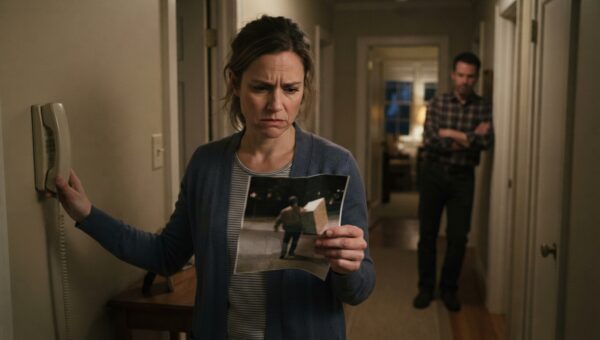
He stood there confessing his own cruelty like it was a natural law of the universe, treating my mother’s life like a sick science experiment he had engineered from the master bedroom. He told me about the rules he enforced, the isolation he demanded, and how he had stood right behind her in the hallway five weeks ago to make sure she delivered the rejection speech verbatim. He thought sharing his twisted philosophy would make me sympathize with his grief, but all it did was lay bare the prison my mother had been living in before her heart finally gave out under the strain.
When he finally stumbled back down my steps and drove off into the dark, I shut the door and slid down to the floor, my knees pulled tightly to my chest. The anger rushing through my veins was hotter and sharper than the grief. But nestled right underneath that rage was a nagging, heavy realization that nothing Ray had said fully added up. A man doesn’t break down weeping on a stranger’s porch just to brag about his control unless he is terrified of what gets left behind when the smoke clears.
The next morning, I drove out to my mother’s house with a stomach full of lead, determined to pack up her personal belongings before Ray could throw them out or claim everything for himself. The driveway was empty except for his rusted pickup truck, sitting crookedly near the mailbox. When I tried the front door, it was unlocked, swinging open with a soft, familiar squeak that I had known since I was a little girl.
The house smelled faintly of instant coffee and old cedar, completely untouched by the chaos of the night before. I walked straight back to her bedroom, pulling open the top drawer of her maple dresser where she always kept her spare keys and church pamphlets. Right underneath a stack of embroidered linen handkerchiefs, I spotted a heavy brown envelope with my name written across the front in her shaky, familiar cursive handwriting.
My fingers trembled as I pulled the flap open and slid out a single crisp business card alongside a handwritten note. The card belonged to Brenda, a family law and estate advocate whose office was located right down by the county courthouse. Written on the back of the card in my mother’s ink was a short, urgent message: “Call her before Ray finds the files.”
I didn’t waste a single second. I grabbed the envelope, locked the front door behind me, and drove straight down to the courthouse, my hands white-knuckling the steering wheel the entire way. Brenda’s office was small, smelling of old paper and peppermint tea, and when I walked through the door clutching that brown envelope, the receptionist didn’t even need me to explain who I was.
“Your mother was in here three weeks ago,” Brenda said softly, sliding a thick manila folder across the mahogany desk toward me. “She knew her heart was failing, and she knew she didn’t have much time left. She wanted to make sure you and the children were protected from everything happening under that roof.”
I opened the folder, and the breath rushed out of my lungs. Inside were official documents establishing a legal trust fund, alongside a fully executed, prepaid twelve-month lease on a quiet, sunny two-bedroom cottage on the south side of town. Dated just twenty-one days prior, the paperwork proved that my mother had not abandoned me on that porch out of malice or selfishness. She had turned me away because Ray was watching her every move, threatening to strip her of everything if she offered me shelter directly, but behind his back, she had spent her final weeks quietly carving out a safe escape route for us all.
“She was terrified of him,” Brenda explained, adjusting her glasses as she looked over the copied signatures. “He monitored every penny she spent, so she had to funnel cash into this account through a series of small, untraceable withdrawals over the last two years. She told me you were too proud to take charity directly, so we structured it as a deferred inheritance disbursement tied to a housing grant.”
I sat there in that quiet office, staring at the clean, legally binding signatures, and felt a profound, heavy wave of peace wash over me for the first time in years. My mother hadn’t failed me. She had played a long, agonizing game of chess against a monster just to make sure her grandchildren had a soft place to land when the world tried to crush them.
Two days later, Ray tried to corner me in the driveway while I was unloading a few boxes of my mother’s photo albums from my trunk. He looked ragged, his face hardened back into that bitter, defensive mask he wore whenever his authority was challenged.
“Those are supposed to stay in the estate,” Ray snapped, taking a step forward with his hand raised toward the cardboard box. “I’m the primary occupant of that house. Everything inside belongs to me now.”
I didn’t flinch, and I didn’t back down. I reached into my coat pocket, pulled out the certified copies of the trust and housing papers stamped by Brenda’s office, and held them out between us like a shield.
“You don’t own anything here, Ray,” I said, my voice steady and cold enough to surprise even myself. “The house, the trust, and every single thing my mother left behind is sealed under this legal protection. If you step foot on my property or try to contact me or my kids again, Brenda will have a restraining order served before lunch.”
He stopped dead in his tracks, his mouth opening to argue before his eyes scanned the official letterhead in my hand. All the bluster and psychological games drained right out of him, leaving him looking like a small, pathetic man standing in an empty driveway. He didn’t say another word. He just turned on his heel, climbed back into his truck, and backed out of the driveway without looking back once.
A week later, we finally moved into the sunny little cottage on the south side of town. The keys turned smoothly in the lock, and the front rooms smelled faintly of fresh paint and lemon polish instead of old regrets.
Now, I sit on the warm back porch watching my two little kids chase each other across a green, freshly mowed lawn inside a secure wooden fence, their laughter echoing up into the afternoon air. In my lap rests my mother’s final handwritten letter, unfolding under the bright sunlight as I trace the gentle curves of her handwriting one last time. She carried a burden heavier than anyone ever knew so we could finally walk out into the light, and for the first time in my life, I know exactly what it means to be truly home.