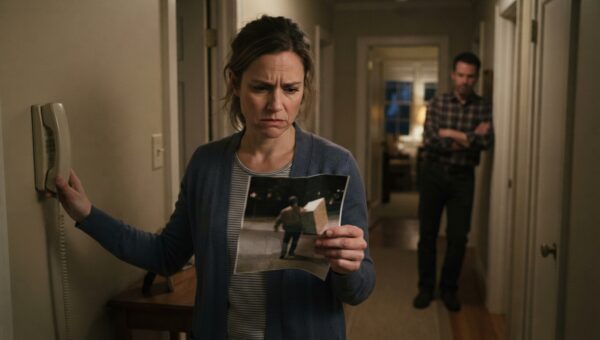
The morning coffee had just finished dripping into the glass carafe when the telephone on the kitchen wall let out that sharp, tinny ring that always makes your ribs tighten. I was standing right there by the sink, wiping down the white Formica counter with a damp sponge for the third time because my hands just didn’t know what else to do with themselves.
Eleven months of oatmeal bowls on that low booster seat, eleven months of finding little plastic dinosaurs in the silverware drawer, and suddenly the house was so quiet it felt hollowed out. I picked up the receiver before the second ring could rattle the plaster. It was Sarah Jenkins, the county caseworker who had handled our placement since Toby was three. She didn’t say hello. She just told me to come down to her office on Elm Street right away.
I didn’t ask why. I already knew, or at least my stomach knew before my brain caught up. Last Friday afternoon, Maya had pulled her rusted blue sedan right up to our front porch with a signed court order waving in her hand like a flag of victory. Toby had clung to my apron strings so hard his little knuckles turned white as chalk. He didn’t understand about biological mothers or circuit court judges or the state’s desperate push for reunification.
He just knew the woman in the passenger seat smelled like menthol cigarettes and kept tapping her acrylic nails against the dashboard while the engine idled loud enough to rattle our windows. When Sarah’s supervisor gently unhooked Toby’s fingers from my waist and carried him down the steps, the boy screamed my name until his voice cracked right in half. I watched that car turn the corner by the grain elevator with thirty-four dollars and eighty cents worth of extra toddler socks and two new pairs of Velcro sneakers sitting in a cardboard box by my front door.
Now it was Monday morning, and Sarah’s office door was locked from the inside before I even reached the end of the linoleum hallway. When she finally opened it, her eyes looked like she hadn’t slept since Friday night. She didn’t offer me coffee. She just pulled out a metal folding chair, motioned for me to sit down, and dropped a thick manila folder right in the center of the scarred oak desk.
The tab was labeled with a faded red marker that had begun to smudge at the edges.
“He was in the county hospital emergency room last night,” Sarah said, and her voice was so flat it sounded like she was reading a grocery list. “Broken collarbone. Multiple soft tissue contusions on his back. Maya told the triage nurse he took a bad spill off the front porch stairs.”
I felt the blood leave my face so fast my ears started ringing with that high, thin tone you get when church bells stop swinging. I reached out to touch the corner of the folder, but my fingers were shaking so badly I pulled them back into my lap. I had spent eleven months teaching that little boy how to tie his shoes, how to brush his teeth without swallowing the mint foam, how to laugh without looking over his shoulder first.
I had bought him a green plastic cup with little white ducks on the side and a stuffed brown bear he named Barnaby because he couldn’t quite manage the r sound yet.
“The porch stairs have a handrail,” I whispered, and the words felt like dry gravel in my throat. “I put that rail up myself back in November so he wouldn’t slip when the frost came down.”
Sarah didn’t look at me. She just flipped open the front cover of the folder, revealing three separate yellow incident reports stapled to a medical intake sheet from two neighboring districts. The dates went back eighteen months before Toby ever set foot in my kitchen. Every single report involved a child under the age of five. Every single report had been marked closed within forty-eight hours due to insufficient domestic cooperation or unverified statements from the primary guardian. Maya’s maiden name was scrawled at the bottom of each one in hurried blue ink.
“They weren’t just accidents, Clara,” Sarah said, her voice dropping down to a harsh whisper that made the hairs on my arms stand straight up. “They were tests. If you gave too little support, she called you selfish and filed a neglect complaint with the intake desk. If you gave too much, she claimed you were trying to buy the boy’s affection and accused you of boundary violations. And if you gave exactly what she asked for, she found some new way to make you regret knowing her name.”
I stared at the pages, watching the names of different small-town doctors blur together under the harsh fluorescent glare of the office light. The state system wasn’t broken by accident. It was built with trapdoors. Every time Maya moved across county lines, she left behind a trail of bruised ribs and fractured wrists that local caseworkers filed away in bottom drawers just to keep their caseload numbers looking clean for the state audit board. She treated children like rented property, testing everyone around her to see how much abuse the system would let her get away with before someone finally grew a backbone and told her no.
“Where is he now?” I asked, and my voice had gotten smaller, sharper, like a wire pulled too tight.
“He’s still in the pediatric ward under a protective hold,” Sarah said, tapping her pen against the metal desk edge. “The doctors had to sedate him because he kept crying for his green cup and his bear. But that’s not even the worst part of it, Clara. Look at the signature on the custody release order from last Thursday.”
I pulled the document closer, squinting past the official state seals and the dense blocks of legal jargon until my eyes landed on the bottom corner where the magistrate’s stamp met the blue ink. The name typed out in bold capital letters didn’t match Maya’s last name at first glance, but the middle name gave it away like a beacon in the fog. Evelyn Vance. Family Court Magistrate for the Fourth Judicial District. The woman who had expedited the emergency reunification without a standard psychological evaluation. The woman who had signed off on sending a four-year-old boy back into a house with three prior uninvestigated child abuse flags.
“The judge who approved the return is her maternal aunt,” Sarah said, and the silence in that small room became so heavy you could almost hear the dust motes hitting the floorboards.
For a second, I didn’t breathe. Everything clicked into place with a sickening, heavy thud. The sudden rush of the court date, the missing background check records from the neighboring county, the way the magistrate had refused to look me in the eye when I handed over Toby’s medical growth charts during the final hearing. It wasn’t just a mistake. It was a family favor executed with state stationery. Judge Vance had used her administrative clearance to bury the three prior closed files under an alternate spelling of Maya’s maiden name, clearing the books so her niece could take the boy back without the state looking too closely at the scars on his ribs.
“She knew,” I said, and the anger rising up inside me wasn’t cold anymore. It tasted like iron and salt. “She knew about the other kids before she ever signed my name off that custody line.”
“Of course she knew,” Sarah said, standing up and grabbing her car keys from the hook by the door. “And that’s why we have about forty-five minutes before the morning docket starts and Judge Vance tries to seal these medical records under a juvenile confidentiality motion. My supervisor wants to play ball and let the internal ethics board handle it over the next six months. But I’m done playing by their rules, and I figured you might want to come along for the ride.”
I didn’t hesitate. I stood up so fast my metal chair scraped against the linoleum with a sound that made my teeth ache. I reached into my tote bag and pulled out the small receipt from the discount store down by the highway, the one showing the thirty-four dollars and eighty cents I had spent on Toby’s new socks and underwear just four days before he was taken away. I laid it right on top of the judge’s signature.
“Let’s go,” I said.
We didn’t take Sarah’s state-issued sedan. We took my old pickup truck because the transmission in her car had been acting up and neither of us had time for a roadside breakdown on the way to the state capitol. The highway was slick with a fine morning mist that turned the pine trees along the shoulder the color of wet slate. By the time we parked behind the county courthouse annex, my hands were still trembling, but the fear had completely burned out, leaving behind something cold and steady and hard as stone. We walked past the bronze statue of the county founder without slowing down, our boots clicking in unison against the wide stone steps.
Sarah had already called a contact in the state attorney general’s office from her mobile phone while I was shifting gears at the bypass exit. When we pushed through the heavy oak doors of the records division, two investigators from the Department of Public Integrity were already waiting by the intake counter with a federal subpoena in their hands. They didn’t look like local sheriff deputies; they wore dark suits that smelled like dry cleaners and carried leather briefcases with brass latches that clicked shut with authority.
“Are you Clara Evans?” the taller one asked, flashing a gold badge that caught the light from the tall arched windows.
“I am,” I said.
“We have Judge Vance’s administrative logs from the past three years,” he said, holding out a clear plastic evidence sleeve containing a certified copy of the suppressed guardianship transfer. “We also have the original intake records from the neighboring district under Maya’s maiden name. Your former foster child is currently being transferred to a secure pediatric recovery room under state protection. If you’re willing to sign as an emergency intervenor, we can have the permanent custody injunction filed before the afternoon recess.”
I looked at Sarah. She gave me a slow, exhausted nod, the kind of nod you only get from someone who has spent twenty years watching the system protect itself until ordinary people finally forced the doors off their hinges. I took the heavy black pen the investigator offered me and signed my name right across the bottom line, pressing down hard enough to tear through the first carbon sheet. I didn’t care about the rules anymore. I didn’t care about the judges or the closed reports or the polite little lies people tell each other to keep the peace in towns where everyone shares a last name or a debt.
By Tuesday morning, the sun was actually breaking through the heavy grey fog over the river valley. The state supreme court had already issued an immediate suspension order for Judge Evelyn Vance pending a formal judicial ethics tribunal, and the local prosecutor’s office had filed three counts of felony child endangerment and falsifying public records against Maya. The state didn’t bother offering another hearing; the paper trail was too thick, the medical evidence too loud, and the family ties too rotten to hide behind another closed docket.
When Sarah brought Toby back to my porch late that afternoon, she didn’t use the state sedan. She carried him up the front steps herself, holding him against her shoulder like he was made of spun glass. He was wearing an oversized blue sweater that smelled like hospital disinfectant, and his right arm was tucked neatly inside a bright neon-blue fiberglass cast that reached all the way down to his knuckles. The moment he saw my screen door open, he let out a little hitch in his breath that wasn’t quite a cry.
“Clara,” he whispered, and it sounded like he was trying out a word he hadn’t used in a hundred years.
I didn’t say anything back. I just knelt down right there on the braided rug in the front hallway and let him wrap his good arm around my neck so hard my collarbone hurt. On the round wooden kitchen table just behind us, the green plastic cup with the little white ducks was sitting right where I had left it on Friday morning. Barnaby the stuffed bear was propped up against the sugar bowl, looking a little dusty from his weekend in the evidence locker, but still wearing his little red felt vest.
I pulled the permanent guardianship papers out of my canvas bag and laid them flat across the grain of the oak table, right next to the receipt for the thirty-four dollars and eighty cents worth of socks. Toby climbed up onto his usual wooden booster seat, reached out with his left hand, and picked up his cup like he had never spent a single night away from that kitchen. The house was quiet again, but this time the silence didn’t feel like a warning. It just felt like the sound of a door finally being bolted from the inside.