Four years ago, I thought life was just an equation where every action required an exact and proportional return. If you put in a certain amount of effort, you expected a specific reward. If you gave too little, you were selfish. If you gave too much, you were showing off. And if you gave exactly what someone wanted, they usually found a way to make you regret knowing them that well.
My marriage to Elena had operated on those unspoken ledgers for seven years before we ever stepped foot inside the Saint Jude Reproductive Health clinic in Dayton. We had spent eighteen months trying to conceive naturally before the doctors gently suggested assisted options, handing us glossy brochures full of smiling families and clinical terminology. We paid our deposits, signed twenty pages of boilerplate waivers without reading the fine print, and trusted the sterile white rooms.
The trouble started the day Elena brought our son, Leo, home from the hospital. Most men probably look at a newborn and feel a wave of unconditional awe, but my brain spent the first forty-eight hours running numbers and checking timelines. Our skin tones, our blood types, the way his earlobes attached, the quiet whispers of doubt that keep men awake at two in the morning. I kept telling myself I was just being practical, but it was really a cold, creeping paranoia that someone might be pulling a fast one on me.
Elena noticed the distance immediately, though she didn’t say much at first. She just moved through the nursery with that quiet, deliberate efficiency of hers, changing diapers and rocking the baby while I sat downstairs staring at the blank television screen. The tension in our house grew thick enough to choke on, a slow poison of my own making, until I finally confronted her in the kitchen on a rainy Tuesday afternoon.
I slammed the commercial home DNA kit box down onto the granite island right next to the electric kettle. My voice sounded thin and sharp even to my own ears.
“I need to know for sure,” I told her, my hands shaking slightly against the counter.
Elena didn’t drop her mug. She didn’t cry or scream like I half expected her to do. She just set the ceramic cup down with a soft click against the stone and looked right at me with a strange little smile that didn’t reach her eyes.
“And what if he isn’t yours?” she asked, her voice entirely flat.
The question hit me like a physical blow to the chest, knocking the wind out of my lungs for a second. Instead of pausing to think about what I was throwing away, my ego flared up like dry brush in July.
“Then I’m filing for divorce,” I answered without hesitation. “I will never spend my life raising another man’s child.”
She nodded slowly, almost as if she had already written down the outcome and was simply waiting for me to read it. Three days later, the mail carrier dropped off the official lab envelope. I tore it open in the truck parked outside a hardware store, my eyes zeroing straight down to the bottom line where the probability of paternity read zero percent. My entire world collapsed right there over the steering wheel, though in hindsight, it was a world built entirely on sand.
I called a divorce lawyer before I even turned the ignition back on. I packed two duffel bags that same evening, walking out of the house and out of Leo’s life without looking back once. For three whole years, I wore my bitterness like a badge of honor, telling any friend who would listen that I had dodged a bullet and protected myself from a deceitful woman. I convinced myself I was the victim of a grand deception, a betrayed husband who had acted swiftly and decisively to clean house.
Then came a random Thursday morning when my cell phone buzzed against the nightstand at 8:14. A man named Arthur Vance introduced himself as a legal auditor working with a class-action firm out of Columbus. He asked if I remembered undergoing fertility treatments at Saint Jude back in 2021.
“Why are you asking about that?” I muttered, rubbing the sleep from my eyes.
“We are reviewing a certified clerical error regarding cross-contaminated genetic samples from that specific quarter,” Arthur said, his tone entirely businesslike. “Your name came up in the archived patient compensation database.”
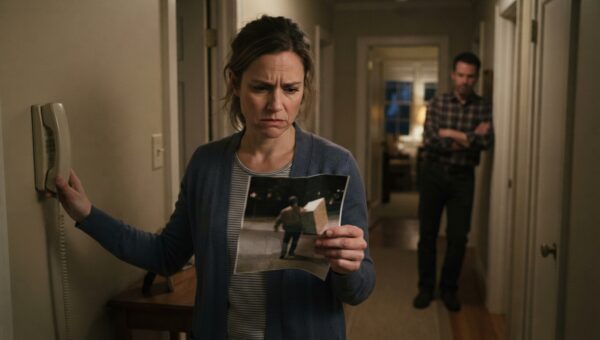
He didn’t wait for me to answer before he emailed a secure digital file containing three pages of hospital audit logs. I opened the PDF on my laptop while he stayed on the line, my eyes scanning the bureaucratic headers until I hit the section detailing specimen mishandling in lab room four during the second week of March. There was no affair, no secret lover, no betrayal on Elena’s part whatsoever. A tired lab technician had swapped storage vials during a shift change, meaning Leo was biologically unrelated to me purely through a medical catastrophe that the clinic had spent years trying to bury. But that wasn’t the part of the document that made my stomach drop into my shoes. Attached to the clinic audit was a secondary legal disclosure showing that Elena had discovered the exact same lab error through routine postnatal genetic follow-ups right around the time I demanded my home test.
She had known the truth before I even bought the kit. She had held the hospital’s confession in her hands while I stood in our kitchen demanding proof of her loyalty.
I sat alone in my quiet apartment for two hours staring at those digital pages until the words blurred together. The realization hit me like cold water thrown in my face. Elena hadn’t smiled in the kitchen because she was hiding a guilty conscience or an affair. She had smiled because she realized in that exact instant that my love for our child and my trust in her were entirely conditional on a genetic receipt. She gave me the out I was practically begging for, letting me walk away from my own son because she knew my pride would always outweigh my devotion. She took the clinic’s administrative error, kept it sealed in a private arbitration settlement that secured Leo’s financial future for life, and let me exile myself. She stripped me of my parental rights not out of malice, but because she recognized I wasn’t man enough to stay when things got complicated.
By mid-afternoon, I found myself driving across town without really planning the route. I parked three houses down from the place we used to share, sitting behind the steering wheel and watching the front yard through the windshield. A little boy with bright blonde hair and an oversized blue sweater was squatting in the grass, pushing a red plastic toy truck back and forth across the concrete walkway. He didn’t know I existed. To him, I was just a stranger sitting in a sedan down the street. I killed the engine and walked slowly up the sidewalk, my boots crunching softly against the gravel drive. Elena must have heard the gate latch because she stepped out onto the porch before I even reached the bottom step. She didn’t look surprised to see me. She just leaned against the wooden porch post, her arms folded across her chest, watching me approach with that same quiet, heavy stillness she had worn the day I left.
“You got the files then,” she said softly, before I could even open my mouth.
“You knew,” I managed to get out, my throat tightening up until the words felt like gravel. “You knew about the lab error the whole time I was packing my bags.”
Elena didn’t blink. “You told me yourself that you wouldn’t spend your life raising another man’s child,” she said, her voice completely devoid of anger, which somehow felt much worse. “You didn’t ask me what happened. You didn’t ask if I was okay. You just wanted a signed confession so you could walk away with a clear conscience and your precious dignity intact.”
I stood there on the bottom step, looking past her toward the front door where Leo was still playing in the hallway. I opened my mouth to argue, to demand a chance to fix it, to ask if I could be a part of his life now that the truth was out in the open. But the words died on my tongue because I remembered the exact ultimatum I had thrown at her four years ago. I had measured my love, put a price tag on my fatherhood, and found it wanting when the numbers didn’t line up the way I liked. I had traded a son for my own stubborn pride, and no court order or late-night apology could ever rewrite that ledger. I slowly pulled my hand back from the wooden gate latch, turned around without saying another word, and walked back to my car alone.