PART 1
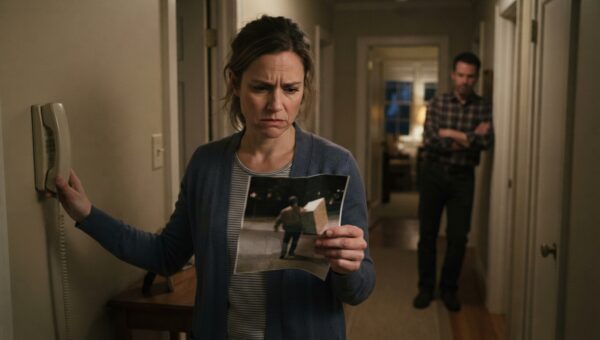
The text message arrived on a Tuesday morning while I was standing in the grocery store checkout line. It was from my younger sister, Brenda, and it contained a photo of an invoice printed on pink paper. At the top was the name of the home care agency that had provided nursing assistants for our mother during the last six months of her life.
At the bottom, highlighted in yellow marker, was a final balance of $12,000.
“Mom’s insurance denied the last two quarters of home assistance,” Brenda wrote right under the image. “They say she exceeded her long-term policy cap. I already paid the agency out of my own checking account because they were threatening to send it to collections. You need to wire me your half, $6,000, by Friday.”
My hand tightened around my phone. I was sixty-two years old, working fifty hours a week as an intake clerk at a county clinic, and living on a tight budget. Six thousand dollars was almost half of my remaining liquid savings. But Brenda had been the sister who lived twenty minutes away from Mom’s small ranch house in Ohio, while I lived three states away in Indiana. During the hard fourteen months leading up to Mom’s passing, Brenda had handled the day-to-day coordination, the doctor visits, and the bill payments.
When Mom passed away in October, we were both heartbroken. Mom had owned her small two-bedroom home outright, but she had very little cash left in her personal checking account. Brenda had told me point-blank at the funeral service that Mom’s savings were practically zero and that we would have to pay out of pocket for any lingering debts before we could clear the house and put it on the market.
I did not question my sister. I transferred $6,000 from my savings into Brenda’s personal checking account that Friday afternoon. Two weeks later, Brenda texted again saying another late bill had arrived from the physical therapy group for another $12,000. She claimed she had already covered that one too, and needed another $6,000 right away. I felt sick to my stomach, but I withdrew another $6,000 from my retirement savings account, paying an early penalty, and wired it directly to her. In total, I sent Brenda exactly $12,000 within twenty days.
By late November, it was time to clear out Mom’s house so the real estate agent could photograph it. Brenda called me on Thursday night with a strange tone in her voice. “You don’t need to drive down here this weekend, Martha,” she said quickly. “I hired a clean-out crew to take everything away. It’s too painful for you, and I can just handle it.”
That was the first moment something felt wrong. Mom had owned an antique Singer sewing machine cabinet that had belonged to our grandmother. Years ago, Mom had promised that cabinet to my daughter, Clara. When I told Brenda that I was coming down anyway to pick up the sewing cabinet, Brenda grew agitated. “The house is already locked up,” she said. “The crew is coming early Friday morning. Just stay home.”
I drove down anyway. I arrived at Mom’s house at seven on Friday morning, just as the sun was rising over the frosted driveway.
Brenda’s car was not there yet, but the front door key was still under the fake stone by the porch steps.
I walked into the quiet, cold living room. The house smelled like Mom’s lavender soap and old paper. In the corner of the dining room sat the heavy mahogany sewing cabinet. I knelt beside it, unlocked the side latch, and pulled open the lower wooden compartment to check if the original iron foot pedal was still intact.
Instead of sewing supplies, my fingers hit a heavy, black leather ring binder hidden behind a stack of folded patterns. Stenciled on the front cover in Mom’s careful, neat handwriting were the words: DAILY CASH & ACCOUNT LEDGER – DO NOT REMOVE.
I opened the binder on the dining table. Inside were eighteen months of meticulous, line-by-line entries written in Mom’s distinct blue ink, accompanied by original bank statements, cleared canceled checks, and official insurance reimbursement receipts neatly stapled to every page.
PART 2
I turned the pages of Mom’s ledger, my fingers tracing the dates. Mom had kept exact records until ten days before her death, when her stroke made writing impossible.
According to the official statements stapled directly inside the ledger, Mom’s long-term care insurance policy had not capped out at all. The insurance company had paid one hundred percent of the home care agency bills through direct electronic deposit directly into Mom’s account every single month. The total balance owed to the home care agency on the pink invoice Brenda had texted me was zero. In fact, attached to page 42 was a final zero-balance statement signed by the agency’s billing supervisor, dated three weeks before Mom died.
Brenda had taken a blank sample billing statement from the folder on Mom’s desk, typed in the fake $12,000 charge herself, highlighted it with a yellow pen, and photographed it to send to me.
I kept reading. The ledger revealed something far worse. Because Brenda held power of attorney during Mom’s final year, she had access to Mom’s secondary bank account, where Mom’s monthly pension checks of $2,450 were deposited. Over fourteen months, Brenda had systematically transferred $34,300 from Mom’s pension account into her own personal account, labeling the transfers as “caregiver compensation,” even though Mom had explicitly recorded in her ledger that Brenda had volunteered to help without pay.
In total, Brenda had taken $34,300 from Mom’s funds and extracted $12,000 directly from my personal savings using falsified invoices. The grand total of money Brenda had misappropriated was $46,300.
While I was sitting at the kitchen table with the binder open in front of me, I heard a key turn in the front lock. The door opened, and Brenda walked in holding a box of heavy-duty contractor trash bags.
She froze when she saw me sitting at the table with the black ledger open. Her face flushed red.
“What are you doing here?” Brenda asked, her voice sharp. “I told you I was having a crew clear this place out.”
“I came for Grandma’s sewing cabinet,” I said quietly, keeping my voice completely steady. “And I found Mom’s records.”
Brenda closed the front door behind her. She walked into the dining room, her eyes locked on the binder. “Mom was confused near the end, Martha. She didn’t know what she was writing down. You can’t trust anything in that old book.”
“The ledger has original bank statements stapled to it, Brenda,” I said, looking her in the eye. “It has the zero-balance receipts from the care agency. Insurance paid every penny. You manufactured that pink invoice and texted it to me. I sent you $12,000 of my savings based on a lie.”
Brenda’s demeanor changed instantly from defensive to cold and dismissive. She crossed her arms. “I spent fourteen months taking Mom to her appointments while you lived three states away,” she said loudly. “You have no idea what I gave up. I deserved that money. It was compensation for my time. You got off easy just paying $12,000.”
“Mom’s pension paid for her expenses, and you took $34,300 of her money without authorization,” I replied. “And you stole $12,000 directly from me.”
“Go ahead and cry about it,” Brenda sneered, taking a step toward the table. “Mom is gone. The estate hasn’t opened probate yet. I am the executor named in her will, and I control the distribution of the house sale. If you try to make a scene, I will drag out the sale of this house for three years and make sure you don’t get a single dime from your inheritance.”
She reached down to grab the binder off the table. But I had already closed it, hugged it tight against my chest, and stood up.
“Touch me or this book, Brenda, and I call the police right now,” I said.
She stepped back, glaring at me. I walked out the front door with the ledger under my arm, got into my car, and drove straight to an elder law and probate attorney’s office in the county seat.
PART 3
The attorney, a thorough woman named Susan Vance, reviewed the binder for two hours on Monday morning. She examined every stapled bank statement, the zero-balance agency receipts, the wire transfer receipts from my savings account to Brenda, and the altered pink invoice photo I had saved on my phone.
“This is not just an estate dispute,” Ms. Vance said, setting down her pen. “This is documented breach of fiduciary duty under power of attorney and personal fraud. Because your sister used wire transfers across state lines based on a falsified document, she is exposed to serious civil liabilities and formal removal as executor.”
Ms. Vance did not file a dramatic criminal complaint right away, nor did she make threats. She took a lawful, methodical approach. First, she filed an emergency motion in probate court to freeze the estate assets and prevent Brenda from being appointed executor, attaching certified copies of Mom’s ledger pages and the bank records as evidence. Second, she issued a formal demand letter to Brenda’s attorney.
The demand letter presented Brenda with two clear choices. Option one was an immediate accounting audit through the probate court, which would trigger a mandatory referral to the county prosecutor’s office for elder financial exploitation and fraud. Option two was a legally binding settlement agreement: Brenda had to formally renounce her rights as executor, allow me to serve as administrator, return the full $12,000 to my bank account immediately, and allow the $34,300 she had taken from Mom to be deducted entirely from Brenda’s half share of the future house sale proceeds.
When Brenda received the court summons and the legal demand letter, she called me four times in one evening, leaving hysterical voicemails claiming I was destroying the family and that our mother would be ashamed of me. I did not return her calls. I forwarded every message directly to Ms. Vance.
Faced with the undeniable paper trail and the real risk of criminal charges, Brenda’s lawyer advised her to surrender. Ten days later, Brenda signed the probate court settlement documents.
On December 12th, the $12,000 was wired back into my savings account in full.
ENDING
We put Mom’s house on the market in January. Because I was appointed estate administrator by the probate court, I handled the listing, the repair work, and the final closing. The house sold in late February for $210,000.
After real estate commissions, closing costs, and minor repair expenses, the net proceeds of the estate totaled $192,000, which was meant to be split equally at $96,000 each.
However, under the court-approved settlement agreement, Susan Vance executed the final distribution calculation. The $34,300 that Brenda had improperly taken from Mom’s pension account was subtracted directly from Brenda’s half of the proceeds.
When the final checks were issued from the estate escrow account, my inheritance check was $113,150, reflecting my equal share plus the reimbursement owed to the estate. Brenda received a check for $61,700.
Brenda did not attend the final closing. She sent her legal representative to sign the closing paperwork. She has not spoken to me since the day she signed the court settlement, and she chose not to attend our family’s quiet holiday gathering this past spring.
I brought Grandma’s mahogany sewing cabinet back to my house in Indiana. It now sits in my daughter Clara’s guest room, clean and polished.
Inside the bottom wooden compartment, right behind the iron foot pedal, sits Mom’s black leather binder. I kept it exactly as I found it. It serves as a reminder that my mother’s quiet, careful habits protected us even after she was gone, and that standing up for the truth was the only way to honor her memory.