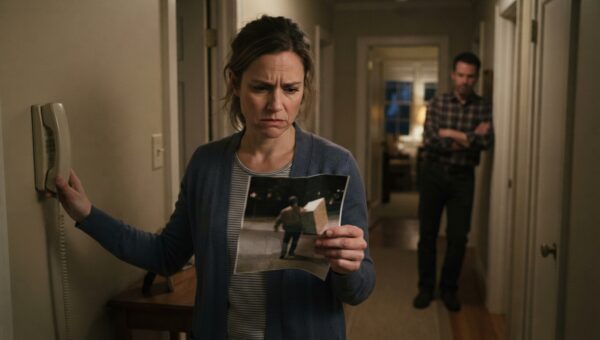
The morning coffee had just finished dripping into the glass carafe when the telephone on the kitchen wall let out that sharp, tinny ring that always makes your teeth ache. But that was three years ago, back in the gravel-drive quiet outside Knoxville where the air always smelled of damp pine needles and woodsmoke. Right now, on a Tuesday afternoon in Charlotte, the only sound in my small apartment was the low hum of the refrigerator and the dead weight of a heavy wooden box sitting on my kitchen table.
When my grandfather Earl passed in his house outside Knoxville, Tennessee, my uncles split the savings and the truck before the casket was even closed, bickering over numbers at the kitchen table. I was just the grandson who’d moved off to the city, so nobody figured I’d walk away with anything. Dale was the oldest, and he always moved like he owned the county register. He’d stand in Grandpa’s kitchen with his thumbs hooked in his belt loops, talking real loud about property taxes and equipment depreciation while the rest of them just nodded along.
At the reading down at the county courthouse, the lawyer pointed me to Grandpa’s old mantel clock – the heavy wooden one that never kept good time. My uncle Dale laughed. ‘Course. Give the city boy the broken junk.
I didn’t say a word back to him. I just reached out, lifted the heavy oak case into my arms, and carried it out to the trunk of my sedan.
It smelled like cedar and stale pipe tobacco, the exact smell of Grandpa’s front room when we’d sit together watching the late afternoon sun stretch across the porch rails. I had it shipped back to my place in Charlotte mostly out of love. For two years it sat on my shelf, silent, a thing I dusted around and never wound.
Life down in the city gets loud real fast, and you find yourself just trying to keep your head above water with rent and car payments and the endless grind of a forty-hour week. That clock just became part of the background, another piece of furniture holding up dust. But then this past spring I finally decided to get it running again.
It was a Sunday, and the weather outside was that greasy kind of warm where you don’t really want to do anything heavy. I set the clock down on the kitchen island, grabbed a small flathead screwdriver from my drawer, and turned the heavy case around.
While I had the back panel off to oil the gears, I noticed the wooden bottom of the case didn’t sit flush – and the little brass screws holding it were bright and new, scratched up like they’d been turned more than once. Grandpa hadn’t touched a screwdriver in years. His hands had gotten too stiff from the arthritis, a fact Dale used to complain about whenever he needed Grandpa to sign a check for seed or tractor parts.
I backed them out one by one, lifted the false bottom away, and behind it lay a dark green velvet pouch, a small leather-bound ledger, and his father’s old silver pocket watch that everyone thought had vanished back in nineteen-eighty.
My hands felt suddenly cold. I sat down hard on the kitchen stool, staring at the little pile of things hidden away beneath the gears and springs. The house in Charlotte was dead silent except for the refrigerator humming in the corner.
I reached out and untied the gold cord on the velvet pouch.
Inside were twelve U.S. Savings Bonds, each one made out in my exact name with my old social security number, dated just three months before Grandpa had his stroke. They weren’t small amounts either. Each bond was for five thousand dollars. Sixty thousand dollars total, tucked away beneath a broken clock while my uncles were screaming at the kitchen table about how there wasn’t a red cent left in the estate.
I picked up the leather ledger next. The cover was worn soft at the corners, showing the gray cardboard underneath. I opened it to the first page, and there was Grandpa’s familiar, cramped handwriting, every letter leaning hard to the left like he was fighting the paper to get the words down straight.
April fourteenth. Dale took four thousand for the truck repair, but the bill from the shop was only twelve hundred. I signed because my hand was shaking so bad I couldn’t hold the pen right.
I turned the page. May second. Another two thousand. Said he needed it for seed, but I saw the new trailer in his driveway yesterday.
It went on like that for four years. Page after page of dates, signatures, and exact dollar figures. It was a complete record of every time Dale and the other boys had leaned on an old man who couldn’t remember where he put his reading glasses half the time. Grandpa hadn’t been confused. He had been keeping score. He knew his sons were draining him, but instead of fighting them out in the open where they would have made his final months miserable, he built a wall and waited.
At the very back of the ledger was a folded piece of lined yellow paper with my name scrawled across the front in thick pencil strokes. I unfolded it carefully, my fingers shaking just a little bit against the paper.
Tommy, if you’re reading this, it means you actually took the time to look inside the old clock instead of throwing it out or selling it for scrap iron at a weekend yard sale. Your uncles think they cleaned me out, and in a way, I let them think it so they’d leave me in peace. But I didn’t work thirty years at the mill just to let Dale buy a bass boat with your college money. Take these bonds down to the bank, show this book to Mr. Henderson at the courthouse, and tell ’em Earl sent you. Don’t let ’em push you around. You’re a good boy.
I just sat there at the kitchen table for a long time, looking at the yellow paper. The afternoon sun moved across the counter, catching the edge of the brass pendulum still resting beside the clock case. I didn’t cry, but my throat felt tight and dry, like I’d swallowed a mouthful of dust.
The next morning, I didn’t go into work. I called my boss, told him I had a family emergency to handle down in Tennessee, and drove straight through the night down I-81. The miles rolled under my tires in a steady hum, the dark highway broken only by the red taillights of semi-trucks hauling loads through the mountain passes. By eight o’clock on Monday morning, I was standing on the polished linoleum of the county courthouse in Knoxville, waiting for Mr. Henderson’s office door to open.
Mr. Henderson was an older man now, his hair completely white and his desk piled high with old cardboard folders that looked like they belonged in a museum. He took off his thick glasses, set them down on top of the ledger, and looked up at me over the rims.
Your grandfather was a sharp man, Thomas, he said quietly, tapping a finger against the leather cover. People thought he was just getting old and soft. But he came into my office eighteen months before he passed, clear-headed as a judge, and we set up these bonds in a private trust. He told me then that if anyone found them, it would be you. He said you were the only one who ever asked him about how the clock worked instead of what it was worth.
What about my uncles? I asked, my voice sounding a little tighter than I meant it to.
They filed the probate papers three weeks after the funeral, Henderson said, leaning back in his squeaky leather chair. They swore under oath that the estate was completely exhausted. That the bank accounts were empty and there were no other assets to distribute. But a savings bond registered under a specific beneficiary doesn’t go through probate, Thomas. And a signed ledger detailing financial coercion under duress is a very interesting piece of evidence for the district attorney’s office if someone chooses to press the issue.
I didn’t want a criminal trial. I didn’t want to drag our name through the local papers or turn the whole county into a war zone. I just wanted what was mine, and I wanted Dale to know that Grandpa hadn’t been as helpless as they all liked to think.
That afternoon, I pulled my car off the gravel shoulder and parked right behind Dale’s red pickup truck in the yard where we used to shell corn on the back porch. The screen door was hanging slightly off its hinges, just like it had when Grandpa was alive. I walked up the three wooden steps and knocked once, hard, before Dale even had a chance to open it.
Dale pulled the door back, a scowl already forming across his forehead, but when he saw it was me standing there on the mat, his expression shifted to something ugly and suspicious.
What are you doing back here? Dale asked, crossing his arms over his chest. We settled the estate months ago. You got your little clock.
I didn’t say a word at first. I just reached into my jacket pocket, pulled out the manila envelope containing copies of the ledger pages and the bank verification for the bonds, and slid them across the worn wooden porch railing right until they hit his chest.
Grandpa left me something else in that clock, Dale, I said, my voice dropping down into a flat, steady register that surprised even me.
Dale looked down at the papers, his eyes scanning the first line of his own signature from three years back. His face didn’t go white like it does in the movies; instead, it flushed a dark, angry red, his jaw working back and forth as he tried to find something smart to say.
He… he didn’t know what he was signing, Dale muttered, his voice hitching slightly on the vowels. The old man was losing his mind at the end. You know how he got.
I stepped closer, keeping my eyes locked right on his. No, Dale. He knew every single dollar you took. And Mr. Henderson has the rest of the copies down at the courthouse. We can settle this right here quietly, or we can let the county prosecutor have a look at the math. Your choice.
For three long seconds, nobody said anything, and honestly that felt worse than any shouting match we could have had. Dale stood there on his porch, his hands trembling slightly as he held the papers, finally realizing that the old man he thought he’d outsmarted had kept a ledger right under his nose the entire time.
You’re a cold bastard, Dale whispered, the fight completely draining out of him.
No, I said, turning back toward my car. I just took the time to look inside the clock.
That evening, I made the long drive back to Charlotte with the windows rolled down, letting the cool night air rush through the car. When I finally carried the heavy oak case back into my apartment, the city outside was quiet and dark. I set it carefully on the wooden mantel above my small electric fireplace, right where it belonged.
I reached inside, picked up the small brass key that had been tucked behind the pendulum, and gave it three gentle turns. The spring caught with a soft, familiar click. And then, for the first time in two years, that old wooden box came alive. The steady, rhythmic tick filled the empty room, loud and clear and completely sure of itself, measuring out the seconds one by one in the dark.