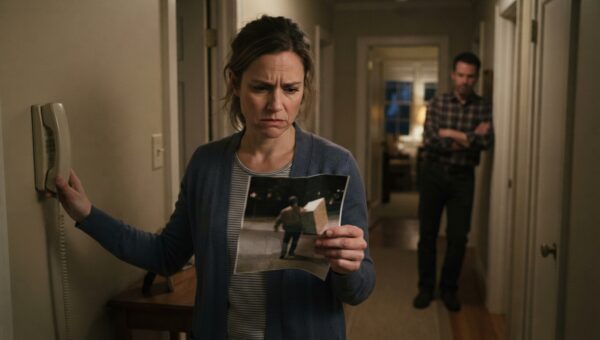
The blue light of the notification flickered against my bedside table at 3:14 in the afternoon, right in the middle of my shift paperwork. Ms. Honeycutt’s email had a small JPEG attached, labeled simply as third-grade art project. I clicked it because I clicked everything from Chloe’s school immediately, half expecting a watercolor of a lopsided horse or a crooked sun.
Instead, the image showed a lump of gray school clay molded into the shape of a woman lying completely flat on her back. Her eyes were closed and her small clay hands were neatly crossed over her chest. I stared at the screen for three seconds before my phone buzzed again with a follow-up text from the teacher.
“Your daughter made this in class today,” Ms. Honeycutt wrote.
I typed back a quick, polite line. “It’s creative.”
The reply came back instantly. “She said it’s you. She said you look like this every morning. She said she has to check if you’re breathing.”
I put the phone face down on the kitchen counter and my hands started shaking so badly I had to grip the edge of the laminate. Chloe is nine. For eighteen months, ever since the insomnia from the grief over my mother’s passing finally broke my nervous system completely, Dr. Aris had kept me on a heavy sedative that knocked me flat until past ten in the morning.
I thought I was just sleeping off the grief. I thought I was resting.
I didn’t know about the alarm clock. I didn’t know about the quiet footsteps on the hardwood at dawn.
The next two hours passed in a blur of cold sweat and rising panic. I pulled up my patient portal and messaged Dr. Aris with a blunt demand for an immediate medication review, telling him I needed a step-down taper starting that very night because the current dosage was destroying my family. Then I walked slowly down the hallway toward Chloe’s bedroom, my boots feeling far too heavy on the floorboards.
Her door was half open. I pushed it wider and stepped inside, scanning the room the way a detective looks for clues in a case he already knows he lost.
Her bed was neatly made with the pink comforter pulled tight. On her nightstand sat her alarm clock, a small digital square with faded blue numbers.
I reached out and pressed the little toggle switch on the back. The alarm was set for 6:30 AM, repeating every single weekday.
Then I checked under her mattress, lifting the corner just an inch out of some strange, desperate instinct. Tucked right near the headboard was a small spiral notebook filled with clumsy nine-year-old handwriting, tracking dates and checkmarks next to brief, heartbreaking notes about whether I had moved or made a sound when she opened my door.
“October 12th. Mom breathing slow,” one line said.
“November 4th. Mom stayed asleep till I left for the bus,” said another.
Eighteen months of silent, terrifying morning surveillance carried out by a child who should have been worrying about spelling tests and cartoon shows. She had been carrying the weight of my life in her small hands because the medication made me as unresponsive as a corpse until the sun was high in the sky.
She never told a soul because she was terrified that if anyone found out her mother couldn’t wake up, social services would step in and take her away from me.
That evening, Dr. Aris called me back personally. He sounded tired, but when I told him what the clay figure looked like, his tone changed instantly.
“The half-life on that sedative is entirely too long for a single mother with a young child,” Dr. Aris said, his voice tight over the line. “We are cutting it in half starting tonight. You’re going to feel rough for a couple of days, but you will wake up.”
“I have to wake up,” I told him. “I’m done hiding behind a pill.”
I tossed the old prescription bottle into the kitchen trash can right then, watching the amber plastic sink beneath the coffee grounds and junk mail. Then I set the alarm on my own phone across the room for 6:25 AM, making sure the volume was loud enough to rattle the drywall.
The night dragged by in a haze of restless chills and phantom noises as my body fought the sudden drop in sedatives. Every time I drifted off, I jerked awake thinking I had missed the time, staring at the ceiling until the digital numbers on the microwave slowly ticked toward dawn.
At 6:25 AM, the alarm on my phone finally screamed.
I sat up so fast my head spun, my vision swimming with a dull, throbbing ache behind my eyes. I didn’t care about the withdrawal fog or the nausea clawing at my throat. I swung my legs over the side of the bed and walked down the cold hallway into the kitchen, keeping my breathing steady.
At exactly 6:32 AM, the front door of Chloe’s bedroom clicked open.
I was sitting right at the small oak kitchen table with a mug of black coffee between my palms, staring straight at the entrance. Chloe stepped out into the hallway wearing her yellow school cardigan and her blue canvas backpack already zipped tight over her shoulders. She stopped dead in her tracks five feet from the kitchen threshold.
Her small hands froze on the straps of her bag. She looked at me sitting there upright, holding the mug, fully dressed in my knit sweater.
I didn’t rush toward her. I just looked into her wide, terrified eyes and kept my voice as soft as I could manage.
“Good morning, baby.”
Chloe dropped her backpack straight onto the linoleum with a heavy thud. She didn’t say a word, but her face crumpled instantly. She burst into loud, ragged tears, running across the kitchen floor and throwing her arms around my neck so hard the coffee sloshed over the rim of my mug.
“You’re awake,” she sobbed into my shoulder, her small frame shaking violently. “You’re awake, you’re awake.”
I wrapped my arms around her tight, burying my face in her hair, feeling the fierce, stinging heat of tears burning the corners of my own eyes.
“I’m awake,” I whispered, holding her closer than I ever had in her life. “And I’m not going anywhere.”
We stayed like that on the kitchen floor for a long time, the morning sun slowly creeping across the linoleum tiles and warming our backs. After a few minutes, Chloe pulled back, wiping her cheeks with the back of her sleeve, her breathing finally starting to slow down.
“You’re not sleeping?” she asked, her voice small and tentative, as if she were testing whether this new reality was real or just another dream.
“Not anymore,” I said, standing up and taking her by the hand. “Let’s make some pancakes. Real ones. Together.”
A small, hesitant smile touched the corners of her mouth, the first real look of childhood ease I had seen on her face in as long as I could remember.
Three days later, I walked into Ms. Honeycutt’s third-grade classroom after the final bell rang. The teacher looked up from grading spelling sheets, her expression cautious, wondering if I had come in to complain about the art project that had broken open my world.
“I wanted to thank you,” I told her, keeping my voice steady. “For the clay figure. And for the text.”
Ms. Honeycutt set her red pen down on the desk and gave me a long, understanding look. “Chloe is a very protective little girl. Sometimes kids carry things they shouldn’t have to hold.”
“She won’t have to carry it anymore,” I said. “The medication is gone. I’m up every morning now. We’re starting over.”
The teacher smiled softly and nodded, the tension leaving her shoulders. “I’m glad to hear that. She’s a bright girl. She deserves to just be a kid.”
The old gray clay figure sits on the top shelf of my bedroom closet now, tucked away behind a box of old winter sweaters as a permanent reminder of the morning I almost lost my daughter to my own absence. But we don’t look at it anymore.
Instead, we look at the refrigerator.
Pinned right to the center of the white door, held up by a strong magnet shaped like a blue daisy, is a fresh drawing Chloe brought home yesterday. It’s done in bright, cheerful markers with no dark edges. It shows two figures sitting side by side at a wooden kitchen table with tall glasses of orange juice and steam rising from two mugs of hot chocolate, their arms raised in a wave to the morning sun.