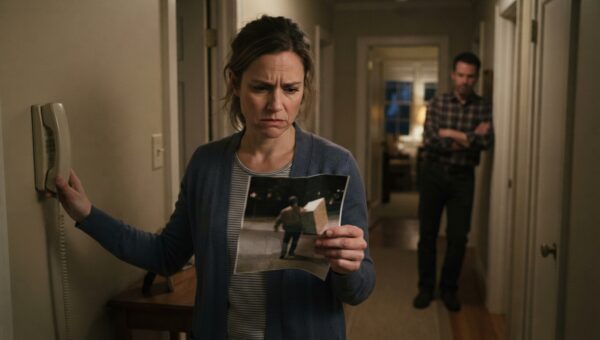
The radiator in the upstairs hallway of our house on Mill Street had a little hiss it made whenever the weather turned damp. Clara used to complain about it back when she was still in high school, saying it sounded like a wet match being put out.
We lived quiet after her mother passed away. Just the two of us and that old radiator keeping time against the winter drafts.
I spent thirty-one years working compliance for state regulatory agencies, which means I spent three decades looking at where systems fail. You learn pretty early on that people with money don’t usually break the big laws. They just buy enough small permissions until the rules bend to fit whatever shape they happen to need on a given Tuesday.
When Clara met Julian Vance at a regional banking seminar down in Springfield, I figured he was just another ambitious young fellow with a sharp haircut and too much pomade. He drove a black sedan that cost more than my first two cars combined and talked about quarterly projections like they were scripture.
At first, things looked entirely normal. They got married in a brick church downtown with a reception that cost more than my pension for a year. Clara smiled in every photograph, though her shoulders looked a bit tighter than they used to when she stood next to him.
I told myself young marriages just take a little adjusting. People settle in at their own pace, and fathers have a bad habit of hovering where they are not wanted.
The first real crack appeared about fourteen months after the wedding when Clara stopped coming to Sunday dinner. Julian called to say she had a migraine, his voice smooth and entirely reasonable over the speakerphone.
Then she missed her cousin’s graduation party in Peoria, and when I dropped by their house unannounced, the front door was locked tight from the inside. I stood on the porch for three minutes hearing muffled movement upstairs before Julian finally opened the crack of the door in his shirtsleeves.
He told me Clara was sleeping off a bad flu and didn’t want to be disturbed by visitors. Her shoes were sitting right there on the bottom step of the entryway, mud dried on the left heel from the garden.
Three weeks later. The hospital called at 4:12 in the morning.
The emergency room nurse had a tight, careful sound to her voice when she told me my daughter had been brought in with multiple rib fractures and severe contusions. She didn’t use the regular switchboard line; she called my cell directly from a desk in the back triage unit.
I drove those twenty-eight miles into town without turning the radio on once. The rain was hitting the windshield in heavy, grey sheets that the wipers could barely clear.
When I pushed through the double doors of the county hospital, Julian and his father Richard Vance were already standing by the nurses station with cups of black coffee. Richard wore an expensive wool overcoat that didn’t have a single drop of rain on it, as if he had been driven right to the sliding entrance under an awning.
Julian looked annoyed more than anything else, checking his silver wristwatch every ten seconds like an impatient commuter waiting for a delayed train.
He saw me coming down the linoleum corridor and stepped forward with that practiced, corporate half-smile he always used when he wanted to smooth over a missed deadline.
“Arthur, thank goodness,” Julian said, his voice dropping into that low, reasonable register he reserved for boardrooms. “Clara had a very unfortunate fall down the basement stairs at the lake property. We told the intake staff immediately, but these small-town doctors tend to make a mountain out of a molehill.”
Richard Vance didn’t even bother looking up from his coffee cup. He just stirred the sugar with a small wooden stick, his signet ring clicking softly against the ceramic rim.
I didn’t answer either of them. I walked straight past their shoulders without slowing my boots on the floor.
The nurse on duty led me down the sterile hallway to room 214, pushing the heavy wooden door open just enough for me to slip inside. The room smelled of antiseptic soap and old gauze.
Clara was propped up on two flat pillows, her face pale and the skin around her left eye turned a deep, bruised purple. When I pulled the bedside chair close and took her hand, her fingers felt cold and trembling against my palm.
She could barely lift her head from the pillow. Tears rolled down her face as she whispered, “Dad… they kept hurting me, and no one believed me.”
Those twelve words sat in that small room like a weight dropped on stone. I looked at the dark swelling along her jawline and the way her breathing hitched every time her ribs shifted beneath the hospital gown.
The door behind me clicked open an inch, and Julian’s voice drifted through the gap, loud enough to remind us he was waiting right outside. “Arthur, let’s not make a scene for the staff.”
I stood up slowly, smoothed down the front of my flannel shirt, and walked back out into the hallway where the two Vances were standing shoulder to shoulder. Richard Vance was checking his phone now, looking like a man waiting for a contractor to finish up some minor yard work.
“She needs to be discharged into private care,” Richard said, not looking up from his screen. “Our family physician has a suite arranged in Peoria. We can have her transferred by noon before these local records get cluttered up with unnecessary notes.”
I looked at Richard Vance and thought about all the small towns I had walked through during my regulatory years, where men like him treated county lines like personal property boundaries.
Instead of arguing, I calmly turned my back on both of them and walked twenty paces down the hall toward the vending machines. I pulled my satellite phone from my vest pocket and dialed a direct extension I hadn’t used since my retirement party four years ago.
Elena Brooks answered on the second ring, her voice crisp and free of any morning sleepiness from her office in the state capital. She didn’t say hello; she just waited for me to give her the district code.
“Elena,” I said, keeping my voice entirely level. “I am standing in St. Jude Memorial in county district four. I need an emergency state protective compliance audit and a neutral patient advocate dispatched to room 214 immediately.”
She was quiet for half a second before asking for the attending physician’s name and the intake report number. “Is this an oversight violation, Arthur?”
“It’s a mandatory reporting failure,” I told her, watching Richard Vance through the wired glass of the nurses station as he lit a thin cigarillo against hospital policy. “And I have reason to believe the local social worker’s notes are currently being rewritten downstairs.”
Within two hours, the quiet atmosphere in that hospital hallway changed entirely. Two state compliance SUVs pulled up right outside the emergency entrance, their tires hissing against the wet asphalt in the morning light.
Elena Brooks walked through those double doors herself, flanked by a neutral patient advocate and a state trooper who didn’t look like he took orders from local businessmen. They didn’t stop at the front desk; they walked straight down to medical records and seized the original triage logs before anyone from the Vance family could make a phone call to the hospital board.
Julian and Richard were sitting in the small administrative conference room on the second floor when Elena and I walked in to join them. Richard stood up immediately, his face turning a dark, mottled red as he recognized the state seal on Elena’s clipboard.
“This is completely out of line,” Richard said, his voice rising enough to rattle the water pitcher on the conference table. “I happen to sit on the regional advisory board for this hospital network. I demand to know under whose authority, “
“State Domestic Violence Oversight Act, section twelve,” Elena interrupted, her tone flat and entirely unimpressed as she set a thick manila folder on the laminate table. “We have received unredacted copies of three previous urgent care visits from out-of-county clinics over the last fourteen months, all listing identical soft-tissue trauma with disputed causation.”
Julian’s hand started shaking slightly where he rested it against the back of the metal chair. The confident, smooth manager look was gone, replaced by a sudden, blank panic around the eyes.
“Clara fell,” Julian muttered, his voice dropping an octave as he looked between Elena and me. “She’s clumsy. She knows she’s clumsy. Everyone in our circle knows how nervous she gets around the house.”
I reached into my pocket and pulled out a small digital recorder I had slipped out of Clara’s bedside drawer while she was resting. I laid it on the table between us and pressed play.
The tinny sound of Julian’s voice filled the quiet conference room, recorded on Clara’s phone three nights before. “If you ever talk to your father about what happened in the kitchen, I’ll make sure every cent of your family’s property is tied up in court until you’re living in a shelter.”
The room went entirely silent except for the low hum of the overhead fluorescent light fixture. Richard Vance looked at his son for three seconds, and in that look, you could see the exact moment he realized his money couldn’t buy back a federal-state compliance record.
“Mr. Vance,” Elena said, looking directly at Julian as she pulled a formal document from her folder. “You are being served with a temporary emergency protective order. State law enforcement is currently securing your residence for evidence preservation.”
Julian didn’t argue anymore. He just sat down hard in the chair, his fingers gripping the edge of the table until his knuckles turned white.
By noon, Clara had been moved to a secure private recovery room on the south side of the building, away from the noise of the lobby and the reach of any local influence. The state investigators had cleared the floor, leaving only the steady beep of the monitor and the quiet sound of the rain outside.
I sat in the wooden armchair beside her bed as the morning sun finally broke through the heavy grey clouds over the river town. The legal papers rested neatly in a stack on the small rolling table near the window.
Clara was sleeping now, her breathing slow and even for the first time in eighteen months, her hand resting calmly against the white cotton sheet.