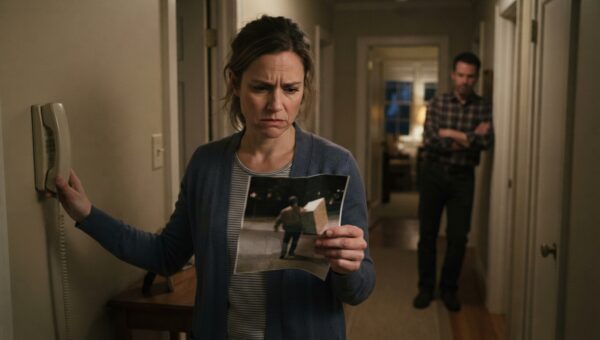
You’ll only embarrass yourself. You’re just a stay-at-home mom now. No one will even remember you.
I said those words on a Tuesday evening while dinner was still cooling on the stove. Elena had been humming to herself, folding laundry with a speed she hadn’t managed in months. The heavy blue catalog from our old high school back in Bakersfield had arrived three days before, filled with glossy pictures of the gymnasium where we had both walked across the stage twenty-two years ago.
She wasn’t even in my graduating class. We met later, when I was working inventory at the warehouse supply yard and she was clerking at the county records office, before we moved out to the desert fringe where the wind always smells of creosote and dry dust. I thought I knew everything about her history. I thought her history started the day she signed our marriage license.
The smile just slid off her face. It didn’t fade slowly; it literally vanished, like someone turned off a lamp in an empty room. She didn’t drop the blue dress she had ordered online using her own grocery savings, though. She just folded it twice, laid it flat inside its thin plastic dry-cleaning sleeve, and carried it back down the hall to the guest room closet. She didn’t slam the door. She didn’t raise her voice. She came back out, wiped the kitchen counter with a damp sponge, and sat down at the end of the table without touching her plate.
For fourteen days, our house didn’t have sound in it. Not real sound, anyway. We talked about the grocery list and whether the oil in the Dodge needed changing, but our voices stayed flat and thin, like paper sliding across a desk. I kept waiting for her to snap at me, or at least cry so I could tell myself she was just being sensitive. She didn’t. She just moved through the kitchen like a ghost who had forgotten why she stopped walking.
Then came the afternoon with the brown paper tape.
I was sitting at the kitchen island nursing a cup of lukewarm coffee when the delivery truck rattled down our gravel drive at 2:14 in the nightmarish July heat. The driver didn’t even knock; he just hoisted a heavy, square cardboard box onto the concrete step and sped back out toward the highway. I watched him go from the window, wondering what Elena had ordered without telling me.
We didn’t have much spare cash with my hours at the supply yard getting cut back to four days a week, and the thought of another package made the muscles in the back of my neck tighten up.
When I lugged the box inside, I noticed the return address immediately. It wasn’t an online warehouse or a clothing catalog. It was printed in neat, dark blue lettering across the corner flap: West Bakersfield Unified High School District, Alumni Relations and Foundation Board.
I didn’t think. That was my first mistake, and probably my last honest excuse. I took the kitchen utility knife from the drawer, slit the reinforced tape down the middle, and pulled back the heavy cardboard flaps.
The first thing I touched was bubble wrap, thick and cloudy. Underneath that lay a solid block of dark walnut wood with a heavy brass plate bolted to the front. The metal was cool to the touch, catching the fluorescent kitchen light with a sharp, blinding glare.
I squinted down at the engraved lettering, turning the heavy thing sideways because my brain refused to line up the words.
Distinguished Alumnus of the Decade. Elena Vance. Keynote Honoree and Founder’s Circle Inductee.
My hand jerked like I had touched a hot stove burner. The brass plaque was heavy, maybe ten pounds of solid metal and wood, and I almost dropped it onto the linoleum. My throat felt instantly dry, like I had been swallowing sand. I reached back into the box, my fingers shaking against the cardboard, and pulled out a thick leather-bound portfolio and a heavy stack of glossy reunion pamphlets.
The top pamphlet had a large photograph right on the front cover. It was Elena, though not the Elena I had looked at across our kitchen table every morning for fifteen years. This was a younger version of her, standing at a podium in an auditorium packed with rows of folding chairs, holding a binder against her chest with a look of fierce, unshakeable certainty. Her hair was pulled back into a simple clip, and her eyes were bright and steady.
I dropped back into the kitchen chair, the wood groaning underneath my weight, and opened the portfolio.
A personal letter on heavy cream stationery slid out and landed facedown on my knee. I picked it up with two fingers, as if it might bite me. The date at the top was from three weeks ago, signed by the superintendent of the district himself.
Dear Elena,
The foundation board was unanimous in selecting you as our keynote alumnus for the twentieth-anniversary gala. Your pioneering work on the regional watershed committee back in the late nineties, combined with the endowment you quietly established for vocational scholarships, laid the groundwork for every community program we still run today. We missed you at the Friday evening dinner, and when you didn’t answer our calls, we feared something was wrong. We are shipping your plaque and the commemorative yearbook inserts directly to your home so you know that Bakersfield has not forgotten its valedictorian, its student council president, and the person who gave this town its voice when it was drowning in debt.
Valedictorian.
I said the word out loud, but it sounded stupid and small in the quiet kitchen.
I had met Elena three years after she moved south. She never talked about high school. When I asked about her past, she usually just shrugged and said she grew up in the valley and wanted a quieter life. I took that to mean she was ordinary. I took her quiet ways, her soft sweaters, and her apron-clad routine around the house as proof that she had always been small, ordinary, and dependent on me to keep the lights on. I had built an entire world inside my own head where I was the provider, the anchor, the one who carried the heavy end of the log, while she was just… there. A fixture. Someone who filled the empty space between my shifts at the yard.
I sat there for an hour, turning the glossy pages of the reunion program. There were pictures of her winning the regional debate trophy, pictures of her cutting a ribbon for the community center she helped fund with scholarship money she won from a state essay contest, and a whole page dedicated to her work organizing the district’s first youth literacy drive. Her name was printed everywhere, bold and clear, right alongside words like leadership, vision, and dedication.
The silence in the house didn’t feel quiet anymore. It felt loud, heavy, and full of teeth.
I heard the gravel crunch under our old sedan’s tires at 4:32.
The sound made my chest seize up. For a second, I actually thought about sliding the heavy brass plaque back into the box, taping the cardboard shut, and shoving it into the back of the pantry like a coward. But the box was too big, and the weight of what I had just read was already sitting right behind my ribs, pressing down until I could barely draw a breath.
The front door clicked open. Elena walked in carrying two plastic grocery bags from the market down on 4th Street, her canvas purse slung over her shoulder. She looked tired. There were faint shadows under her eyes, the kind that come from fourteen days of sleeping on the edge of a mattress without rolling over.
She stopped in the small entryway when she saw the cardboard flaps gaping open on the kitchen island.
Her gaze didn’t drop to the box first. It locked onto my face. She stood there for three long seconds, the plastic grocery handles cutting into her fingers, her expression completely flat. She already knew. Or maybe she had known the second the delivery notice came in the mail yesterday.
“Elena,” I started, but my voice cracked right in the middle like dry pine.
She walked past me without a word, set the grocery bags down on the counter, and began putting the cans of soup and the loaf of bread away in the pantry. One by one. Methodically. Not looking at the plaque, not looking at the letters spread out across the oilcloth table.
“I opened it,” I said, and the words tasted like copper. “I didn’t know. I swear to God, Elena, I didn’t know any of this.”
She closed the pantry door with a soft click and turned around, leaning back against the white wood. Her hands stayed flat on the edge of the counter, gripping the laminate just hard enough that her knuckles turned white.
“You didn’t want to know,” she said. Her voice wasn’t shaking. It was lower than I had ever heard it, steady and cold as well water. “You never asked. Every time I tried to tell you about the scholarship fund or why I still get mail from the district office, you’d turn the television up or tell me supper was getting cold. It wasn’t that I hid it, Harlan. It was just easier for you to pretend I started the day we met.”
“I said a stupid thing,” I whispered, and I hated how small I sounded in my own kitchen. “I was mad about the bills, I was stressed about the yard, and I just, I didn’t think.”
“No,” she said, looking straight through me like I was made of glass. “You thought exactly what you wanted to think. Because if I was just a stay-at-home mom who never did anything and never went anywhere, then it made you feel bigger. It made your job feel more important than it actually is.”
She walked over to the island, finally looking down at the heavy walnut wood and the gleaming brass plate with her name stamped across it in deep black letters. For a moment, her jaw tightened, and I saw a flicker of something raw and old cross her face, the ghost of the girl who had stood at that podium twenty-two years ago. Then the mask went back up.
She didn’t scream. She didn’t throw the letters at my head or cry the way I half-hoped she would so I could try to fix it. She just reached down, lifted the heavy plaque with both hands, and cradled it against her chest like it was something fragile she had been missing for a very long time.
“I’m not going back to the way things were, Harlan,” she said quietly, her eyes fixed on the hallway leading toward our bedroom. “I stayed here because I thought this was a partnership. But I spent two weeks in this house realizing that the man I married doesn’t even respect the person I was before he found me. That’s on me for letting you forget. But it stops today.”
She turned and walked down the hall, carrying the brass plaque toward the living room.
I stayed sitting at the kitchen table while the sun went down behind the desert scrub outside, turning the sky the color of a bruised peach. I didn’t follow her. I didn’t know how. Through the open door, I heard the faint, solid thud of her setting the heavy wooden base down onto the surface of the mantel above our cold brick fireplace. It didn’t make a sound when it landed. It just sat there, catching the last gray light from the window, looking heavier and more permanent than anything else we owned.