The notification light on my register flashed three times at 4:17 yesterday afternoon, right before a girl with worn-out sneakers walked through the front door of my shop. Her name was Clara. I could tell she was nervous the second she stepped past the bell because she kept smoothing down the front of her plain blue blouse like she was afraid she didn’t belong among the silk and satin hanging from my racks.
I own The Painted Button right off the town square in our little corner of the Missouri Ozarks, and over the last twelve years, I have seen every kind of bride come through those glass doors. I have seen the ones who walk in with checkbooks thick enough to choke a mule, and I have seen the ones who count their quarters on the counter while trying to figure out how to pay for a secondhand veil. Clara belonged to the second group, though I didn’t know it yet.
Three weeks earlier, the shop had been quiet on a rainy Tuesday morning when Mrs. Evelyn Vance pushed open the door. Evelyn was eighty-two years old back then, and she walked with that slow, deliberate step of someone who carried things that couldn’t be put down. She had brought a heavy canvas garment bag with her, setting it down on my front counter with both hands like it was made of blown glass.
I remember the smell of cedar and old wool that came off it when she unzipped the heavy brass teeth. Inside was a 1960s vintage lace wedding dress with a high collar, delicate seed pearls around the cuffs, and a skirt that had yellowed just a fraction toward the very bottom hem, the color of old cream.
“My daughter was supposed to wear this,” Evelyn had told me that morning, her voice thin and dry as winter grass. “Her name was Clara, too. Same spelling. She never got the chance. An infection took her three weeks before the ceremony in 1994. I have kept it in the cedar chest in the spare room ever since because I couldn’t bear to look at it, and I certainly couldn’t bear to sell it to some flippant girl who wouldn’t know the first thing about honoring a promise.”
She didn’t want to sell it for profit. She reached into her wool coat and pulled out a thick brown envelope tied with a bit of cotton twine, laying it right on top of the lace.
Inside was five hundred dollars in crisp twenty-dollar bills and a piece of heavy linen paper with her neat, sharp handwriting on it. Her instructions were specific, almost stubborn, the way old women from these hills tend to be when they have made up their minds. She wanted me to hang the dress on the back rack, the one where I kept the clearance and damaged items that needed minor repairs, and she wanted me to slap an eight-hundred-dollar price tag on it.
“Make it too high for someone just looking for a cheap bargain,” Evelyn had instructed me, her pale blue eyes fixed right on mine. “Wait for the girl who looks at it not because she has no money, but because she loves it so much she forgets to check the tag. The moment she starts to cry and puts it back because she can’t afford it, you cross out that price.
You use this five hundred to cover the rest, and you give her the dress. And you give her the note I tucked into the lining.”
I had agreed without hesitation because when a woman like Evelyn Vance asks you to carry a piece of her heart, you don’t say no. I placed the dress on the back rack, wedged between a satin gown with a broken zipper and a tulle skirt that smelled faintly of campfire smoke. I wrote eight hundred on the tag in black marker and waited.
For three weeks, nobody even pulled the hanger aside. Brides walked past the damaged rack to look at the new ivory gowns imported from Chicago or the sleek modern slips hanging near the window. I almost began to wonder if Evelyn’s ghost of a daughter would stay in that canvas bag forever.
Then yesterday afternoon happened. The bell above the door chimed, and Clara walked in. She had her hair tied back in a messy knot with a yellow pencil holding it together, and her canvas sneakers had a small hole near the left toe where her sock poked through. She didn’t look at the front displays. She walked straight past the silk and tulle, her hand trailing along the metal pipes until she stopped dead in front of the clearance rack. Her fingers brushed against the vintage lace, and I saw her whole posture change. She didn’t pull it out roughly the way some teenagers do; she lifted the hanger off the rail as if she were lifting a sleeping baby out of a crib.
She spent twenty minutes in the small dressing room in the back. When she finally stepped out, the curtain scraped against the linoleum floor with a dry hiss, and I had to look twice. That 1960s lace fit her shoulders as though it had been measured on her body thirty years before she was even born. The high collar framed her jawline, and the seed pearls caught the afternoon light coming through the front window. She was smiling, but her eyes were brimming with bright, heavy tears that she was trying hard to blink away.
“It’s beautiful,” she whispered as she carefully took it off, her hands shaking just a little bit against the delicate fabric. “It’s the most beautiful thing I’ve ever seen.”
She checked the tag hanging from the sleeve. The smile vanished from her face so fast it was like someone had blown out a candle in an empty room. Her shoulders slumped forward, and all the light went right out of her expression.
“It’s beautiful,” she whispered again as she carefully took it off, “but I only have $300.”
She started hanging the dress back on the rack. She didn’t make a fuss or ask if there was a payment plan. She just gave one small, defeated nod to herself, the kind of nod people give when life has reminded them exactly what their station is, and she turned toward the exit.
That was when I quietly reached into my coat pocket, picked up my red pen, and did something that left everyone in the shop staring in absolute silence.
Mia, my assistant, dropped her clipboard on the counter with a loud clatter that made the glass jars rattle. I didn’t care. I walked past the register, my rubber-soled shoes squeaking softly against the floor, and reached the rack just as Clara’s hand was leaving the hanger. I lifted the dress off the rail, turned the cardboard tag over, and drew a thick, deliberate red line right through the eight hundred dollars. Next to it, in neat block letters, I wrote three hundred dollars flat.
Clara stopped in her tracks, turning back around with her mouth slightly open. “Ma’am? You made a mistake. That says eight hundred.”
“I didn’t make any mistake,” I told her, my voice sounding a little thicker than I intended. “Store policy allows for markdown adjustments on clearance items if the consignor authorizes it in advance.”
“I can’t afford eight hundred,” she said, her voice dropping to a whisper as if she were afraid someone would overhear and take the dress away from her. “I told you, I only have three hundred saved from my tips at the diner, and my fiancé works down at the feed store, and we’re paying for the pastor’s fee ourselves, so, “
“It’s three hundred dollars, Clara,” I said, handing the hanger straight into her arms. “Not a penny more.”
She stared at the tag, then up at my face, and then the tears finally broke over her lower lashes. She didn’t cry loud or dramatic; she just covered her mouth with one hand and let out a shaky breath that sounded like a long winter finally coming to an end. Mia was still standing by the counter, her eyes wide as saucers, looking back and forth between us like she was watching a magic trick she hadn’t signed up for.
After Clara paid for the dress with three crumpled hundred-dollar bills she dug out of a faded canvas zipper pouch, I walked back to my office behind the partition. I opened the bottom drawer of my metal desk, slid past the tax ledgers and the receipt books, and pulled out the thick brown envelope Evelyn Vance had left behind three weeks ago. Inside, alongside the remaining two hundred dollars in cash, was a small, sealed white envelope with three words written on the front in that same sharp, spidery hand: *For the Bride.*
I brought it out to the front counter where Clara was carefully wrapping the vintage lace in blue tissue paper.
“There’s one more thing that belongs with this dress,” I said, sliding the small envelope across the glass.
Clara took it with both hands, her thumb tracing the ink on the front. She slid her finger under the flap and pulled out a small card of heavy cream paper. She read it right there under the yellow light of my pendant fixtures, her lips moving silently as she spelled out the words Evelyn had written three decades ago.
*To the girl who loves this dress enough to let it go:*
*My Clara never got to wear these pearls down the aisle, and for a long time, that felt like a debt the world owed me. But love isn’t something you keep locked in a cedar chest. If you are holding this note, it means you saw the beauty in the stitches before you saw the price on the tag. Have a wonderful wedding, sweetheart. Make it loud, make it joyful, and let my girl walk with you in spirit.*
*, Evelyn Vance.*
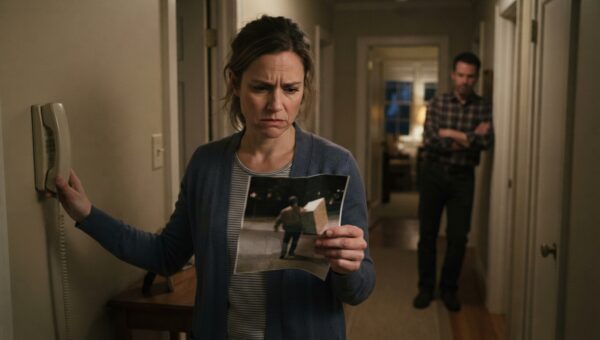
Clara looked up at me, her eyes red and shining, and she didn’t have to say a word. I reached for the phone on the back wall and dialed the number Evelyn had left on her consignment contract.
“Evelyn?” I said when the old woman picked up on the second ring. “You better put the coffee on. We have a visitor coming over to show you how that lace fits.”
The next afternoon, the sun was cutting long, bright stripes across the hardwood floor of Evelyn Vance’s living room out on Ridge Road. The air smelled of old paper and peppermint, the kind of clean, quiet smell that only old houses have when they’ve been lived in by the same person for fifty years. Clara stood by the bay window wearing the altered dress, the vintage lace falling down around her ankles in soft, quiet folds that caught the light like morning frost.
Evelyn sat in her high-backed wing chair with a knitted afghan over her knees, her hands trembling slightly as she reached out to touch the seed pearls on Clara’s cuff. She didn’t say anything for a long time. She just looked up at Clara’s face, her own expression softening until the sharp lines around her mouth seemed to melt away into something entirely peaceful.
“You look just like her,” Evelyn whispered, her voice cracking just enough to let all the years of waiting spill out into the room. “God Almighty, you look just like her.”
Evelyn reached into the pocket of her cardigan and pulled out a small velvet box that looked like it had been opened a thousand times. Inside sat a vintage pearl brooch shaped like a little laurel wreath, the silver tarnished just a bit around the edges with age. She unclipped it from the pad and motioned for Clara to lean down.
With hands that were steady and sure, Evelyn Vance pinned that small heirloom pearl brooch right onto the lace bodice of the dress, right over Clara’s heart. They stood there together in the warm afternoon light, both of them smiling through gentle tears, two people connected by a thirty-year-old secret and a dress that had finally found the home it was waiting for all along.